
Beer Bread
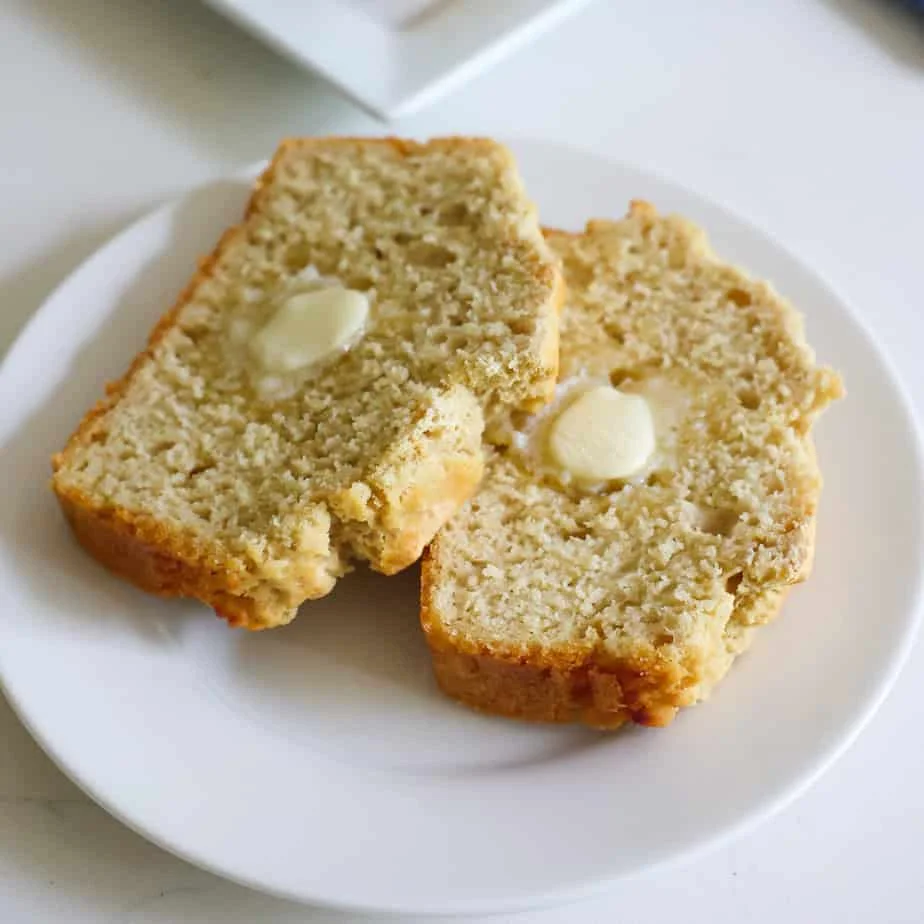
This American beer bread is a quick, no-knead loaf with a soft crumb and buttery, golden crust. Beer provides the liquid and helps give the bread its savoury flavour, while baking powder keeps the method simple.
Ingredients
- 375 g (3 cups)plain flour
- 12 g (1 tablespoon)baking powder
- 3 g (1/2 teaspoon)salt
- 1.5 g (1/2 teaspoon)garlic powder
- 1 g (1/2 teaspoon)ground cumin
- 25 g (2 tablespoons)granulated sugar
- 355 ml (1 × 12-ounce bottle or can), at room temperaturebeer
- 43 g (3 tablespoons), meltedbutter
Instructions
- 1
Prepare the oven
Heat the oven to 175°C (350°F). Grease a 23 × 13 cm (9 × 5-inch) loaf tin.
- 2
Mix the batter
In a large bowl, stir together the flour, baking powder, salt, garlic powder, cumin and sugar. Pour in the beer and mix just until combined; avoid overmixing.
- 3
Fill the tin
Spoon the mixture into the prepared loaf tin, then pour the melted butter over the top.
- 4
Bake the loaf
Bake for 50 minutes, or until lightly browned and a toothpick inserted in the centre comes out clean. The centre is done when it reaches 88°C (190°F).
- 5
Cool before slicing
Set the tin on a wire rack and leave the loaf to cool for 10 minutes. Turn it out of the tin and let it cool for a further 20 minutes before slicing.
What is beer bread?
Beer bread is a simple American quick bread, made without kneading or a separate rise. Baking powder provides the lift, while beer brings moisture and flavour.
This version seasons the loaf with garlic and cumin and finishes it with melted butter. The result is a tender centre beneath a savoury, buttery crust.
Nutrition and macros by portion
The nutrition label shows one serving as written: 177 calories, 4g protein, 31g carbs, 4g fat.
| Portion | Adjustment | kcal | Protein | Carbs | Fat |
|---|---|---|---|---|---|
| Lighter | Use less butter | 124 kcal | 3g | 22g | 3g |
| This serving | As written | 177 kcal | 4g | 31g | 4g |
| Hungry | Serve a larger slice | 266 kcal | 6g | 47g | 6g |
The flour and sugar provide most of the carbohydrates, while the butter contributes much of the fat; the flour and beer contribute some protein. Pair a slice with a bean, egg or other protein-rich dish and vegetables for a more balanced plate.
Choosing the beer
Room-temperature beer: It blends readily into the dry ingredients and avoids chilling the batter. A lager or pale ale works well; a strongly flavoured beer will make its character more noticeable in the loaf.
Fresh beer: Baking powder does the main leavening here, but a beer that is not stale gives the bread a better flavour. Use a variety you would be happy to drink.
Mixing without overworking
Dry ingredients: Stir the flour, raising agent, seasonings and sugar evenly before adding the beer. This helps distribute the baking powder and spices through the loaf.
Gentle mixing: Stop as soon as no dry patches remain. The batter will be thick and may look uneven; excessive mixing can make the finished bread dense.
The butter topping
Before baking: Pour the melted butter over the batter once it is in the tin. It adds richness and helps form the loaf's buttery top and crust as it bakes.
Even coverage: Pour it slowly across the surface rather than concentrating it in one spot. Some butter may run down the sides; that is fine.
How to tell it is done
Colour and skewer: Look for a lightly browned top, then insert a toothpick into the centre. It should come out clean rather than coated in wet batter.
Temperature: For the specified doneness cue, the centre should reach 88°C (190°F). If the top browns before the middle is ready, continue baking and check again.
Cooling and serving
In the tin: Rest the loaf on a wire rack for 10 minutes before turning it out. This short pause helps it hold together when removed.
Before slicing: Leave it out of the tin for another 20 minutes. Serve slices with soup, chilli or a savoury spread, or enjoy them warm on their own.
Recipe notes & tips
- Measure the flour carefully so the loaf does not become overly dry or heavy.
- Grease the loaf tin thoroughly, including the corners.
- Mix only until the flour is incorporated, even if the batter looks a little lumpy.
- Pour the butter evenly over the batter for a more consistent crust.
- Let the loaf cool for the full 30 minutes before slicing for cleaner slices.
Variations
- Herb flavour: Add dried rosemary or thyme to the dry ingredients for an aromatic loaf.
- Cheesy loaf: Fold grated mature Cheddar into the batter just before transferring it to the tin.
- More spice: Increase the garlic powder or cumin slightly for a more pronounced savoury note.
- Mild beer: Choose a light lager for a subtle beer flavour.
- Dark beer: Use a stout or porter for a deeper, more robust flavour.
Common mistakes to avoid
- Overmixing: The loaf can turn dense; stop as soon as the dry ingredients are incorporated.
- Cold beer: It can make the batter colder than intended; use beer at room temperature.
- Loose tin preparation: The loaf may stick; grease the base and sides well before filling.
- Slicing too soon: The warm crumb can crumble; allow the full cooling time before cutting.
- Relying on colour alone: A browned top can hide an underbaked centre; check the middle with a toothpick or thermometer.
How to store
Once completely cool, store the loaf wrapped or in an airtight container at room temperature for up to 2 days. Reheat slices briefly in a toaster or warm oven; freeze wrapped slices for longer storage and thaw before reheating.
Frequently asked questions
Does the beer need to be warm?
It should be at room temperature, as specified, rather than chilled. This helps it combine with the dry ingredients without cooling the batter.
Can I use non-alcoholic beer?
Yes. Use 355 ml of non-alcoholic beer at room temperature; the flavour may differ slightly depending on the brand.
Why is my beer bread dense?
Overmixing can make the loaf heavy, and inaccurate flour measuring can also affect its texture. Mix only until combined and measure the flour carefully.
How do I know when the centre is baked?
A toothpick inserted in the centre should come out clean, and the specified internal temperature is 88°C (190°F).
Can I make the batter ahead?
It is best to bake the batter soon after mixing so the raising agents can do their work in the oven. Prepare the tin and ingredients in advance instead.
Cook it from the original
This recipe comes from smalltownwoman.com. Their page has the author’s own photos, notes and tips — the best place to cook it from.
Open the recipe on smalltownwoman.com