
Almond Flour Bread
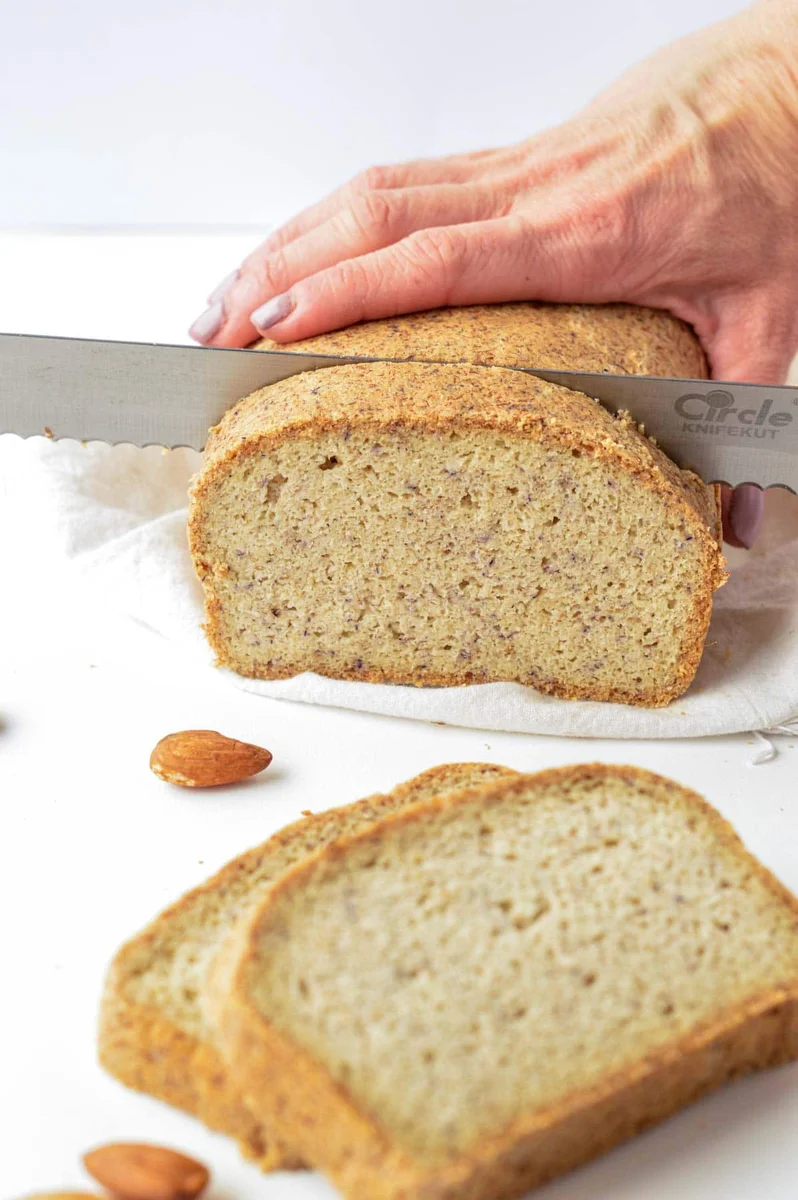
This American-style almond flour loaf uses psyllium husk and eggs to create a sliceable bread with a classic, hearty texture. It is a useful option for gluten-free baking, and careful mixing and cooling help the loaf hold together.
Ingredients
- 250 g (2 1/2 cups)Almond flour
- 40 g (1.4 oz)Whole psyllium husk
- 1 tablespoonBaking powder
- 1 teaspoonSalt
- 1 teaspoonXanthan gum
- 2 largeEggs
- 2 largeEgg whites
- 2 tablespoonsExtra virgin olive oil (or melted coconut oil, avocado oil, almond oil or melted butter)
- 240 ml (1 cup)Lukewarm water
Instructions
- 1
Prepare the tin
Heat the oven to 200°C (400°F). Line a 23 x 13 cm (9 x 5 inch) loaf tin with baking parchment and lightly oil the paper so the loaf does not stick. Set the tin aside.
- 2
Weigh ingredients
Before you begin, weigh the dry ingredients, using a separate bowl for each one. Accurate weights are recommended for this bread.
- 3
Mix dry ingredients
In a large bowl, stir together the almond flour, psyllium husk, baking powder, salt and xanthan gum. Set aside.
- 4
Whisk eggs
Put the whole eggs, egg whites and olive oil in another bowl. Using an electric beater on high, whisk for 30 seconds, until the mixture is paler and foamy with bubbles on top.
- 5
Combine the mixture
Return to the bowl of dry ingredients. Add the beaten egg mixture and the water.
- 6
Beat the dough
With the electric beater on low, whisk for 15 seconds. The dough will be sticky and grow heavier as the fibre absorbs moisture. For extra air, increase the speed to medium and beat for a further 15 seconds. Stop the beater and scrape the dough from the beaters into the bowl.
- 7
Fill the tin
Transfer the dough to the prepared loaf tin. Smooth the top with a spatula without pressing it down, as pressing can make the loaf denser.
- 8
Position the tin
Place the tin on the second rack from the bottom, just below the centre rack but not on the lowest rack. This position helps prevent the top from burning.
- 9
Bake the loaf
Bake at 200°C (400°F) for 60 minutes. After 20 minutes, you can cover the top with foil to help prevent it from burning. Test the centre with a skewer; if it comes out with crumbs, bake for another 10 minutes, up to 80 minutes total.
- 10
Cool before slicing
Leave the loaf in the tin for 5 minutes, with any foil removed, then move it to a cooling rack. Wait 4 hours or overnight before slicing.
What is almond flour bread?
Almond flour bread is a loaf made without wheat flour, using ground almonds as its base. This American-style recipe pairs the flour with psyllium husk, eggs and xanthan gum to help the loaf set and slice.
Psyllium absorbs water and gives the dough structure, while the eggs help bind it. The method works best when the ingredients are measured carefully and the loaf is allowed to cool fully.
Nutrition and macros by portion
The nutrition label shows one serving as written: 246 calories, 9g protein, 9g carbs, 21g fat.
| Portion | Adjustment | kcal | Protein | Carbs | Fat |
|---|---|---|---|---|---|
| Lighter | Use a smaller slice | 172 kcal | 6g | 6g | 14g |
| This serving | As written | 246 kcal | 9g | 9g | 21g |
| Hungry | Have a larger portion | 369 kcal | 14g | 14g | 31g |
Almond flour and olive oil provide most of the fat, while the eggs and egg whites contribute protein. Almond flour and psyllium supply the carbohydrates and fibre. Pair a slice with vegetables and a protein-rich topping to make it part of a more complete plate.
Choosing and measuring the ingredients
Almond flour: weigh it if possible, since cup measurements can vary depending on how the flour is packed. Use whole psyllium husk as specified, rather than assuming a ground product will behave the same way.
Binding agents: xanthan gum and psyllium both contribute to the loaf’s structure. Measure them carefully, along with the baking powder and salt.
Whisking and handling the dough
Egg mixture: beating the eggs, whites and oil until foamy adds air before the dough becomes heavy. Keep to the specified 30 seconds on high speed.
Sticky dough: psyllium starts absorbing the water as soon as the wet and dry mixtures meet. Work promptly, and use the low-speed mixing time before the optional medium-speed beat.
Getting the texture right
Gentle shaping: smooth the top with a spatula but avoid pushing the dough down. The recipe notes that pressing it can leave the baked loaf heavier and denser.
Doneness: use a skewer in the centre; it should come out clean. If it carries crumbs, continue baking in 10-minute increments, stopping at 80 minutes total.
Baking and cooling
Rack position: set the tin just below the centre of the oven, rather than on the very bottom rack. A piece of foil can be placed over the loaf after 20 minutes if the top needs protection.
Cooling time: leave the loaf in its tin for 5 minutes, then transfer it to a rack. Wait at least 4 hours or overnight before slicing so the loaf has time to settle.
Serving the loaf
The loaf can be sliced once fully cooled and served with savoury or sweet toppings. Its almond and egg base also works alongside soup or a salad for a simple meal.
For a more balanced plate, pair a slice with vegetables and a protein-rich topping such as eggs or beans.
Recipe notes & tips
- Weigh the dry ingredients for more consistent results.
- Use whole psyllium husk, as listed, and check its form before measuring.
- Beat the eggs and oil until visibly foamy before adding them to the dry mixture.
- Avoid pressing the dough down when smoothing its surface.
- If the top browns too quickly, cover it with foil after 20 minutes.
- Let the loaf cool for at least 4 hours before slicing.
Variations
- Change the oil: use melted coconut oil, avocado oil, almond oil or melted butter as listed.
- Toast slices: toast fully cooled slices before serving for a firmer surface.
- Serve savoury: pair a slice with soup or a salad.
- Add a topping: serve slices with eggs or another topping of your choice.
Common mistakes to avoid
- Using a different psyllium form: stick to whole psyllium husk, as the recipe specifies.
- Guessing the dry measurements: weigh them for more reliable proportions.
- Overmixing the finished dough: follow the short mixing times, since it thickens as the fibre absorbs water.
- Pressing the dough into the tin: smooth it lightly instead to avoid a denser loaf.
- Slicing too soon: wait 4 hours or overnight so the loaf can cool and set.
- Stopping while the skewer has crumbs: bake for another 10 minutes and test again, up to 80 minutes total.
How to store
Once cool, store the loaf in an airtight container in the fridge and use within 5 days. Reheat or toast slices before serving.
Frequently asked questions
Can I use ground psyllium husk instead?
The recipe specifies whole psyllium husk, so use that for the intended texture. A ground form may absorb liquid differently.
How do I know when the loaf is baked?
Insert a skewer into the centre; it should come out clean. If crumbs cling to it, bake for another 10 minutes and check again, up to 80 minutes total.
Why does the dough become so thick?
The psyllium absorbs moisture, making the dough stickier and heavier as you mix. This is expected in the method.
When can I slice the bread?
After cooling it in the tin for 5 minutes and transferring it to a rack, wait 4 hours or overnight before slicing.
Can I use another oil?
Yes. The recipe lists melted coconut oil, avocado oil, almond oil or melted butter as alternatives to extra virgin olive oil.
Can I cover the loaf while it bakes?
You can place foil over the loaf after 20 minutes to help prevent the top from burning. Remove it for the initial 5 minutes of cooling in the tin.
Cook it from the original
This recipe comes from sweetashoney.co. Their page has the author’s own photos, notes and tips — the best place to cook it from.
Open the recipe on sweetashoney.co