
Almond Flour Tortillas
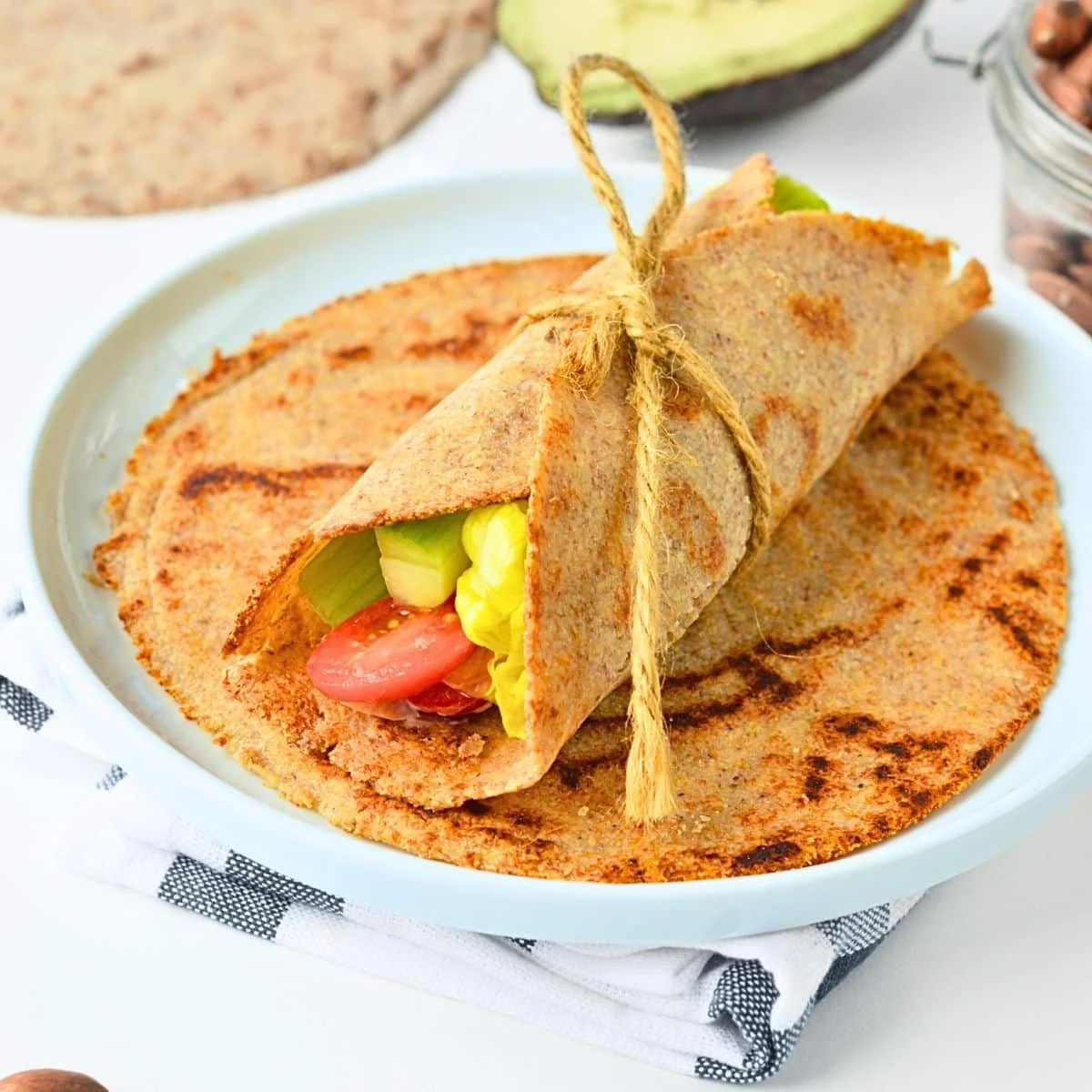
These soft almond flour tortillas are made with psyllium husk, olive oil and a short list of pantry ingredients. Make them in about 15 minutes for wraps, or serve them as a flexible side bread.
Ingredients
- 96 g (1 cup)Almond flour
- 3 tablespoons (about 15 g)Whole psyllium husk
- 1/4 teaspoonSalt
- 7.5 ml (1/2 tablespoon)Extra virgin olive oil
- 120 ml (1/2 cup)Lukewarm water
- 1/4 teaspoonGround paprika (optional)
- 1/4 teaspoonGarlic powder (optional)
Instructions
- 1
Mix the dry ingredients
In a medium bowl, stir together the almond flour, psyllium husk and salt. Add the paprika and garlic powder too, if using.
- 2
Form the dough
Add the olive oil and lukewarm water, then mix with a spatula. The mixture will be moist at first; knead it until it comes together.
- 3
Divide the dough
Shape the dough into a ball with your hands and divide it into 4 even pieces. Roll each piece into a small ball.
- 4
Set between paper
Place one dough ball between two sheets of parchment paper.
- 5
Roll the tortilla
Press the ball lightly with your palm, then roll it out with a rolling pin. Keep it from getting too thin: thinner tortillas turn crispier and are less soft when cooked.
- 6
Remove the paper
Carefully peel away the top sheet of parchment.
- 7
Shape the edges
For a round tortilla, place a saucepan lid over the dough and cut around it with a knife. Lift away the trimmings with your fingers; if you do not have a lid, cut the dough into a square or rectangle.
- 8
Transfer to the pan
Use a non-stick crepe pan so the tortilla does not stick. Turn the dough over onto the pan, then peel away the remaining parchment to release it. Handle it gently, as a pan that is too hot can make the tortilla break.
- 9
Cook the first side
Set the pan over medium heat and cook for 2–3 minutes, or until the underside is brown. Slide a spatula or flat tool underneath and turn the tortilla over.
- 10
Finish cooking
Cook for another 1–2 minutes. Longer cooking makes the tortilla crispier and harder to roll without breaking, so take it off while the centre is still soft.
- 11
Serve the tortillas
Serve with a filling of your choice or as a side bread with curry.
What are almond flour tortillas?
Tortillas are thin flatbreads associated with Mexican cooking, traditionally made from corn or wheat. This version uses almond flour and psyllium husk for a pliable, grain-free alternative.
Psyllium helps bind the dough, while olive oil adds richness. Rolling the rounds to a moderate thickness and keeping the centre soft helps them stay flexible.
Nutrition and macros by portion
The nutrition label shows one serving as written: 190 calories, 6g protein, 9g carbs, 16g fat.
| Portion | Adjustment | kcal | Protein | Carbs | Fat |
|---|---|---|---|---|---|
| Lighter | Use less olive oil | 133 kcal | 4g | 6g | 11g |
| This serving | As written | 190 kcal | 6g | 9g | 16g |
| Hungry | Make a larger batch | 285 kcal | 9g | 14g | 24g |
Almond flour and olive oil provide most of the fat, while almond flour also contributes protein. The almond flour supplies most of the carbohydrates in this small batch; psyllium adds fibre. Pair a tortilla with a filling rich in vegetables and a source of protein for a more complete plate.
The ingredients that hold them together
Almond flour: this gives the tortillas their nutty flavour and forms the main part of the dough. Use finely ground flour for a more even texture.
Psyllium husk: this absorbs water and helps the dough hold its shape. The recipe calls for whole husk, so avoid swapping in a different form without adjusting the method.
Getting the dough ready
Hydration: the mixture may look wet just after the water goes in. Knead it until it gathers into a dough before dividing it.
Portions: dividing the dough into 4 even pieces helps the tortillas cook at a similar rate. Roll each piece between parchment so it is easier to handle.
Rolling without tearing
Thickness: roll the dough evenly, but do not make it too thin. Thin rounds crisp up more readily and are more likely to crack when rolled around a filling.
Paper: peel the top sheet away gently, then use the remaining sheet to help turn the tortilla onto the pan. A non-stick pan is important because the dough can stick.
When the tortillas are done
Colour: cook the first side over medium heat for 2–3 minutes, until browned underneath, then turn it over.
Texture: give the second side another 1–2 minutes and stop while the centre is still soft. More time makes the tortilla crisper and less easy to fold.
Ways to serve them
Fill the tortillas with your preferred wrap ingredients while they are warm and flexible. You can also serve them alongside curry as a flatbread.
For easier rolling, avoid overcooking and add fillings in a moderate amount so the tortilla is not strained.
Recipe notes & tips
- Use a non-stick pan to help prevent the dough from sticking.
- Knead the mixture until it forms a ball before dividing it.
- Roll the rounds between parchment sheets for easier handling.
- Keep the pan at medium heat so the tortilla has time to cook without becoming brittle.
- Take the tortilla off the heat while the centre is still soft if you want to roll it around a filling.
Variations
- Add paprika: include the optional paprika for a gently spiced flavour.
- Add garlic: use the optional garlic powder for a savoury note.
- Make square tortillas: trim the rolled dough into squares if you do not have a lid for cutting rounds.
- Serve as a side: use the tortillas in place of flatbread alongside curry.
- Choose a filling: add your preferred wrap filling just before serving.
Common mistakes to avoid
- Rolling too thin: the tortilla can turn crisp and break when folded; leave it a little thicker.
- Skipping the kneading: the mixture may seem wet at first; keep kneading until the dough comes together.
- Using a hot pan: the dough can break during transfer; cook over medium heat.
- Using a pan that is not non-stick: the tortilla may stick; use a non-stick crepe pan.
- Overcooking: the tortilla becomes harder to roll; stop when the centre is still soft.
How to store
Refrigerate for up to 4 days on a plate covered with plastic wrap to keep the tortillas from drying out. Rewarm in a hot pan for 1–2 minutes. Freeze for up to 2 months.
Frequently asked questions
Why is the dough wet at first?
It can look moist just after you add the water. Knead it until it comes together as a dough.
How do I keep the tortillas flexible?
Do not roll them too thin, and cook them only until browned on the first side and soft in the centre. Longer cooking makes them crisper and harder to roll.
Can I make square tortillas?
Yes. If you do not have a saucepan lid to use as a guide, cut the rolled dough into a square or rectangle.
Do I need a non-stick pan?
The recipe recommends one because the tortillas can stick to the pan. Use a non-stick crepe pan and cook over medium heat.
How long do these tortillas keep?
They keep in the fridge for up to 4 days when covered to prevent them drying out. They can also be frozen for up to 2 months.
How should I reheat them?
Warm them in a hot pan for 1–2 minutes.
Cook it from the original
This recipe comes from sweetashoney.co. Their page has the author’s own photos, notes and tips — the best place to cook it from.
Open the recipe on sweetashoney.co