
Cinnamon Apple Scones
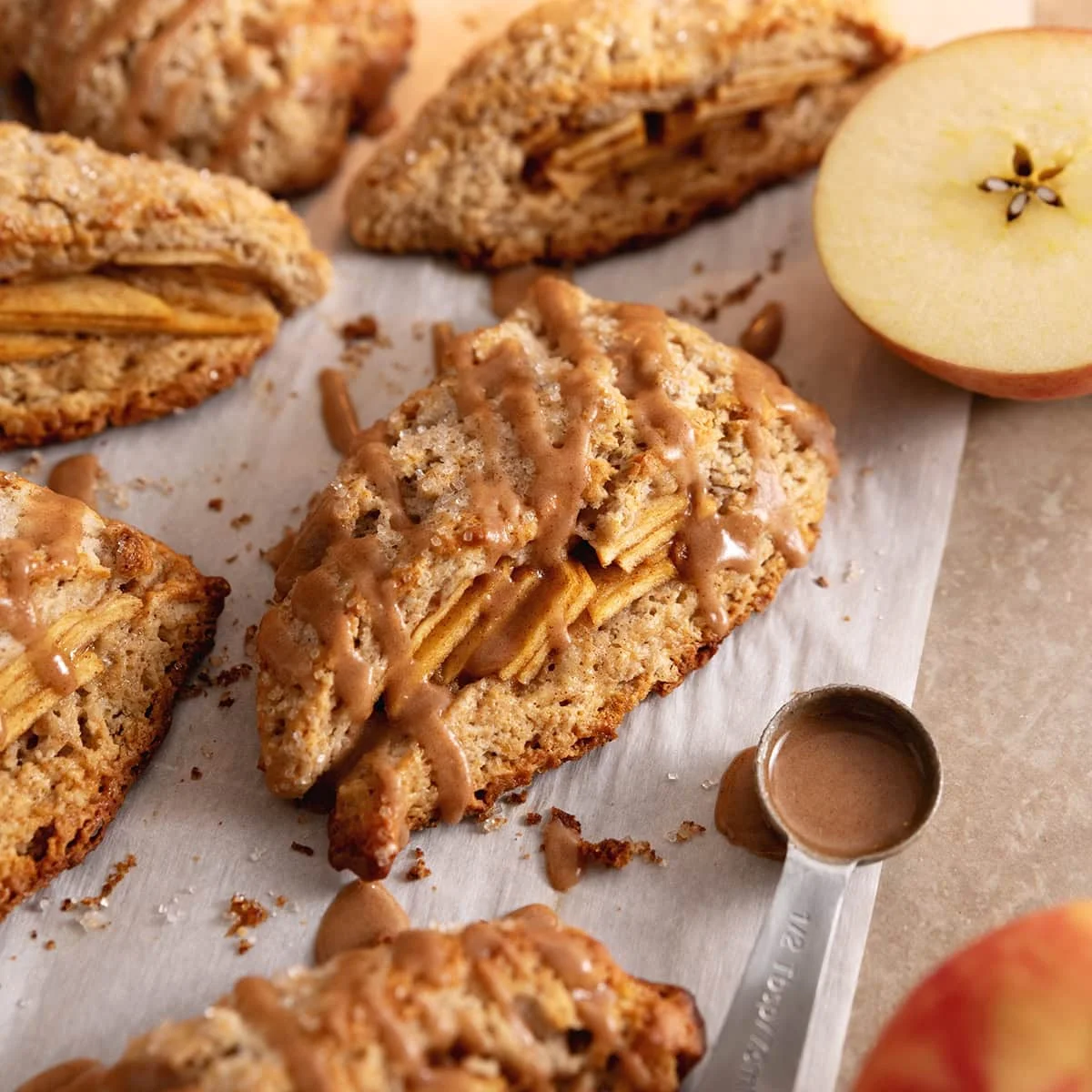
These American-style scones bring together tender cinnamon-macerated apple slices, a soft, buttery crumb and a maple-cinnamon drizzle. Chilling the dough before baking helps the scones hold their shape while their edges turn golden.
Ingredients
- 200 gtart apples, thinly sliced (about 2 small apples)
- 2 tablespoonsbrown sugar
- 1 tablespoonlemon juice
- 1 teaspoonground cinnamon
- 1/4 teaspoonsalt
- 1 largeegg, cold
- 100 gdouble cream, cold
- 1 teaspoonvanilla extract
- 250 gplain flour
- 100 ggranulated sugar
- 1 tablespoonbaking powder
- 1 teaspoonground cinnamon
- 1 teaspoonsalt
- 115 gunsalted butter, cold and cubed
- 1 tablespoondouble cream, for brushing
- 3 tablespoonscoarse sugar, for sprinkling
- 50 gicing sugar
- 1/2 teaspoonground cinnamon
- 2 tablespoonsmaple syrup
Instructions
- 1
Marinate the apples
In a medium bowl, combine the apple slices, brown sugar, lemon juice, 1 teaspoon of cinnamon and 1/4 teaspoon of salt. Toss until coated, cover and refrigerate for about 1 hour, or while you prepare the dough.
- 2
Prepare the tray
Line a baking sheet with baking parchment and set it aside.
- 3
Whisk the wet ingredients
In a small bowl, whisk the cold egg with 100 g of cold double cream and the vanilla extract. Set aside.
- 4
Mix the dry ingredients
In a large bowl, stir together the plain flour, granulated sugar, baking powder, 1 teaspoon of cinnamon and 1 teaspoon of salt.
- 5
Cut in the butter
Add the cold, cubed butter and toss it through the flour mixture. Use a pastry blender or your fingertips to work it in until the pieces are about the size of peas.
- 6
Bring the dough together
Make a well in the centre of the flour mixture. Pour in the egg mixture and combine with your hands or a spatula until a shaggy dough forms.
- 7
Fold the dough
Turn the dough out onto a lightly floured surface and roughly fold it over itself 1–2 times, using your hands or a bench scraper. This helps make layers and bring in any loose flour; do not knead or overwork it.
- 8
Add the apples
Divide the dough in half and press each portion into a round about 1.3 cm thick. Arrange the marinated apple slices in a thick layer in the centre of one round, leaving the edges clear. Set the other round on top and press the edges to seal, then cut the dough into 8 wedges with a knife or bench scraper.
- 9
Chill the wedges
Transfer the wedges to the lined baking sheet, spacing them about 5 cm apart. Refrigerate the tray while you heat the oven to 175°C.
- 10
Brush and sprinkle
Just before baking, brush a thin layer of the remaining 1 tablespoon of double cream over each scone. Sprinkle each with coarse sugar.
- 11
Bake until golden
Bake for 20–22 minutes, until the edges are golden brown. Leave the scones on the baking sheet for about 10 minutes, then transfer them to a wire rack to cool.
- 12
Make the glaze
In a small bowl, stir together the icing sugar, 1/2 teaspoon of cinnamon and maple syrup. If the glaze is too runny, stir in a little more icing sugar; if it is too thick, add a little more maple syrup.
- 13
Drizzle and serve
Use a spoon to drizzle the glaze over the scones before serving.
What are cinnamon apple scones?
Scones are a familiar American bake, often served for breakfast or with coffee, and commonly made as a sweet, wedge-shaped quick bread. This version pairs a buttery, crumbly dough with tart apples seasoned with cinnamon, sugar and lemon.
Apple filling: Chilling the sliced fruit lets it soften and take on the cinnamon flavour. Enclosing it between two rounds of dough distributes the apple through the scones rather than leaving it only on top.
Nutrition and macros by portion
The nutrition label shows one serving as written: 406 calories, 5g protein, 58g carbs, 18g fat.
| Portion | Adjustment | kcal | Protein | Carbs | Fat |
|---|---|---|---|---|---|
| Lighter | Use less glaze | 284 kcal | 4g | 41g | 13g |
| This serving | As written | 406 kcal | 5g | 58g | 18g |
| Hungry | Serve two scones | 609 kcal | 8g | 87g | 27g |
The flour, sugar and apples contribute most of the carbohydrates, while the butter and double cream provide much of the fat. The egg and dairy add some protein, though these scones are not especially protein-rich; serve one with plain yoghurt or an egg for a more balanced plate.
Why keep the ingredients cold?
Cold butter: Small, pea-sized pieces remain dotted through the flour instead of disappearing into it. In the oven, they help create the scones’ tender, crumbly texture.
Cold cream and egg: Keeping the wet ingredients chilled helps the dough stay cool as you bring it together. Work efficiently once they meet the flour mixture.
How to handle the dough
Rough folds: Folding the dough over itself once or twice brings it together and creates layers without the effort of kneading. Stop when the dry patches are incorporated.
Gentle shaping: Press the dough into rounds rather than rolling or stretching it repeatedly. Too much handling can make the finished scones dense.
Getting the apple layer right
Even filling: Arrange the slices in a thick layer in the centre of one round, keeping the rim clear so the two pieces of dough can seal together. Press gently around the edge before cutting the wedges.
Chilling: A stint in the fridge while the oven heats firms the shaped dough. This helps the wedges keep their form as they bake.
How to judge doneness
Colour: Bake at 175°C for 20–22 minutes, watching for golden edges as the main cue. The scones should look set rather than doughy around the sides.
Cooling: Let them rest on the baking sheet for about 10 minutes before moving them to a wire rack. They are delicate while hot, and the short rest makes them easier to transfer.
Finishing and serving
Crisp top: Brushing the tops with double cream helps the coarse sugar adhere and gives the scones a lightly sweet finish. Apply the cream in a thin layer just before baking.
Maple glaze: Drizzle the glaze over the cooled scones so it stays visible on top. Serve with tea or coffee, or alongside plain yoghurt and fresh fruit for a more substantial breakfast.
Recipe notes & tips
- Slice the apples thinly so they fit neatly between the dough rounds.
- Use your fingertips briefly when rubbing in the butter to keep it as cold as possible.
- Flour the work surface lightly; too much extra flour can make the dough dry.
- Keep the edges of the dough rounds clear of apples to help them seal.
- Check the scones at 20 minutes, as oven performance can affect browning.
- Add the glaze after the scones have cooled enough for it to sit on top.
Variations
- Add pecans: Fold a small handful of chopped pecans into the apple filling for crunch.
- Use a different apple: Choose another tart, firm apple that will hold its shape when baked.
- Change the spice: Replace some of the cinnamon with ground ginger for a warmer flavour.
- Skip the glaze: Leave off the maple drizzle for a less sweet finish.
- Add orange: Use a little finely grated orange zest in the dough for a citrus note.
Common mistakes to avoid
- Warm butter: It blends too fully into the flour; start with cold butter and work quickly.
- Overworking the dough: Kneading can make the scones tough; stop as soon as the dough comes together.
- Filling the edges: Apple slices at the rim can prevent a good seal; leave a clear border before topping with the second round.
- Crowding the tray: Scones need space around them; leave about 5 cm between wedges.
- Moving them too soon: Hot scones can break apart; leave them on the baking sheet for about 10 minutes.
- Glazing while hot: The drizzle may run off; let the scones cool before adding it.
How to store
Once cool, keep the scones in an airtight container at room temperature and eat within 2 days. Warm them briefly in a low oven before serving; add any fresh glaze after reheating.
Frequently asked questions
Can I make the dough ahead?
Yes. Shape and cut the scones, then cover and refrigerate the tray until you are ready to bake. Bake them chilled, checking for the same golden-edge cue.
Can I use cooking apples?
Yes, provided they are thinly sliced. Softer apples may break down more during marinating and baking than firm, tart apples.
Why is the dough shaggy?
A rough, uneven dough is expected before the folds. Bring it together gently and avoid adding extra flour unless it is too sticky to handle.
How do I know the scones are baked?
The edges should be golden after 20–22 minutes at 175°C. Allow for some variation between ovens and check near the end of the baking time.
Can I freeze the scones?
Freeze cooled, unglazed scones in a sealed container. Defrost them and warm briefly in a low oven, then drizzle with glaze before serving.
How can I adjust the glaze consistency?
Stir in a little more icing sugar if it is too runny, or a little more maple syrup if it is too thick. Add either gradually until it is easy to drizzle.
Cook it from the original
This recipe comes from teakandthyme.com. Their page has the author’s own photos, notes and tips — the best place to cook it from.
Open the recipe on teakandthyme.com