
Baked Pork Tenderloin
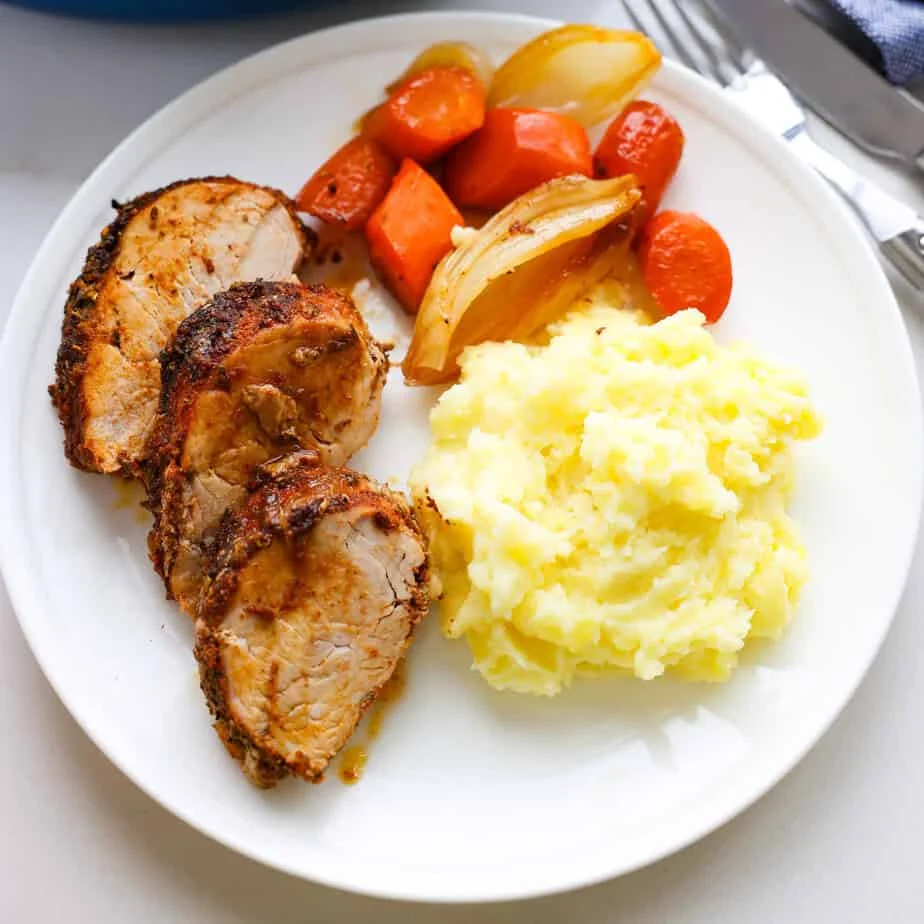
This baked pork tenderloin is coated in a sweet, savoury herb rub and roasted with onions and carrots. It makes a straightforward one-pan centrepiece, with buttery vegetables to serve alongside the sliced pork.
Ingredients
- 680 g (1 1/2 lb)pork tenderloin
- 25 g (2 tablespoons)brown sugar
- 7.5 ml (1 1/2 teaspoons)smoked paprika
- 5 ml (1 teaspoon)onion powder
- 5 ml (1 teaspoon)garlic powder
- 5 ml (1 teaspoon)dried thyme
- 5 ml (1 teaspoon)crushed rosemary
- 5 ml (1 teaspoon)dried marjoram
- 2.5 ml (1/2 teaspoon)salt
- 2.5 ml (1/2 teaspoon)freshly ground black pepper
- 57 g (1/4 cup)butter, cut into thin pats
- 2 mediumyellow onions, quartered
- 3 largecarrots, peeled and chopped
Instructions
- 1
Season the pork
Mix the brown sugar, smoked paprika, onion powder, garlic powder, thyme, rosemary, marjoram, salt and black pepper. Massage the rub over the entire pork tenderloin, then leave it to rest for 30 minutes.
- 2
Heat the oven
Meanwhile, preheat the oven to 200°C (400°F).
- 3
Arrange the pan
Put the pork and vegetables in an oven-safe pan or cast-iron skillet, keeping the vegetables to the sides. Lay the butter pats over the seasoned pork.
- 4
Bake the pork
Bake for 25–30 minutes, or until the pork reaches an internal temperature of 63°C (145°F). Transfer it to a cutting board, cover it and keep it warm.
- 5
Finish and serve
Return the vegetables to the oven for a few minutes, until tender. Slice the pork and serve it with the vegetables.
What is baked pork tenderloin?
Pork tenderloin is a lean, tender cut from along the backbone, and baking it whole keeps preparation simple. This American-style version pairs it with a sweet, smoky dry rub and roasted onions and carrots.
The mix of thyme, rosemary and marjoram gives the seasoning an earthy, herb-led flavour. Butter on top of the pork melts during baking and adds richness to the pan.
Nutrition and macros by portion
The nutrition label shows one serving as written: 381 calories, 37g protein, 18g carbs, 18g fat.
| Portion | Adjustment | kcal | Protein | Carbs | Fat |
|---|---|---|---|---|---|
| Lighter | Less butter, more vegetables | 267 kcal | 26g | 13g | 13g |
| This serving | As written | 381 kcal | 37g | 18g | 18g |
| Hungry | Larger pork portion | 572 kcal | 56g | 27g | 27g |
The pork supplies most of the protein, while the brown sugar and vegetables contribute carbohydrates. Butter is the main source of fat, with a little more coming from the pork. Serve with an extra green vegetable to round out the plate without making the pork portion larger.
Why use this herb rub?
Brown sugar: it brings a little sweetness that complements the smoked paprika and dried herbs. Spread the rub evenly so the flavour is distributed over the tenderloin.
Dried herbs: thyme, rosemary and marjoram provide the savoury backbone. Crushing the rosemary helps break up larger pieces before it is mixed in.
Getting the pork ready
Even coating: massage the seasoning over the whole tenderloin, including its sides. The 30-minute rest gives the rub time to sit on the meat before it goes into the oven.
Butter pats: cut the butter thinly and place it on top of the seasoned pork as directed. Keep the onions and carrots beside the meat so they can roast in the same pan.
How to judge doneness
Temperature: check the thickest part of the tenderloin and take it out when it reaches 63°C (145°F). A meat thermometer gives a clearer doneness cue than relying on the outside colour.
Resting: cover the pork on the cutting board while the vegetables finish cooking. Slice it for serving once the vegetables are tender.
Tender carrots and onions
Cut size: chop the carrots into pieces that are reasonably similar in size so they cook at a similar pace. Quarter the onions as listed, keeping the pieces large enough to hold their shape.
Final check: the vegetables may need a few more minutes after the pork is removed. Return them to the oven until tender rather than leaving the pork in to wait.
What to serve with it
The roasted onions and carrots are built into the dish, so serve them alongside the sliced pork. Their savoury, sweet flavour works well with the smoky herb seasoning.
For a fuller plate, add a simple green vegetable or a modest portion of potatoes. Keep any extra side seasoning restrained so it does not compete with the rub.
Recipe notes & tips
- Mix the dry rub thoroughly before applying it so the sugar and herbs are evenly distributed.
- Use a roasting pan or cast-iron skillet that gives the vegetables room around the pork.
- Check the temperature in the thickest part of the tenderloin.
- Keep the pork covered while the vegetables finish in the oven.
- Slice the tenderloin across the grain for serving.
Variations
- Herb balance: adjust the relative amounts of thyme, rosemary and marjoram while keeping the listed total seasoning quantities.
- More paprika: use a little extra smoked paprika and reduce another dry seasoning to keep the rub balanced.
- Root vegetables: replace some of the carrots with another chopped root vegetable, allowing for differences in cooking time.
- Onion mix: use a mixture of yellow and red onions in place of the yellow onions.
- Milder flavour: use ordinary paprika instead of smoked paprika for a less smoky rub.
Common mistakes to avoid
- Uneven seasoning: massage the rub over the sides as well as the top so the whole tenderloin is coated.
- Skipping the rest: leave the seasoned pork for the full 30 minutes before baking.
- Guessing doneness: check the centre with a thermometer and remove the pork at 63°C (145°F).
- Overcooking the pork: take it out when it reaches the stated temperature and keep it covered while the vegetables finish.
- Serving firm vegetables: return them to the oven for a few minutes until tender.
How to store
Refrigerate leftover pork and vegetables in a covered container within 2 hours of cooking and use within 3–4 days. Reheat until steaming hot, using a little water or cooking liquid to help keep the pork moist.
Frequently asked questions
Can I prepare the rub ahead of time?
Yes. Mix the dry rub ahead and keep it in a sealed container; massage it onto the pork before the 30-minute rest.
How do I know when the tenderloin is done?
Check the thickest part with a meat thermometer. The recipe calls for an internal temperature of 63°C (145°F).
Can I use a baking dish instead of a skillet?
Yes, use an oven-safe baking dish with room to arrange the pork and vegetables around it.
Why do the vegetables go back in the oven?
The pork may reach its target temperature before the vegetables are tender. Removing and covering the pork lets the vegetables finish without keeping the meat in the oven.
Can I leave out the butter?
The butter adds richness as it melts over the pork. You can omit it, though the finished dish will be less buttery.
Cook it from the original
This recipe comes from smalltownwoman.com. Their page has the author’s own photos, notes and tips — the best place to cook it from.
Open the recipe on smalltownwoman.com