
Cottage Cheese Protein Pancakes
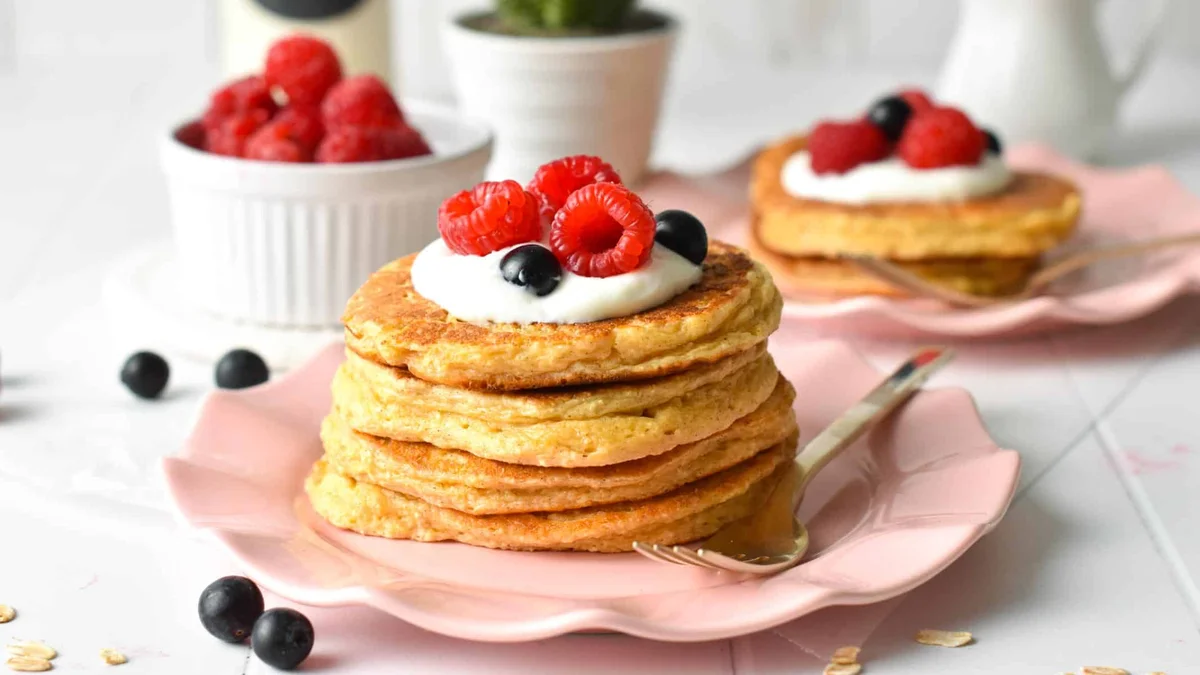
These American-style cottage cheese pancakes blend oats, eggs and vanilla protein powder into a thick batter, with crisp edges and a soft centre. They make a quick, filling breakfast and are easy to serve with fruit or syrup.
Ingredients
- 225 g (1 cup)low-fat cottage cheese
- 2 largeeggs
- 90 g (1 cup)old-fashioned rolled oats
- 1.25 ml (¼ teaspoon)cinnamon
- 10 ml (2 teaspoons)baking powder
- 30 ml (2 tablespoons), loosely filled and levelledvanilla protein powder
- 15–30 ml (1–2 tablespoons), to tastegranulated sweetener, such as allulose or erythritol
- 15–30 ml (1–2 tablespoons)almond milk
- As neededavocado oil, for the griddle
Instructions
- 1
Add the ingredients
Put the cottage cheese, eggs, oats, cinnamon, baking powder, vanilla protein powder and sweetener into a high-speed blender.
- 2
Blend the batter
Blend at medium-high speed, using the blender's tamper to push the batter towards the blade. If needed, stop and scrape down the sides of the jug with a silicone spatula so everything combines.
- 3
Check the texture
Blend until the batter is thick and combined; it should look moist and a little grainy, not dry. If it is dry, blend in an extra egg white or 15–30 ml (1–2 tablespoons) almond milk, though this should not usually be necessary.
- 4
Heat the griddle
Warm a pancake griddle over medium-high heat with avocado oil.
- 5
Shape the pancakes
Scoop 80 ml (⅓ cup) of batter for each pancake, keeping it in a thick mound rather than letting it spread. Oil your fingers or dampen them lightly with water, then press the batter into a flatter shape.
- 6
Cook the first side
Cook for 1–2 minutes, until the edges look dry and the pancake is easy to turn.
- 7
Flip and finish
Flip and cook for 2–3 minutes, until the centre is set rather than wet. The pancakes will puff as they cook and deflate as they are served; this is normal.
- 8
Serve the pancakes
Serve with maple syrup or sugar-free pancake syrup, berries and a dollop of Greek yoghurt, if desired.
- 9
Store leftovers
Keep the pancakes in an airtight container or zip-lock bag in the fridge for up to 3 days, or freeze for up to 1 month. If frozen, thaw in the fridge the day before serving.
What are cottage cheese pancakes?
American pancakes are griddle-cooked cakes, usually made from a pourable batter. This version blends cottage cheese, eggs and oats into a thicker mixture, with vanilla protein powder adding flavour and protein.
Cottage cheese pancakes are a contemporary variation rather than a traditional regional style. Here, the oats give the batter body, while the cottage cheese and eggs help keep the middle soft.
Nutrition and macros by portion
The nutrition label shows one serving as written: 363 calories, 32g protein, 40g carbs, 9g fat.
| Portion | Adjustment | kcal | Protein | Carbs | Fat |
|---|---|---|---|---|---|
| Lighter | Use less syrup | 254 kcal | 23g | 28g | 6g |
| This serving | As written | 363 kcal | 32g | 40g | 9g |
| Hungry | Add Greek yoghurt | 545 kcal | 48g | 59g | 13g |
The oats and sweetener provide most of the carbohydrate, while the eggs, cottage cheese and protein powder contribute much of the protein. Fat comes mainly from the eggs, cottage cheese and oil used on the griddle; pair a serving with berries for a fresh side, or add Greek yoghurt for extra protein.
Choosing the ingredients
Cottage cheese: Low-fat cottage cheese is the base of the batter and blends with the eggs to make it moist. A high-speed blender helps smooth out the curds.
Protein powder: Use vanilla-flavoured powder and measure it loosely, then level it rather than packing it into the spoon. Different powders absorb liquid differently, so check the batter before cooking.
Oats: Old-fashioned rolled oats are blended directly into the mixture. They thicken it and give the pancakes more structure than a thin, pourable batter.
Getting the batter right
Blending: Use the tamper to move the mixture towards the blades, and pause to scrape down the jug if ingredients stick to its sides. Blend until everything is combined, but expect the batter to retain a slightly grainy look.
Adjusting: The batter should be thick and moist. If it seems dry, add an extra egg white or a little almond milk and blend again; avoid adding liquid automatically if the texture is already right.
Shaping and flipping
Thick portions: Each pancake starts with 80 ml (⅓ cup) of batter, which holds its shape instead of spreading on its own. Press it flatter with lightly oiled or damp fingers for more even cooking.
Easy release: Wait until the edges look dry and the pancake is easy to lift before turning it. If it resists, give it a little more time rather than forcing the flip.
Cooking for a soft centre
First side: Cook for 1–2 minutes over medium-high heat, watching for dry-looking edges as the cue to turn. The exact time can vary with the griddle and the thickness of the pancakes.
Second side: Allow another 2–3 minutes, checking that the centre is set and no longer wet. The pancakes may puff while hot and settle as they cool; that change is expected.
How to serve them
Sweet toppings: Maple syrup or sugar-free pancake syrup both suit the vanilla flavour. Berries add a fresh, fruity contrast.
Extra protein: A dollop of Greek yoghurt is suggested alongside the pancakes. Serve the toppings at the table so everyone can choose how much to add.
Making the batter work for you
Sweetness: The recipe gives a range of 15–30 ml (1–2 tablespoons) of granulated sweetener. Start with the smaller amount if your protein powder is already sweet, then adjust to taste.
Griddle: Use enough avocado oil to coat the cooking surface. If making several pancakes, leave room to press and turn each one without crowding the griddle.
Recipe notes & tips
- Measure the protein powder loosely and level it rather than packing it into the spoon.
- Scrape down the blender jug if the batter sticks to the sides.
- Check that the batter is moist before adding any extra almond milk.
- Press the thick batter flatter with lightly oiled or damp fingers.
- Wait for dry-looking edges before flipping the pancakes.
- Expect the pancakes to puff during cooking and settle when served.
Variations
- Berry topping: Serve with fresh berries for a fruity contrast.
- Yoghurt topping: Add a dollop of Greek yoghurt as suggested in the recipe.
- Sugar-free finish: Choose sugar-free pancake syrup instead of maple syrup.
- Sweeter batter: Use up to 30 ml (2 tablespoons) of granulated sweetener, adjusting to taste.
- Dairy-free milk: Use almond milk as listed to loosen the batter if needed.
Common mistakes to avoid
- Dry batter: Check the texture before changing it, then blend in an extra egg white or 15–30 ml almond milk if needed.
- Packed protein powder: Spoon it loosely and level it so the measured amount is not compressed.
- Batter left on the jug: Stop the blender and scrape down the sides to bring the ingredients together.
- Flipping too soon: Wait until the edges look dry and the pancake lifts easily.
- Expecting them to stay puffed: The pancakes naturally deflate as they are served.
How to store
Store in an airtight container or zip-lock bag in the fridge for up to 3 days, or freeze for up to 1 month. Thaw frozen pancakes in the fridge the day before serving.
Frequently asked questions
How do I know when to flip a pancake?
Cook the first side for 1–2 minutes and look for edges that appear dry. It should also be easy to lift before you turn it.
Should the batter be completely smooth?
No. It should be thick, moist and well combined, but a slightly grainy look is expected.
What can I do if the batter looks dry?
Blend in an extra egg white or 15–30 ml (1–2 tablespoons) of almond milk. Add it only if the mixture genuinely seems dry.
Why do the pancakes deflate?
They puff while they are warm and settle as they are served. The recipe notes that this is normal.
Can I freeze these pancakes?
Yes. Freeze them for up to 1 month, then thaw in the fridge the day before serving.
What should I serve with them?
The suggested accompaniments are maple syrup or sugar-free pancake syrup, berries and a dollop of Greek yoghurt.
Cook it from the original
This recipe comes from sweetashoney.co. Their page has the author’s own photos, notes and tips — the best place to cook it from.
Open the recipe on sweetashoney.co