
Mango Pudding (Hong Kong Style)
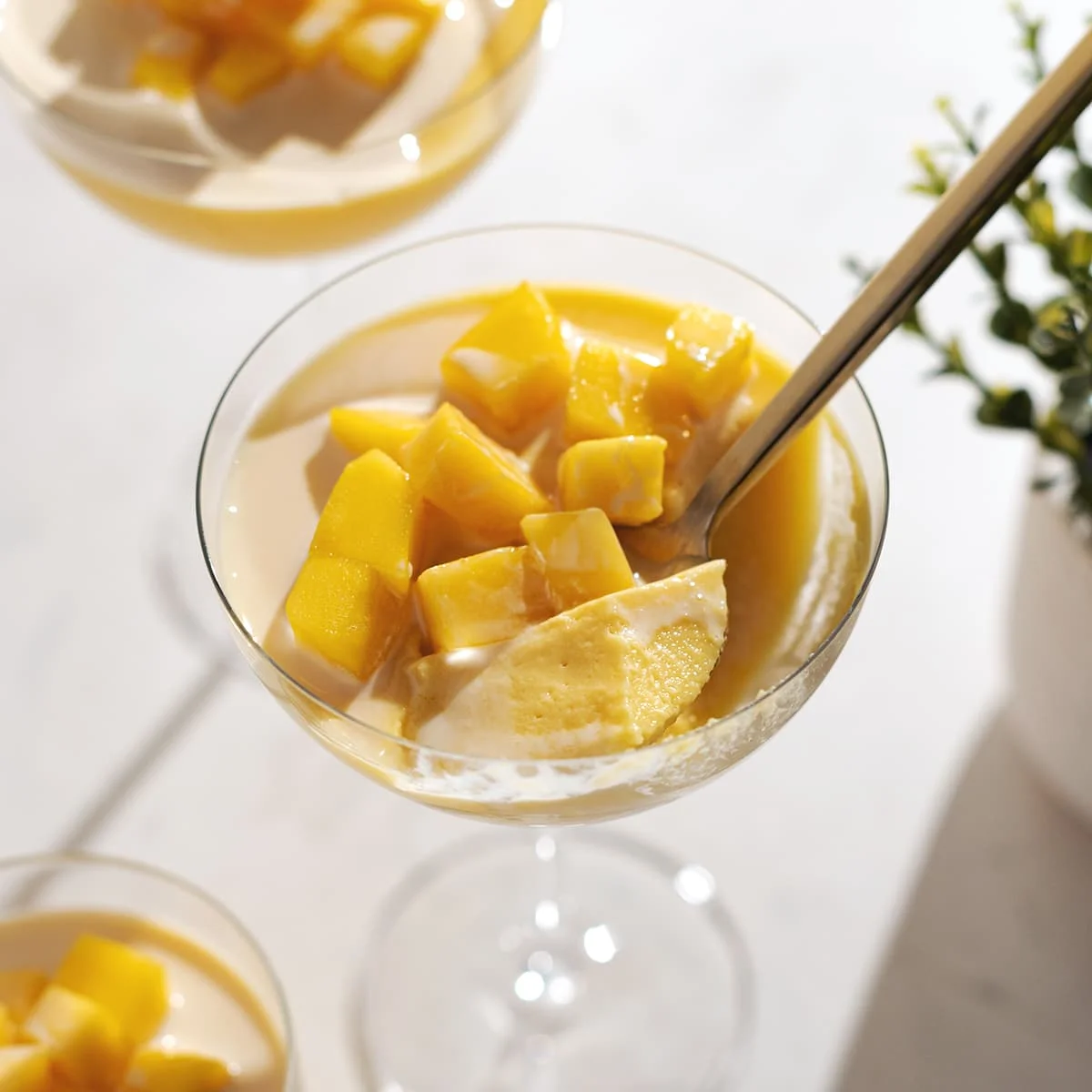
Hong Kong-style mango pudding is a chilled, creamy dessert often served at dim sum or yum cha. Ripe mango, evaporated milk and gelatine make a smooth pudding that can be prepared ahead and served cold.
Ingredients
- 100 gcold water
- 2 tablespoonsgelatine powder
- 450 gfresh, ripe mangoes, peeled and cut into pieces (about 2 large mangoes)
- 350 g, plus extra for servingevaporated milk
- 100 ggranulated sugar
Instructions
- 1
Bloom the gelatine
Pour the cold water into a small bowl and sprinkle the gelatine over it. Leave for 5 minutes, until it has absorbed the water and formed a gel.
- 2
Blend the mango
Blend the mango pieces until smooth. If the fruit is fibrous or stringy, pass the purée through a fine-mesh sieve.
- 3
Mix the base
Pour the mango purée into a small pot. Add the evaporated milk and granulated sugar, then stir to combine.
- 4
Add the gelatine
Add the bloomed gelatine to the mango mixture and place the pot on the hob.
- 5
Warm gently
Heat over a low-to-medium heat, stirring occasionally, until the gelatine has completely dissolved. Do not let the mixture boil; warm it only enough to dissolve the gelatine.
- 6
Cool and portion
Take the pot off the heat and leave the mixture to cool slightly. Pour it into serving cups or bowls.
- 7
Chill until set
Refrigerate the cups for at least 4 hours or overnight, until set. Serve with extra mango chunks and evaporated milk.
What is Hong Kong-style mango pudding?
This is a chilled mango dessert commonly associated with dim sum and yum cha menus. It brings together fruit purée, milk and gelatine for a soft, spoonable set.
This home version keeps the ingredients simple: ripe fresh mango supplies the fruit flavour, while evaporated milk gives the pudding a creamy finish.
Nutrition and macros by portion
The nutrition label shows one serving as written: 294 calories, 10g protein, 51g carbs, 7g fat.
| Portion | Adjustment | kcal | Protein | Carbs | Fat |
|---|---|---|---|---|---|
| Lighter | Use less added sugar | 206 kcal | 7g | 36g | 5g |
| This serving | As written | 294 kcal | 10g | 51g | 7g |
| Hungry | Serve with extra mango | 441 kcal | 15g | 77g | 11g |
The mango and sugar provide most of the carbohydrates, while evaporated milk contributes both fat and protein; the gelatine also adds protein. Pair a serving with a meal that includes vegetables and a savoury protein source if you want a more balanced overall plate.
Choosing the mangoes
Ripeness: Choose fragrant mangoes that yield slightly when pressed, as they bring sweetness and a full fruit flavour to the pudding.
Fibre: Blend the fruit until smooth. If the purée still looks stringy, strain it through a fine-mesh sieve before mixing it with the milk.
Getting the gelatine right
Blooming: Sprinkle the powder evenly over cold water and let it stand for 5 minutes. This gives it time to hydrate before it goes into the warm mixture.
Dissolving: Stir the bloomed gelatine into the mango base and warm it gently. Boiling is unnecessary and can interfere with the pudding setting properly.
Look for a smooth mixture
Before chilling: The gelatine should be fully dissolved, with no visible grains or lumps in the mango mixture. Stir as it warms so the sugar dissolves and the ingredients combine evenly.
After chilling: Give the pudding at least 4 hours in the fridge, or leave it overnight. It should be set enough to hold its shape in the cup while remaining soft enough to eat with a spoon.
Plan the chilling time
Cooling: Let the mixture cool slightly off the heat before portioning it into cups or bowls. This makes it easier to handle and serve in individual portions.
Setting: The fridge does the final work, so allow at least 4 hours for the pudding to firm up. Making it the night before is a convenient option.
Serving ideas
Topping: Add extra mango chunks and a little evaporated milk just before serving, as suggested in the method. Keep the portions chilled until they reach the table.
Alongside: Serve after a savoury dim sum or yum cha meal, or offer it as a light, cool finish to another Chinese-inspired dinner.
Recipe notes & tips
- Use ripe mangoes for the fullest fruit flavour.
- Strain the purée if your mangoes are noticeably fibrous.
- Let the gelatine bloom for the full 5 minutes before adding it.
- Keep the hob heat low to medium and stir as the gelatine dissolves.
- Cool the mixture slightly before pouring it into serving cups.
- Chill overnight if you want to prepare dessert well ahead.
Variations
- Coconut finish: Replace the evaporated milk with coconut milk for a different creamy flavour.
- Citrus note: Add a little lime zest to the mango purée for a fresh, tangy accent.
- Layered cups: Pour the mixture over small pieces of mango in each serving cup.
- Mixed fruit: Serve with a few pieces of fresh pineapple alongside the mango topping.
- Less sweet: Reduce the sugar to suit the sweetness of your ripe mangoes.
Common mistakes to avoid
- Skipping the bloom: Gelatine may dissolve unevenly; let it stand in the cold water for 5 minutes first.
- Boiling the mixture: Excess heat can stop the pudding setting as intended; warm it gently instead.
- Leaving fibrous purée unstrained: Stringy texture can carry through to the finished pudding; sieve the purée if needed.
- Rushing the chill: The pudding may remain loose; refrigerate for at least 4 hours.
- Pouring it while very hot: The mixture is harder to portion neatly; let it cool slightly off the heat first.
How to store
Cover the cups and keep them refrigerated, ideally for up to 3 days. This pudding is served cold, so there is no need to reheat it; add the extra milk and mango just before serving.
Frequently asked questions
Can I make the pudding the day before?
Yes. Chill it overnight, covered, and add the extra evaporated milk and mango when you serve it.
Why has my pudding not set?
It may need more chilling time, or the gelatine may not have dissolved fully. Leave it in the fridge overnight; if it is still loose, check that the gelatine was measured and bloomed as directed next time.
Can I use frozen mango?
Yes, thaw it fully and drain away excess liquid before blending. The flavour and sweetness can vary, so taste the purée before mixing.
Do I have to strain the mango purée?
Only if it is stringy or fibrous. Smooth mangoes can be used straight from the blender.
Can I use fresh milk instead of evaporated milk?
Evaporated milk gives this version its creamy texture and flavour. Fresh milk can make the result less rich, so the finished pudding will be different.
How should I serve the pudding?
Serve it chilled in its cup or bowl, topped with extra mango chunks and a little evaporated milk.
Cook it from the original
This recipe comes from teakandthyme.com. Their page has the author’s own photos, notes and tips — the best place to cook it from.
Open the recipe on teakandthyme.com