
Chicken Bone Broth
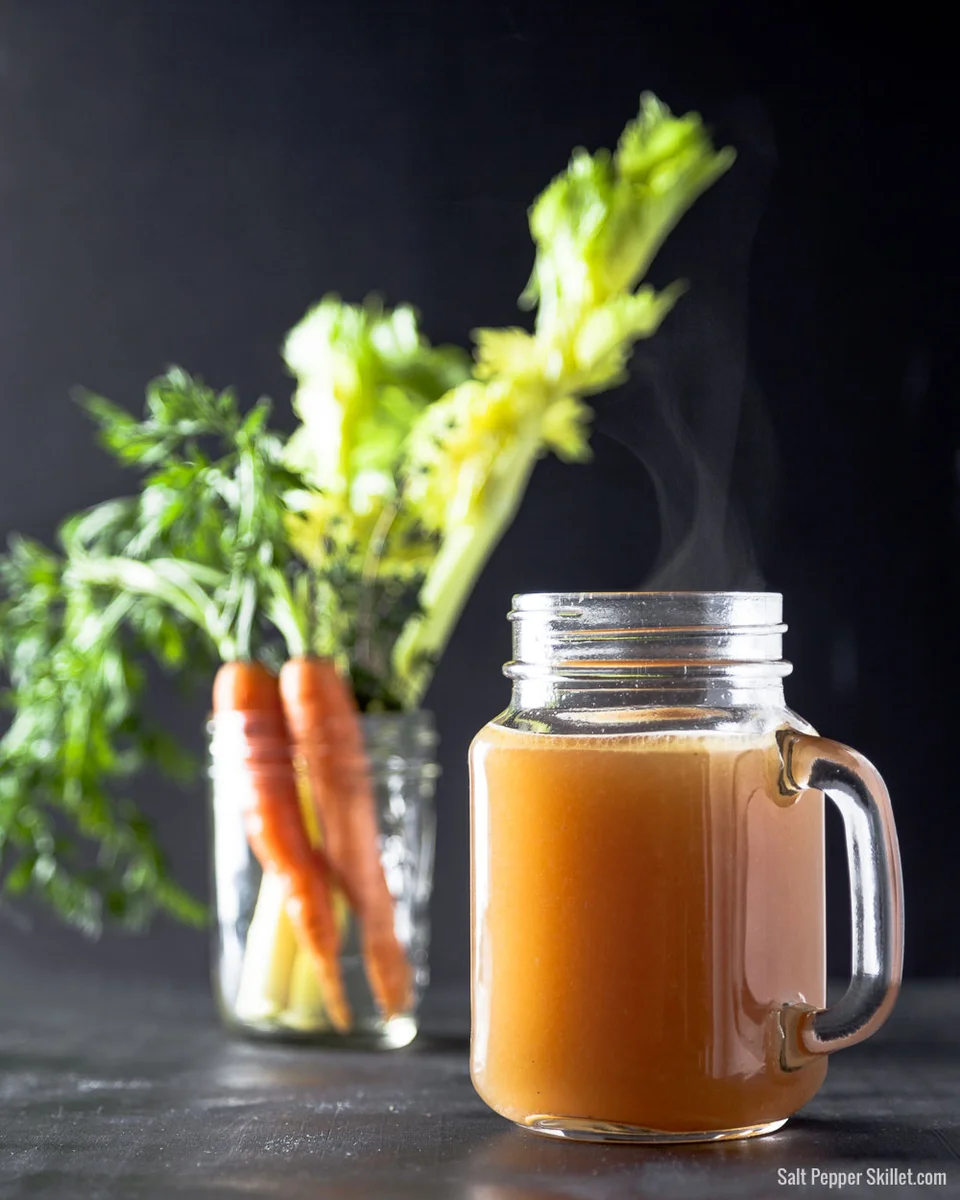
Chicken bone broth is a slowly simmered stock made from roasted chicken bones, vegetables and herbs. Roasting first gives it a deeper flavour, and the finished broth works for sipping or cooking.
Ingredients
- 1chicken carcass, roughly chopped (a rotisserie chicken carcass can be used)
- 227 g (½ pound), about 10chicken feet
- 2onions, quartered
- 4 stalkscelery, roughly chopped
- 1 headgarlic, cut in half crosswise
- 60 ml (¼ cup)apple cider vinegar
- 3bay leaves
- 12peppercorns
- 8 sprigsfresh thyme
- 1 bunchparsley
Instructions
- 1
Heat the oven
Preheat the oven to 230°C (450°F).
- 2
Roast the chicken
Line a baking sheet with foil, arrange the chicken carcass and feet on it, and roast for 25 minutes.
- 3
Roast the vegetables
Add the onion, celery and garlic to the baking sheet. Roast for a further 25 minutes, until browned.
- 4
Simmer the broth
Transfer the roasted ingredients to a stockpot with the apple cider vinegar, peppercorns, bay leaves and thyme. Cover with cold water and bring to the boil, then reduce the heat to a low simmer for up to 8 hours. Periodically skim foam and fat from the surface as it cooks.
- 5
Strain and chill
Strain the broth into a bowl and add 2 cups (about 475 ml) of ice cubes to cool it quickly. Set the bowl inside a larger bowl of ice and leave until cool before refrigerating overnight. Scrape off and discard the fat that has collected on top.
- 6
Reheat or store
Reheat the broth to serve, keep it chilled, or freeze it for later use.
What is chicken bone broth?
Bone broth is a long-simmered stock made by extracting flavour from bones and connective tissue. It is often associated with American home cooking, where stocks like this are used as a base for soups, sauces and other dishes.
Roasting the chicken and vegetables before simmering gives this version a more savoury, rounded flavour. Chicken feet add gelatin to the broth, while the overnight chill makes it easier to remove the settled fat.
Nutrition and macros by portion
The nutrition label shows one serving as written: 90 calories, 11g protein, 5g carbs, 4g fat.
| Portion | Adjustment | kcal | Protein | Carbs | Fat |
|---|---|---|---|---|---|
| Lighter | Skim fat thoroughly | 63 kcal | 8g | 4g | 3g |
| This serving | As written | 90 kcal | 11g | 5g | 4g |
| Hungry | Serve with bread | 135 kcal | 17g | 8g | 6g |
The chicken contributes most of the protein and some fat, while the onion, celery and garlic provide a small amount of carbohydrate. The recipe contains no added salt, and the final fat content depends on the carcass and how thoroughly the surface fat is removed. For a more filling meal, serve the broth with vegetables and a source of carbohydrate such as bread or rice.
Why roast the ingredients first?
Chicken: roasting the carcass and feet for 25 minutes starts browning that deepens the stock’s flavour.
Vegetables: adding the onion, celery and garlic for the second 25 minutes lets them brown without having to roast for the full 50 minutes.
What the vinegar does
Vinegar: the apple cider vinegar adds acidity to the pot and balances the savoury ingredients. Measure it as listed, then cover everything with cold water.
Keep the simmer gentle
Heat: once the pot comes to the boil, lower it to a low simmer for up to 8 hours. A gentle simmer helps keep the broth from becoming cloudy and makes it easier to manage.
Surface: skim away foam and fat periodically as directed. Avoid letting the pot boil vigorously during the long cooking time.
Chilling and removing the fat
Cooling: adding ice cubes and setting the bowl in a larger bowl of ice helps cool the strained broth before it goes into the refrigerator. Let it cool before refrigerating overnight.
Finishing: once chilled, the fat forms a layer on top that can be scraped off and discarded. The broth may set to a jelly-like consistency when cold because of the chicken feet.
Ways to use the broth
Drinking: reheat a portion and serve it plain as a warm drink. Taste it before serving, since no salt is specified in the recipe.
Cooking: use the broth in place of stock in soups, stews, grains or sauces. It is also useful to freeze in smaller portions for recipes that call for just a little.
Recipe notes & tips
- Use a stockpot large enough to cover the roasted ingredients with cold water.
- Keep the heat low after bringing the pot to the boil.
- Skim the surface periodically during the simmer rather than waiting until the end.
- Cool the broth before placing it in the refrigerator, as described in the method.
- Label frozen portions with the date so you can use the oldest ones first.
Variations
- Herb change: swap the thyme for another herb if you want a different savoury note.
- Peppery broth: adjust the peppercorns to suit your taste.
- More savoury depth: roast the carcass and vegetables until well browned, without letting them burn.
- Soup base: add the finished broth to a soup with vegetables and cooked grains.
- Single portions: freeze the strained broth in small containers for convenient use.
Common mistakes to avoid
- Skipping the roast: the broth will miss the deeper flavour from browned chicken and vegetables; roast them for the stated times.
- Boiling hard: a vigorous boil can make the broth cloudy; lower the heat to a gentle simmer after it comes to the boil.
- Forgetting to skim: foam and fat remain in the pot; skim the surface periodically during cooking.
- Refrigerating while hot: the method calls for cooling the bowl first; use the ice bath and wait until the broth is cool.
- Leaving the chilled fat in place: scrape off the solid layer after the overnight chill if you want to remove it.
How to store
Refrigerate the cooled broth overnight before removing the fat, then keep it chilled and use within 3–4 days. Freeze portions for longer storage; thaw in the refrigerator and reheat until steaming hot.
Frequently asked questions
Can I use a rotisserie chicken carcass?
Yes. The recipe specifically allows a rotisserie chicken carcass, roughly chopped before roasting.
How long should the broth simmer?
Simmer it on low heat for up to 8 hours, skimming foam and fat periodically.
Can I skip the chicken feet?
You can, but the finished broth may be less gelatinous. The recipe includes about 10 chicken feet.
Why is the broth jelly-like after chilling?
Chicken feet contain connective tissue that can give the broth a gelled texture when cold. It will loosen again when reheated.
When should I remove the fat?
Chill the broth overnight, then scrape the fat layer from the top and discard it.
What can I use the broth for?
Reheat and drink it, or use it in soups, sauces and other dishes that call for stock.
Cook it from the original
This recipe comes from saltpepperskillet.com. Their page has the author’s own photos, notes and tips — the best place to cook it from.
Open the recipe on saltpepperskillet.com