
Spicy Szechuan Chicken Stir-Fry
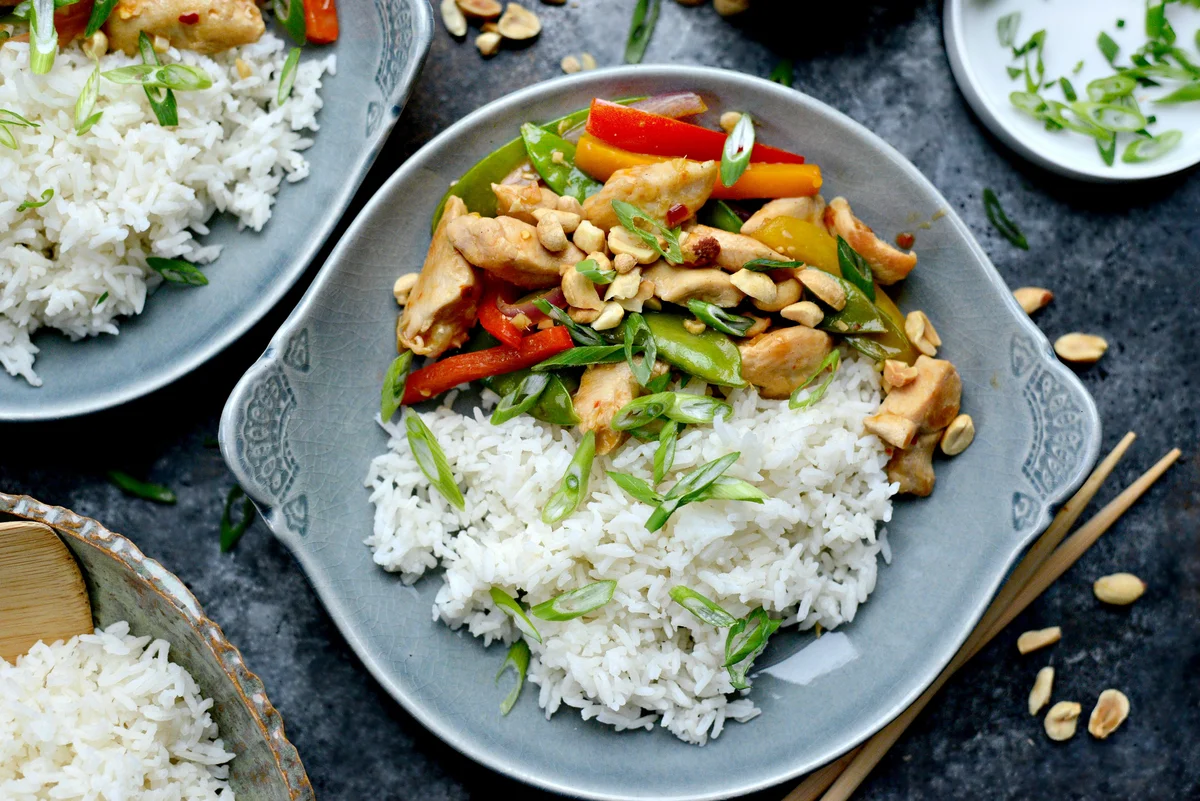
This Szechuan-style chicken stir-fry combines tender chicken, crisp vegetables and a spicy, savoury sauce, served over rice. It is a good choice when you want a colourful meal that cooks quickly in a wok.
Ingredients
- 25 ml (5 teaspoons), dividedtoasted sesame oil
- 160 ml (2/3 cup)low-sodium chicken broth
- 30 ml (2 tablespoons)low-sodium tamari or low-sodium soy sauce
- 15 ml (1 tablespoon)rice vinegar
- 10 ml (2 teaspoons)chilli paste, such as sambal oelek
- 2 pincheskosher salt
- 2 pinchesground white pepper
- 680 g (1 1/2 pounds), cut into bite-sized piecesboneless, skinless chicken breasts
- 2 heaped tablespoons (or a 5 cm/2-inch piece)fresh ginger, peeled and finely minced
- 15 ml (1 tablespoon), about 4 clovesfresh garlic, pressed or minced
- 1/2red pepper, sliced into strips
- 1/2orange pepper, sliced into strips
- 1/2yellow pepper, sliced into strips
- 150 g (1/3 pound, or about 1 cup), cleaned and trimmedmangetout
- 1/2 medium, sliced verticallyred onion
- 8 g (1 tablespoon), plus 15 ml (1 tablespoon) cool watercornflour
- 600 g (3 cups), cookedlong-grain white or brown rice, for serving
- 60 ml (1/4 cup), slicedspring onions, for garnish
- 35 g (1/4 cup), roughly choppedlightly salted peanuts, for garnish
Instructions
- 1
Mix the sauce
In a small bowl or measuring jug, whisk together 10 ml (2 teaspoons) of the sesame oil, the chicken broth, tamari, rice vinegar and chilli paste.
- 2
Heat the wok
Set a wok over medium-high heat. Add 15 ml (1 tablespoon) of sesame oil and swirl it around to coat the surface.
- 3
Cook the chicken
Season the chicken with a few pinches of salt and white pepper. Cook it in two batches, placing half in a single layer and stir-frying for 2–3 minutes, until golden and fully cooked. Transfer it to a clean plate, then repeat with the remaining chicken.
- 4
Stir-fry vegetables
Add the ginger and garlic and cook for 1 minute. Add the peppers, mangetout and onion, then stir-fry for 2–3 minutes, until the vegetables glisten. Return the chicken to the wok and toss it with the vegetables.
- 5
Thicken the sauce
Pour in the broth mixture and bring it to a boil. Quickly stir the cornflour with the cool water, add it to the wok and cook for 1–2 minutes, until the sauce thickens.
- 6
Serve with rice
Serve the stir-fry over cooked rice and garnish with spring onions and chopped peanuts.
What is Szechuan chicken stir-fry?
Szechuan chicken is a stir-fried dish inspired by the bold, chilli-forward flavours associated with Sichuan cooking in China. This version pairs chicken with a mix of colourful vegetables and a quick sauce made with tamari, vinegar and chilli paste.
The method works by cooking the chicken in batches before adding it back to the wok, helping the meat brown rather than crowding and steaming. A cornflour slurry thickens the sauce so it clings to the chicken and vegetables.
Nutrition and macros by portion
The nutrition label shows one serving as written: 339 calories, 30g protein, 31g carbs, 10g fat.
| Portion | Adjustment | kcal | Protein | Carbs | Fat |
|---|---|---|---|---|---|
| Lighter | Use fewer peanuts | 237 kcal | 21g | 22g | 7g |
| This serving | As written | 339 kcal | 30g | 31g | 10g |
| Hungry | Add more cooked rice | 509 kcal | 45g | 47g | 15g |
The rice and vegetables provide most of the carbohydrates, while the chicken is the main source of protein. Sesame oil and peanuts contribute much of the fat; serve with plenty of vegetables alongside if you want a more balanced plate.
Build a balanced sauce
Sauce base: chicken broth keeps the mixture pourable, while tamari brings savoury depth and rice vinegar adds a sharp note.
Chilli: sambal oelek gives the sauce its heat. Its strength varies, so use a milder or smaller amount if you prefer less spice.
Choose and prep the vegetables
Pepper and onion: slicing them into strips helps them cook quickly while retaining some bite. Cut the pieces to a similar size for more even cooking.
Mangetout: trim the ends before cooking, then add the pods with the other vegetables. The short cooking time keeps them bright and crisp-tender.
Get the wok temperature right
Hot pan: give the wok time to heat over medium-high before adding oil and chicken. The chicken should sizzle as it hits the surface.
Small batches: cook half the chicken at a time, as directed. Crowding the pan can release moisture and make it harder for the pieces to turn golden.
Check doneness and texture
Chicken: stir-fry each batch for 2–3 minutes, until golden and fully cooked through. The exact time depends on the size of the pieces, so check the thickest pieces before proceeding.
Vegetables: cook them for 2–3 minutes, until they glisten; they should still have some bite. Once the slurry goes in, cook for 1–2 minutes, until the sauce thickens.
Serve it while hot
Rice: spoon the stir-fry over cooked long-grain white or brown rice so it can catch the sauce. Keep the rice ready before finishing the wok, as the final steps move quickly.
Garnish: spring onions add a fresh finish, while chopped peanuts contribute crunch. Add them just before serving.
Recipe notes & tips
- Cut the chicken into similarly sized pieces so they cook at roughly the same rate.
- Prepare and measure the sauce ingredients before heating the wok.
- Keep the cooked chicken on a clean plate while you stir-fry the next batch.
- Stir the cornflour slurry again just before adding it, as it can settle.
- Have the cooked rice ready before you start the final sauce step.
Variations
- Adjust the heat: use less chilli paste for a gentler sauce or add more to taste.
- Swap the protein: use boneless chicken thighs instead of chicken breasts and cook until fully done.
- Change the vegetables: replace the peppers with an equal amount of another quick-cooking vegetable.
- Choose the rice: serve with cooked brown rice instead of white rice.
- Skip the peanuts: leave them out for a nut-free garnish, or add extra spring onions.
Common mistakes to avoid
- Crowded wok: the chicken can steam instead of browning; cook it in the two batches specified.
- Uneven pieces: some chicken may cook faster than the rest; cut it into similar-sized bites.
- Overcooked vegetables: they can lose their crisp texture; stop after 2–3 minutes when they glisten.
- Lumpy cornflour: it may not thicken evenly; mix it thoroughly with cool water before adding.
- Sauce added too early: the chicken and vegetables can overcook while it reduces; add the sauce after stir-frying them.
How to store
Refrigerate leftovers in an airtight container for up to 3 days. Reheat until piping hot in a pan or microwave, adding a small splash of water if the sauce has thickened too much; store rice separately if possible.
Frequently asked questions
Can I use ordinary soy sauce instead of tamari?
Yes. The recipe allows low-sodium soy sauce as an alternative to low-sodium tamari.
Can I make the stir-fry less spicy?
Yes. Reduce the chilli paste or leave some out, then taste the sauce and adjust to suit your preference.
How do I know the chicken is cooked?
The recipe calls for the pieces to be golden and fully cooked after 2–3 minutes per batch. Check that the thickest pieces are cooked through before removing them from the wok.
Can I prepare any of this ahead?
You can cut the chicken and vegetables and mix the sauce ingredients in advance. Keep them refrigerated until you are ready to cook.
What can I serve instead of rice?
The recipe serves the stir-fry over long-grain white or brown rice. You can choose either type, depending on what you have ready.
Cook it from the original
This recipe comes from simplyscratch.com. Their page has the author’s own photos, notes and tips — the best place to cook it from.
Open the recipe on simplyscratch.com