
Seared Scallops
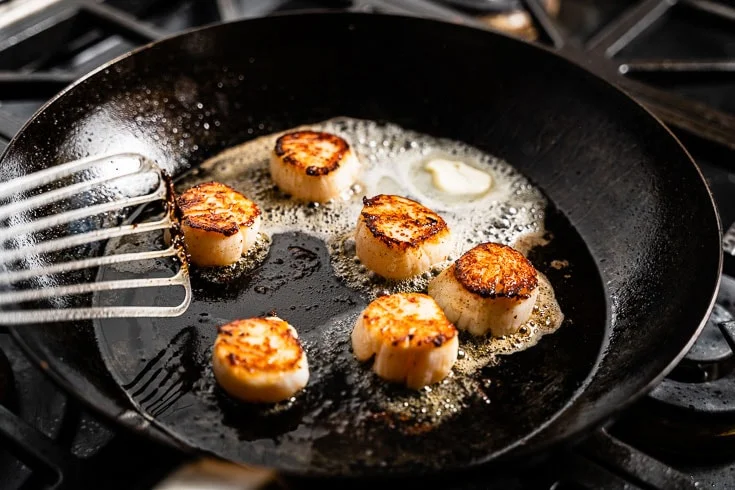
Sea scallops are quickly seared until golden, then finished with a lemon-brown butter sauce. This speedy American-style dish makes a simple supper feel like a restaurant treat.
Ingredients
- 454 g (1 pound)sea scallops, preferably dry-packed and defrosted
- to tasteDiamond Crystal kosher salt
- to tastefreshly ground black pepper
- enough to coat the pancanola oil or another neutral oil
- 15 ml (1 tablespoon)unsalted butter
- 2 small, chopped (optional)shallots
- 15 ml (1 tablespoon), choppedItalian parsley
- ½lemon
Instructions
- 1
Dry the scallops
Rinse the scallops under cold water and remove the small side muscle. Arrange them on a paper-towel-lined plate or baking sheet, then pat thoroughly dry with more paper towels.
- 2
Heat the pan
Set a large skillet over high heat and add enough oil to just cover its base.
- 3
Season all sides
As the skillet heats, season the scallops on every side with salt and pepper.
- 4
Sear the first side
Once the oil just begins to smoke, carefully place the scallops presentation side down in the skillet. Sear for about 2 minutes, until golden brown.
- 5
Turn and add butter
Turn the scallops with a fish spatula or spoon. Lower the heat to medium-low and add the butter and optional shallots.
- 6
Baste until done
Spoon the melted butter over the scallops as they cook for about 1 to 1½ minutes more. Cook until their internal temperature reaches 46°C (115°F); it should rise by 6–8°C (10–15°F) from the residual heat to about 52°C (125°F).
- 7
Finish and serve
Scatter over the parsley and squeeze in the juice from half a lemon. Immediately take the skillet off the heat to stop the cooking, and serve the scallops with the lemon-butter pan sauce.
What are seared scallops?
Scallops are the sweet, tender muscle of a shellfish, prized in American cooking for their delicate flavour and quick cooking time. A hard sear gives them a browned exterior while keeping the centre tender.
This version pairs the scallops with a simple pan sauce of butter, lemon and parsley. The sauce comes together in the skillet as the scallops finish cooking, making the dish both fast and flavourful.
Nutrition and macros by portion
The nutrition label shows one serving as written: 320 calories, 48g protein, 8g carbs, 13g fat.
| Portion | Adjustment | kcal | Protein | Carbs | Fat |
|---|---|---|---|---|---|
| Lighter | Use less butter and oil | 224 kcal | 34g | 6g | 9g |
| This serving | As written | 320 kcal | 48g | 8g | 13g |
| Hungry | Add extra scallops | 480 kcal | 72g | 12g | 20g |
Scallops provide most of the protein, while the small amount of butter and cooking oil contribute most of the fat. The scallops and shallots supply some carbohydrates; serve with vegetables or a salad for a balanced plate.
Choose and prepare the scallops
Dry-packed scallops: These are a good choice for searing because they release less moisture into the pan. If using defrosted scallops, drain them well before patting dry.
Side muscle: Look for a small, firm tab on the side of each scallop and pull it off before cooking. It can be tougher than the rest of the scallop.
Get a good sear
Dry surface: Thoroughly patting the scallops dry helps them brown rather than steam. Season them just before they go into the hot pan.
Hot oil: Heat the pan over high heat until the oil just starts to smoke, then add the scallops carefully. Leave room between them so the pan stays hot; cook in batches if necessary.
Butter, shallots and basting
Lower heat: After turning the scallops, reduce the heat to medium-low before adding the butter. This gives the scallops time to finish while the butter melts without scorching.
Basting: Spoon the melted butter over the scallops for the final 1 to 1½ minutes. The optional shallots soften in the butter and add a gentle savoury note.
Look for the right doneness
Golden outside: The first side should be visibly browned after about 2 minutes; avoid shifting the scallops around while that crust forms.
Temperature: The method gives 46°C (115°F) as the temperature to remove the scallops from the pan, with residual heat expected to bring them to about 52°C (125°F). Take the skillet off the heat promptly so they do not keep cooking in the hot pan.
Serve while the sauce is warm
Lemon finish: A squeeze of lemon and chopped parsley brighten the buttery pan juices. Serve straight away, spooning the sauce over the scallops.
On the side: Pair them with a simple green salad, steamed vegetables or bread to catch the sauce. Keep accompaniments ready before you start, since the scallops cook quickly.
Recipe notes & tips
- If the scallops are frozen, defrost them fully and drain them before drying.
- Pat every side dry, including the flat surfaces that will touch the pan.
- Have the butter, shallots, parsley and lemon ready before you begin searing.
- Use a large skillet and leave space around each scallop for browning.
- Remove the pan from the heat as soon as the scallops are finished to limit carryover cooking.
Variations
- Skip the shallots: Leave them out for a clean lemon-butter sauce.
- Add garlic: Stir a little finely chopped garlic into the butter as it melts.
- Use chives: Swap the parsley for chopped chives for a mild onion-like finish.
- Add a little heat: Finish with a pinch of chilli flakes.
- Serve with pasta: Spoon the lemon-butter sauce over cooked pasta alongside the scallops.
Common mistakes to avoid
- Wet scallops: They can steam instead of sear; pat them thoroughly dry before seasoning.
- Crowded skillet: The pan temperature can drop; cook in batches if the scallops do not fit with space between them.
- Moving them too soon: The crust may tear; let the first side sear for about 2 minutes before turning.
- Butter added over high heat: It can brown or burn too quickly; lower the heat before adding it.
- Leaving them in the pan: Residual heat keeps cooking them; take the skillet off the stove as soon as they are done.
How to store
Refrigerate leftovers in a sealed container for up to 2 days. Reheat gently in a covered skillet over low heat with a splash of water or butter, just until warmed through; avoid prolonged heating, which can toughen the scallops.
Frequently asked questions
How can I tell when scallops are done?
Follow the method's temperature cue: remove them from the pan at 46°C (115°F), allowing for residual heat to bring them to about 52°C (125°F). They should have a browned exterior and a tender centre.
Do I need to remove the side muscle?
Yes, remove the small, firm connector muscle before cooking. It can be noticeably tougher than the scallop itself.
Can I use frozen scallops?
Yes. Defrost them fully, drain them well and pat them very dry before they go into the pan.
What does dry-packed mean?
Dry-packed scallops are packed without added water or a soaking solution. They are preferred here because they tend to release less moisture as they sear.
What can I serve with seared scallops?
Try a green salad, steamed vegetables or bread to soak up the lemon-butter sauce. Prepare the sides in advance so you can serve the scallops as soon as they are cooked.
Can I leave out the shallots?
Yes. They are optional, and the scallops will still have a buttery sauce with lemon and parsley.
Cook it from the original
This recipe comes from saltpepperskillet.com. Their page has the author’s own photos, notes and tips — the best place to cook it from.
Open the recipe on saltpepperskillet.com