
Oven-baked vitello tonnato
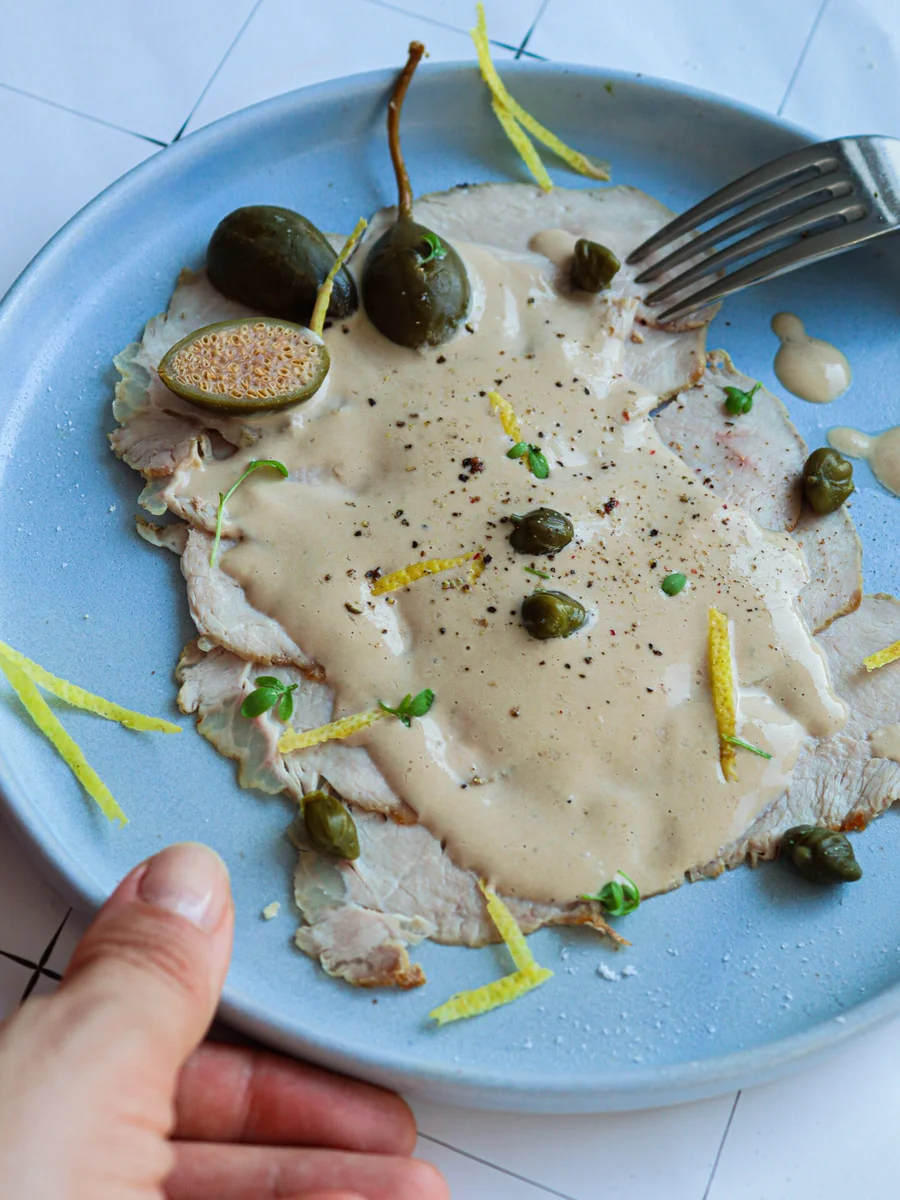
Oven-baked vitello tonnato pairs thin slices of roast veal with a creamy tuna, anchovy and caper sauce. It takes little hands-on work, and the chilled slices make it a useful make-ahead dish for a relaxed meal.
Ingredients
- 1 kgtrimmed veal loin
- 3 clovesgarlic
- 2 sprigsrosemary
- 2 sprigsthyme
- to tastesalt and pepper
- 30 mlolive oil
- 200 gtuna in olive oil, drained
- 150 mlolive oil
- 2fresh egg yolks
- 30 mlsmall capers
- 30 mlwhite wine vinegar
- 45 mllemon juice
- 3anchovy fillets
- to tastesalt and pepper
- 1 jarlarge caperberries
- to tastelemon zest, to garnish
Instructions
- 1
Preheat the oven
Heat the oven to 150°C fan.
- 2
Season the veal
Trim away any sinew with a sharp knife, then season the veal generously on all sides with salt and pepper.
- 3
Prepare the herbs
Peel the garlic. Wash the rosemary and thyme, then dry them.
- 4
Sear the meat
Heat 30 ml olive oil in a frying pan and sear the veal on every side for about 2–3 minutes.
- 5
Add the aromatics
Shortly before the meat has finished searing, add the garlic, rosemary and thyme to the pan.
- 6
Transfer the veal
Put the seared veal in the oven. If the frying pan is ovenproof, use it; otherwise transfer the meat to a baking tray.
- 7
Roast the veal
Reduce the oven temperature to 130°C and roast the veal for 40 minutes, until pink.
- 8
Check the temperature
For especially tender veal, use a meat thermometer. A core temperature of 58–60°C keeps it juicy with a lightly pink centre.
- 9
Cool the meat
Remove the veal from the oven and wrap it well in foil with the garlic and herbs. Leave it to cool completely, preferably overnight, in the fridge.
- 10
Set out the sauce ingredients
Get all the ingredients for the tuna sauce ready.
- 11
Drain the tuna
Drain the tuna, reserving its liquid.
- 12
Blend the sauce base
Put the tuna, anchovies, small capers, egg yolks, lemon juice, vinegar, salt and pepper in a tall beaker. Blend with a stick blender.
- 13
Emulsify the oil
Add the olive oil very slowly while continuing to blend. If needed, add a little of the reserved tuna liquid.
- 14
Season the sauce
Taste the sauce and adjust the salt and pepper.
- 15
Unwrap the veal
Take the veal out of the fridge and remove it from the foil onto a chopping board.
- 16
Slice the meat
Use a sharp knife to cut the veal into very thin slices and arrange them on a platter or individual plates. A meat slicer can make this neater.
- 17
Finish the dish
Spoon the sauce over the veal and garnish with the large caperberries and lemon zest.
What is vitello tonnato?
Vitello tonnato is an Italian dish of chilled, thinly sliced veal served with tuna sauce. It is particularly associated with Piedmont in north-west Italy, where meat and seafood come together in a distinctive cold dish.
This version roasts the veal in the oven rather than cooking it on the hob. The tuna, anchovies, capers, egg yolks and olive oil make a savoury, smooth sauce, while the caperberries and lemon zest provide a bright finish.
Nutrition and macros by portion
The nutrition label shows one serving as written: 500 calories, 42g protein, 1g carbs, 36g fat.
| Portion | Adjustment | kcal | Protein | Carbs | Fat |
|---|---|---|---|---|---|
| Lighter | Use less sauce | 350 kcal | 29g | 1g | 25g |
| This serving | As written | 500 kcal | 42g | 1g | 36g |
| Hungry | Add potatoes and bread | 750 kcal | 63g | 2g | 54g |
The veal supplies most of the protein, while the olive oil and egg yolks contribute much of the fat. The tuna and capers add flavour, and the recipe contains very little carbohydrate beyond small amounts in the sauce ingredients. Serve it with a generous salad or vegetables to round out the plate.
Searing before roasting
The quick sear gives the outside of the veal colour and lets the garlic and herbs warm in the pan. Turn the meat so each side makes contact with the hot surface for about 2–3 minutes.
Ovenproof pan: leave the veal in it for roasting. Otherwise, transfer it to a baking tray, as the method directs.
Getting the veal just right
The recipe aims for a pink centre and gives 40 minutes at 130°C after the initial sear. Since the exact cooking time depends on the shape of the loin and your oven, use the stated 58–60°C core temperature as your doneness cue.
Rest and chill: wrap the cooked veal with the garlic and herbs and let it cool completely in the fridge, preferably overnight. Chilling firms the meat, making it easier to cut into fine slices.
Blending a smooth tuna sauce
Blend the tuna with the anchovies, capers, egg yolks, lemon juice and vinegar before adding the oil. Then pour in the 150 ml olive oil very slowly while the blender is running, so the sauce emulsifies rather than separating.
Reserved tuna liquid: keep it to hand and blend in a little if the sauce needs loosening. Taste at the end and adjust the seasoning.
Slicing and serving
Use a sharp knife to make very thin slices across the chilled loin, then spread them out on a platter or plates. A slicing machine can help achieve even slices, but a sharp kitchen knife works too.
Cover the veal with the tuna sauce and finish with large caperberries and lemon zest. Serve it cold as a starter or as part of a larger Italian-style meal.
What to serve alongside
A crisp green salad or simply dressed vegetables work well alongside the rich sauce. Bread is useful for scooping up any sauce left on the plate.
For a fuller meal, add boiled or roasted potatoes. Keep any accompaniments simply seasoned so they do not compete with the tuna, capers and lemon.
Recipe notes & tips
- Pat the washed herbs dry so they do not add excess moisture to the searing pan.
- Sear the veal on all sides before transferring it to the oven.
- Pour the sauce oil in a slow, steady stream while blending.
- Reserve the tuna liquid before discarding the tin or jar contents.
- Chill the wrapped veal thoroughly before slicing for neater, thinner pieces.
- Add the caperberries and lemon zest just before serving.
Variations
- Add more lemon: a little extra zest gives the finished platter a brighter citrus note.
- Use a different cut: choose a similarly sized, trimmed cut of veal and check its core temperature as it roasts.
- Make it smoother: blend the sauce for longer before adding the oil.
- Serve individually: arrange the veal and sauce on separate plates rather than a shared platter.
- Add fresh herbs: scatter a small amount of chopped parsley over the finished dish.
Common mistakes to avoid
- Skipping the sear: the veal misses its browned exterior; sear every side before roasting.
- Adding oil too quickly: the sauce may split; blend continuously and pour the oil in slowly.
- Cutting the veal warm: it can be harder to slice thinly; cool it completely in the fridge first.
- Overcooking the centre: the meat may lose its pinkness; check it with a thermometer and use the recipe's 58–60°C cue.
- Discarding the tuna liquid: the sauce may be difficult to loosen; reserve the liquid and add a little if needed.
How to store
Keep the cooked veal and tuna sauce covered in the fridge, ideally stored separately, and use within 1–2 days. Serve the veal cold; if you prefer it warmer, reheat the meat gently before adding the sauce. The sauce contains fresh egg yolks, so keep it chilled and do not leave it at room temperature for long.
Frequently asked questions
Can I make vitello tonnato ahead?
Yes. The recipe recommends chilling the wrapped veal completely, preferably overnight. You can also prepare the sauce ahead and keep it covered in the fridge.
How do I know when the veal is done?
Use a meat thermometer in the centre of the loin and follow the recipe's 58–60°C cue for a juicy, lightly pink middle.
Can I make the tuna sauce without a stick blender?
A food processor or blender can do the job. Add the olive oil gradually while blending to help the sauce emulsify.
What if the sauce is too thick?
Blend in a little of the tuna liquid you reserved when draining the tuna, until the sauce reaches a spoonable consistency.
Can I slice the veal with a knife?
Yes. Use a sharp knife and cut the chilled meat as thinly as you can. A meat slicer is an optional way to get more even slices.
Cook it from the original
This recipe comes from sabrinastable.com. Their page has the author’s own photos, notes and tips — the best place to cook it from.
Open the recipe on sabrinastable.com