
Ahi Edamame Poke Bowls
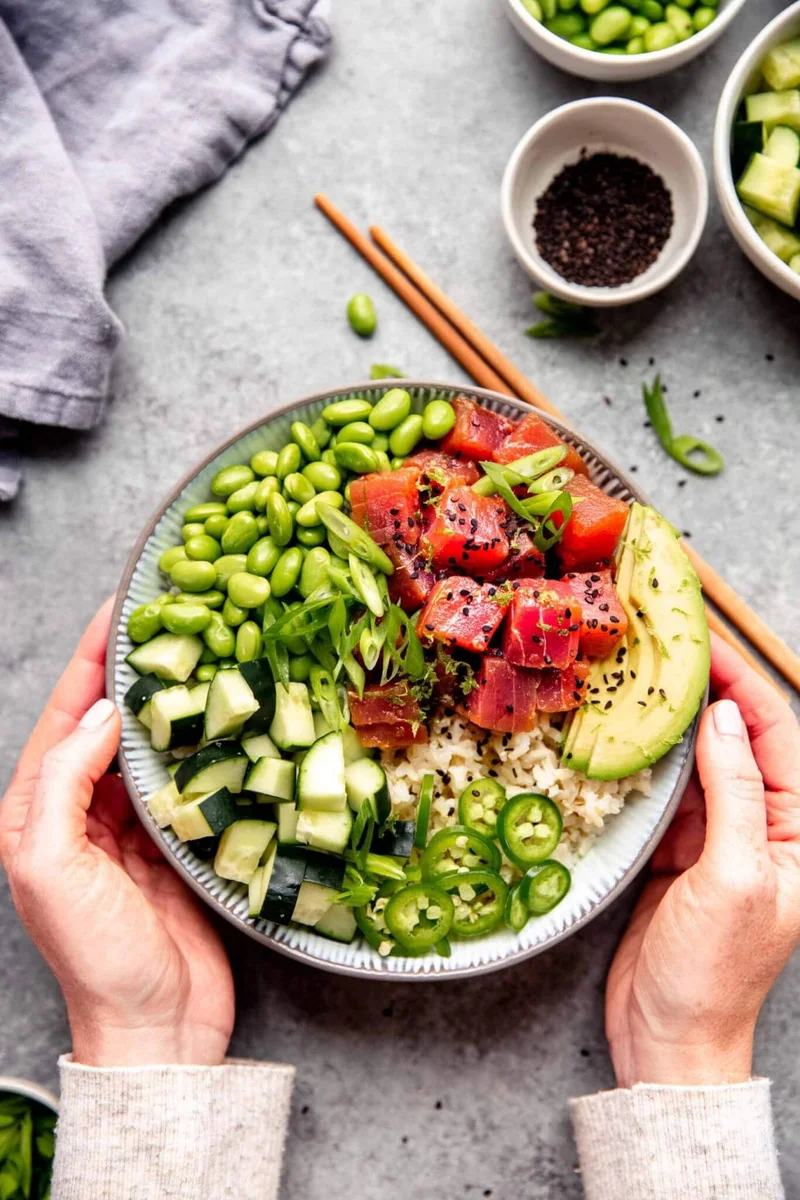
These ahi poke bowls pair cubes of tuna dressed with yuzu, soy and sesame oil with rice, crisp vegetables and creamy avocado. They come together quickly and make a fresh, colourful meal with plenty of contrasting textures.
Ingredients
- 30 ml (2 tablespoons)yuzu juice (*)
- 15 ml (1 tablespoon)soy sauce or tamari
- 2.5 ml (½ teaspoon)sesame oil
- Pinchcayenne pepper
- 340 g (12 ounces)sushi-grade tuna or yellowtail, cut into 1.3 cm (½-inch) cubes
- 390 g (2 cups)cooked short-grain brown rice or sushi rice
- 150 g (1 cup)cucumber, cut into 1.3 cm (½-inch) cubes
- 75 g (½ cup)shelled edamame
- 1avocado, sliced
- 2spring onions, green parts only, sliced diagonally
- 1jalapeño, thinly sliced
- 5 ml (1 teaspoon)black sesame seeds
- Zest of 1lime
Instructions
- 1
Dress the tuna
In a medium bowl, whisk together 30 ml yuzu juice, 15 ml soy sauce, 2.5 ml sesame oil and a pinch of cayenne. Add the tuna and toss to coat, then leave it to stand while you prepare the remaining ingredients.
- 2
Build the bowls
Divide the warm cooked rice between four bowls. Add the tuna mixture, cucumber, edamame, avocado, spring onions and jalapeño. Finish with the black sesame seeds and lime zest, and serve immediately.
What are ahi poke bowls?
Poke is a Hawaiian dish of seasoned, cut fish, often served with rice and toppings. This version brings together ahi tuna, vegetables and a citrusy yuzu-soy dressing for a quick bowl with fresh, bright flavours.
The combination works because the rice gives the toppings a mild base, while cucumber and edamame add freshness and avocado brings richness.
Nutrition and macros by portion
The nutrition label shows one serving as written: 583 calories, 30g protein, 82g carbs, 14g fat.
| Portion | Adjustment | kcal | Protein | Carbs | Fat |
|---|---|---|---|---|---|
| Lighter | Use less rice | 408 kcal | 21g | 57g | 10g |
| This serving | As written | 583 kcal | 30g | 82g | 14g |
| Hungry | Add extra rice | 875 kcal | 45g | 123g | 21g |
The rice supplies most of the carbohydrates, while tuna is the main source of protein. Avocado and sesame oil contribute much of the fat; serve with extra greens or cucumber if you would like more vegetables alongside the bowl.
Choosing the tuna
Sushi-grade tuna: Choose fish sold for raw consumption and keep it chilled until you are ready to prepare it. Yellowtail is offered as an alternative in the recipe.
Even cubes: Cut the fish into roughly 1.3 cm cubes so the dressing coats the pieces evenly and they are easy to eat with rice.
Getting the dressing right
Yuzu and soy: Whisk the yuzu juice, soy sauce, sesame oil and cayenne together before adding the tuna. This distributes the seasoning through the fish without masking its flavour.
Brief marinating: The recipe rests the tuna only while you prepare the other ingredients. Keep that pause short so the fish stays fresh in texture.
Rice and toppings
Warm rice: Divide the cooked rice between the bowls while it is warm, as directed. Short-grain brown rice gives a chewy base; sushi rice is the listed alternative.
Even portions: Arrange the cucumber, edamame and sliced avocado across the bowls so each serving gets a mix of textures and flavours.
Finishing the bowls
Fresh accents: Spring onions and jalapeño bring sharpness and heat, while black sesame seeds add a nutty finish. Lime zest brightens the bowl just before serving.
Serve promptly: Assemble the bowls at the end and enjoy them immediately, while the rice is warm and the raw tuna is freshly dressed.
What to serve alongside
These bowls can stand on their own as a complete meal. If you want to add something, serve a simple side of extra cucumber or lightly dressed greens so the tuna and yuzu remain the focus.
Recipe notes & tips
- Use tuna intended for raw consumption and keep it chilled until preparation.
- Cut the tuna and cucumber into similarly sized cubes for an even bite.
- Whisk the dressing before adding the fish so the seasonings are evenly combined.
- Prepare and slice the toppings while the tuna rests briefly in the dressing.
- Add the lime zest just before serving for a fresh citrus aroma.
Variations
- Use sushi rice: Swap in cooked sushi rice for the brown rice as listed.
- Try yellowtail: Use an equal amount of yellowtail in place of the tuna.
- Choose tamari: Replace the soy sauce with tamari as the recipe allows.
- Adjust the heat: Use less jalapeño for a milder bowl.
- Add more citrus: Serve with extra yuzu juice at the table for a sharper finish.
Common mistakes to avoid
- Using warm fish: Keep the tuna chilled until you dress it.
- Oversized cubes: Cut the tuna into roughly 1.3 cm pieces so it is easy to eat.
- Uneven dressing: Whisk the dressing ingredients together before tossing with the tuna.
- Leaving the tuna to stand too long: Keep the resting time to the brief period needed to prepare the toppings.
- Assembling too early: Build the bowls just before serving to preserve the fresh textures.
How to store
These bowls are best eaten immediately, especially because they contain raw tuna. If necessary, refrigerate leftovers promptly in a sealed container and use within 24 hours; keep the rice and raw fish chilled, and do not leave the assembled bowl at room temperature.
Frequently asked questions
Can I use white rice instead of brown rice?
Yes. The recipe gives sushi rice as an alternative to short-grain brown rice.
Can I make these bowls without raw tuna?
The recipe specifies sushi-grade tuna or yellowtail. For a cooked version, use cooked fish instead, though the result will differ from traditional raw-fish poke.
Can I prepare the ingredients ahead?
You can cook the rice and prepare the vegetables ahead, then keep them refrigerated. Dress the tuna and assemble the bowls shortly before serving.
How spicy are the bowls?
The cayenne and jalapeño provide the heat. Reduce or omit either one to make the bowls milder.
What can I use instead of yuzu juice?
The recipe specifies yuzu juice. If you cannot find it, another citrus juice can be used, but it will change the dressing's flavour.
Cook it from the original
This recipe comes from platingsandpairings.com. Their page has the author’s own photos, notes and tips — the best place to cook it from.
Open the recipe on platingsandpairings.com