
Pork Loin Roast
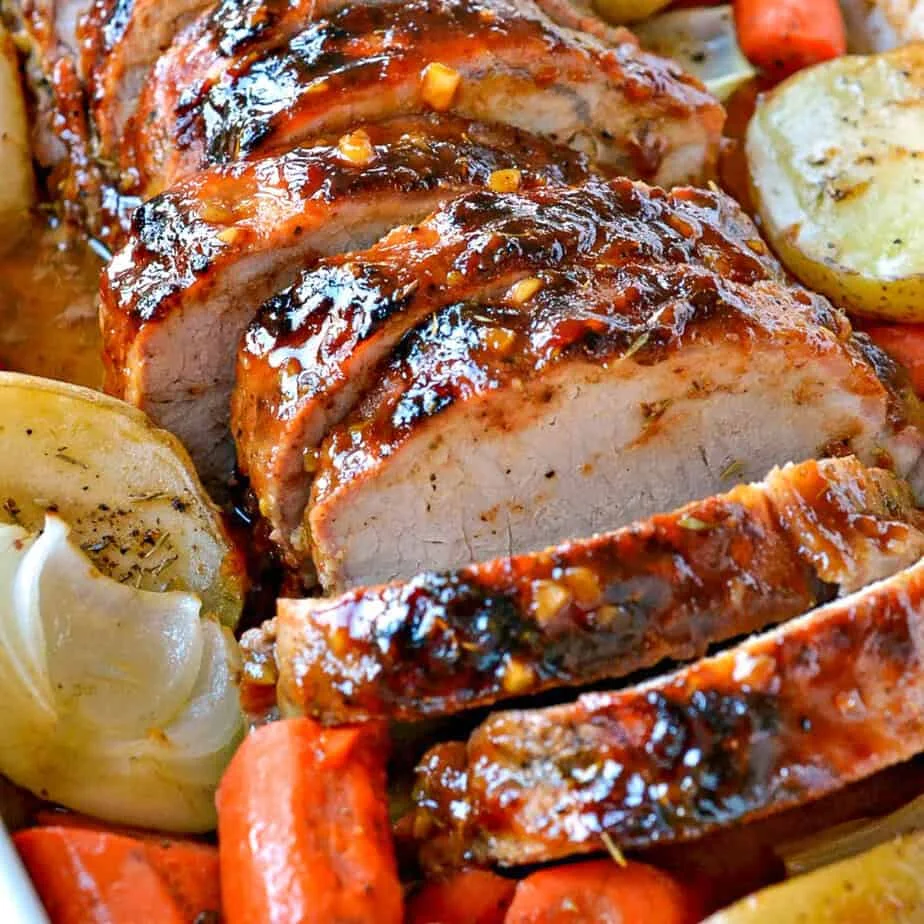
This American-style pork loin roast pairs a warmly spiced, seared joint with potatoes, carrots and onions, all finished with a sweet, tangy honey-mustard glaze. It makes a satisfying centrepiece for a family meal, with the vegetables roasting alongside the pork.
Ingredients
- 45 mlbrown sugar
- 5 mlground ginger
- 5 mlground cumin
- 2.5 mlgarlic powder
- 2.5 mlonion powder
- 2.5 mlground mustard
- 2.5 mlthyme leaves
- 2.5 mlmarjoram
- 1.25 mlground cayenne pepper
- 1.25 mlcrushed red pepper flakes
- 22.5 mlolive oil
- 1.6–1.8 kgboneless pork loin roast
- 4 medium, halvedpotatoes
- 4 large, peeled and cut into chunkscarrots
- 2 medium, halvedonions
- 14 gbutter
- 2 cloves, mincedgarlic
- 60 ml (¼ cup)pineapple or orange juice
- 45 mlhoney
- 22.5 mlspicy brown mustard
- 45 mllow-sodium soy sauce
- 30 mlketchup
- 15 mlapple cider vinegar
- 15 mlfreshly grated ginger
- To tastekosher salt and freshly ground black pepper
Instructions
- 1
Trim and dry
Trim away any pork fat thicker than 6 mm, then pat the roast dry with paper towels.
- 2
Season the pork
Mix the brown sugar, ground ginger, cumin, garlic powder, onion powder, ground mustard, thyme, marjoram, cayenne and red pepper flakes in a small bowl. Rub the mixture over the pork and refrigerate for 1–2 hours.
- 3
Sear the roast
Heat the olive oil in a large frying pan or Dutch oven until a drop of water crackles and pops. Sear the pork until deeply golden on both sides.
- 4
Roast with vegetables
Transfer the pork to a large roasting tin or casserole dish with the potatoes, carrots and onions. Roast in an oven preheated to 190°C for 1–1¼ hours, until the centre of the pork reaches 63°C.
- 5
Make the glaze
Meanwhile, melt the butter in a small saucepan over low heat. Add the garlic and cook for 1 minute, stirring constantly. Stir in the juice, honey, spicy brown mustard, soy sauce, ketchup, cider vinegar and freshly grated ginger. Season with salt and pepper to taste, then simmer for 2–3 minutes.
- 6
Baste and rest
Baste the roast with the glaze every 15–20 minutes. Once cooked, cover the pork loosely with foil and leave it to rest for 15 minutes.
What is pork loin roast?
Pork loin roast is a substantial, boneless cut of pork cooked whole and sliced to serve. This American-style version takes a familiar roast dinner approach, with potatoes, carrots and onions cooked in the same dish.
A spice rub seasons the meat before searing, while a honey-mustard glaze adds a sweet, savoury and gently sharp finish. The vegetables make it a practical one-pan centrepiece.
Nutrition and macros by portion
The nutrition label shows one serving as written: 445 calories, 48g protein, 35g carbs, 13g fat.
| Portion | Adjustment | kcal | Protein | Carbs | Fat |
|---|---|---|---|---|---|
| Lighter | More vegetables, less glaze | 312 kcal | 34g | 25g | 9g |
| This serving | As written | 445 kcal | 48g | 35g | 13g |
| Hungry | Larger pork portion | 668 kcal | 72g | 53g | 20g |
The potatoes, carrots, onions, brown sugar and honey contribute most of the carbohydrates, while the pork provides most of the protein. Fat comes from the pork, olive oil and butter; serve a generous share of vegetables alongside each slice to balance the plate.
The spice rub
Warm spices: cumin, ginger, thyme and marjoram give the pork a rounded savoury aroma, while cayenne and red pepper flakes bring a little heat. Brown sugar adds sweetness and helps the seasoning cling to the meat.
Even coverage: rub the mixture over all sides of the dried roast, then chill it for the stated 1–2 hours so the surface is well seasoned before cooking.
Searing before roasting
Hot pan: let the oil heat until water crackles on contact, then brown the pork on both sides. This step builds a deeper roasted flavour on the outside.
Handle carefully: use tongs or a sturdy spatula to turn the roast without scraping off the rub. Transfer it to the roasting dish once both sides are golden.
Getting the pork cooked
Temperature cue: the recipe gives 190°C and 1–1¼ hours as a guide, but the key doneness check is 63°C at the centre of the pork. Insert a meat thermometer into the thickest part, avoiding the dish.
Resting time: leave the cooked joint loosely covered with foil for 15 minutes before slicing. This also gives you time to bring the vegetables and glaze to the table.
Vegetables in the roasting dish
Cut size: halve the potatoes and onions, and cut the carrots into chunks as directed. Keeping the pieces fairly even helps them cook at a similar pace.
Arrange the vegetables around the pork in a large roasting dish, leaving room for heat to circulate. Check their tenderness as the roast nears the end of its cooking time.
A glossy honey-mustard glaze
Build the sauce: soften the minced garlic briefly in melted butter, then add the juice, honey, mustard, soy sauce, ketchup, vinegar and fresh ginger. Simmer for 2–3 minutes to bring the flavours together.
Regular basting: brush or spoon the glaze over the roast every 15–20 minutes. Keep the saucepan on low heat if needed so the sauce stays easy to spread.
Serving the roast
Slice the rested pork across the grain and serve it with the roasted vegetables and any glaze from the dish. A green vegetable, such as steamed green beans, makes a fresh contrast to the sweet-savoury sauce.
For a more substantial spread, serve with bread to catch the juices. Spoon the glaze over the sliced pork just before serving.
Recipe notes & tips
- Pat the pork dry before applying the rub so it coats the surface evenly.
- Use a roasting dish large enough to hold the joint and vegetables without packing them tightly.
- Check the pork with a thermometer near the end of the roasting time rather than relying on the clock alone.
- Baste every 15–20 minutes as the recipe directs, using a clean spoon or pastry brush.
- Rest the roast for the full 15 minutes before carving for easier slicing.
- Taste the glaze after simmering and adjust the salt and pepper to your preference.
Variations
- Citrus choice: use orange juice instead of pineapple juice for a brighter glaze.
- Gentler heat: reduce or omit the cayenne and red pepper flakes for a milder rub.
- More mustard: add a little extra spicy brown mustard for a sharper glaze.
- Different vegetables: swap in other roasting vegetables, cut to a similar size.
- Herb variation: replace the marjoram with an equal amount of dried oregano.
Common mistakes to avoid
- Skipping the drying step: the rub can slide off a damp roast, so pat the pork thoroughly with paper towels.
- Crowding the roasting dish: tightly packed vegetables may not roast evenly, so use a dish with enough space.
- Searing in a cool pan: the pork may colour poorly, so wait until the oil is properly hot before adding it.
- Guessing doneness by time: roast size and oven performance vary, so check for 63°C in the centre.
- Cutting straight away: the juices can escape more readily, so rest the pork loosely covered for 15 minutes.
- Letting the garlic brown: it can taste bitter, so cook it over low heat for just 1 minute while stirring.
How to store
Refrigerate leftover pork and vegetables in a covered container for up to 3 days. Reheat until piping hot, adding a splash of water or extra glaze if the meat seems dry.
Frequently asked questions
Can I prepare the pork ahead?
Yes. Apply the rub and refrigerate the pork for the recipe's 1–2 hours before roasting. Keep it chilled until you are ready to cook.
How do I know when the pork is done?
Check the thickest part with a meat thermometer; the recipe specifies 63°C. Allow the roast to rest for 15 minutes once it is cooked.
Can I use orange juice instead of pineapple juice?
Yes. The recipe allows either juice, and both work in the honey-mustard glaze.
Can I make the glaze in advance?
You can prepare it ahead and refrigerate it in a covered container. Warm it gently before basting so it is easy to spread.
What can I serve with pork loin roast?
The potatoes, carrots and onions roast with the pork, so the dish is already a substantial meal. Green beans or another green vegetable make a simple accompaniment.
Can I use a different cut of pork?
This method is written for boneless pork loin, so another cut may need a different cooking time. Use a thermometer and check the centre rather than following the timing alone.
Cook it from the original
This recipe comes from smalltownwoman.com. Their page has the author’s own photos, notes and tips — the best place to cook it from.
Open the recipe on smalltownwoman.com