
Meat empanada with homemade pastry
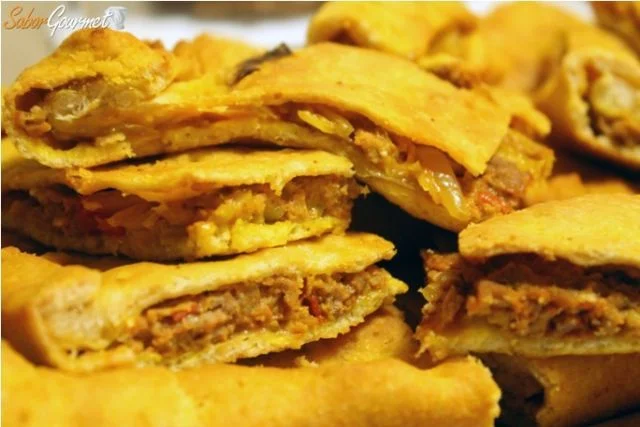
This meat empanada wraps a savoury minced-meat filling in homemade yeasted pastry. It takes a little time for the dough to rise, but the filling and assembly are straightforward.
Ingredients
- 300 gplain flour
- 1 sachetbaker’s yeast
- 100 mlwater, lukewarm
- A pinchsalt
- 1onion
- To tasteolive oil
- ¼red pepper
- 250 gminced meat
- 1 teaspoonsweet paprika or food colouring
Instructions
- 1
Mix the dough
Put the flour, yeast and a pinch of salt in a large bowl and stir briefly. Gradually add the 100 ml of lukewarm water, mixing until incorporated; if the dough is too wet, work in a little extra flour until it becomes even.
- 2
Leave to rise
Make a small mark in the centre of the dough, cover the bowl with a clean tea towel and leave it to rise for about 25 minutes, until doubled in size.
- 3
Season the filling
Put the minced meat in a bowl and add a little salt, plus ground pepper if you like. Add the cleaned onion, cut into thin strips, and 1 teaspoon of sweet paprika; stir to distribute the seasoning. Add olive oil, keeping some aside to brush over the pastry, then push the meat to one side so the oil gathers separately.
- 4
Shape the base
Once the dough has risen, divide it into two unequal pieces, making one slightly larger for the base. On a clean, dry, lightly floured surface, roll out the larger piece until it is a little bigger than your baking tray. Line the tray with baking paper and brush it with some of the seasoned oil, then lay the pastry base on top.
- 5
Fill and seal
Spread the filling evenly over the base. Roll out the smaller piece of dough to cover the filling, making it slightly smaller than the base but large enough to cover it. Bring the edges together and press and roll them with your fingers to seal.
- 6
Bake the empanada
Prick the pastry base and the sealed edge. Brush the top with the remaining paprika oil, adding a little more oil if needed. Bake in a preheated oven at 180°C for about 40 minutes.
- 7
Cool and serve
Check that the pastry is crisp and firm; the original method suggests turning the empanada over so both sides become crisp. Remove it from the oven, let it cool briefly, then cut and serve.
What is a meat empanada?
Empanadas are filled pastries found in many Spanish-speaking cuisines, with dough and fillings that vary from place to place. This version is a large, oven-baked pie rather than individually folded pastries.
Homemade yeasted dough makes a soft casing that can be rolled around the filling. Minced meat, onion and sweet paprika give it a simple savoury centre.
Nutrition and macros by portion
The nutrition label shows one serving as written: 470 calories, 17g protein, 52g carbs, 21g fat.
| Portion | Adjustment | kcal | Protein | Carbs | Fat |
|---|---|---|---|---|---|
| Lighter | Less oil, more vegetables | 329 kcal | 12g | 36g | 15g |
| This serving | As written | 470 kcal | 17g | 52g | 21g |
| Hungry | Larger slice | 705 kcal | 26g | 78g | 32g |
The flour supplies most of the carbohydrates, while the minced meat provides much of the protein and some of the fat. Olive oil adds further fat, but its amount is not specified, so the nutrition estimate is approximate. Pair a slice with salad or vegetables to add a fresh, fibre-rich side.
The homemade pastry
Dry ingredients: stir the flour, yeast and salt together before adding the lukewarm water, so the yeast and seasoning are spread through the flour.
Water: add it gradually and stop when the dough comes together. If it feels too wet, the method recommends working in a little flour rather than adding a large amount at once.
Seasoning the filling
Onion: cut it into thin strips so it can be spread through the filling. The method adds it raw to the seasoned mince before the empanada is assembled.
Paprika oil: sweet paprika colours and flavours the oil, which is also used to brush the pastry. Keep some aside for the top; the ingredient list also offers food colouring as an alternative.
Rolling and sealing
Base: make the lower piece of dough slightly larger than the top, and roll it out to extend beyond the tray so there is enough pastry to seal the edges.
Seal: place the top over the filling and press the two layers together around the edge, rolling them into a firm rim. Pricking the pastry gives steam a way to escape during baking.
How to judge doneness
The stated baking time is about 40 minutes at 180°C in a preheated oven. Look for a crisp, firm surface rather than relying on colour alone, since the paprika oil can tint the pastry.
The recipe suggests turning the empanada to crisp both sides. A large filled pie can be awkward to flip, so handle it carefully if you follow that step.
Serving the empanada
Let the pie rest briefly after baking so the filling settles and the pastry is easier to cut. Serve it warm or at room temperature.
A green salad or cooked vegetables make a fresh accompaniment. Cut smaller wedges alongside a side dish for a more balanced plate.
Recipe notes & tips
- Use lukewarm rather than hot water when mixing the dough.
- Add the water gradually so you can judge the dough’s consistency.
- Keep the base slightly larger than the top to make sealing easier.
- Set aside some of the paprika oil before mixing it with the filling.
- Let the baked empanada cool briefly before cutting it.
Variations
- Chicken filling: use chopped chicken breast instead of minced meat, as suggested in the recipe description.
- Beef pieces: replace the mince with chopped beef for a chunkier filling.
- Food colouring: use it instead of sweet paprika if you want colour without paprika flavour.
- Pepper seasoning: add a little ground black pepper to the mince if desired.
- Red pepper: include the listed quarter red pepper, cut into small pieces, in the filling.
Common mistakes to avoid
- Adding all the water at once: pour it in gradually so the dough does not become difficult to handle.
- Using too much extra flour: add only a little at a time if the dough is overly wet.
- Making both dough pieces equal: keep the base slightly larger so it can cover the filling and meet the top.
- Leaving too little pastry at the edge: allow an overhang on the base for a secure seal.
- Cutting straight from the oven: let the pie cool briefly so the filling is less likely to spill out.
How to store
Cool leftovers, cover or place them in an airtight container, and refrigerate for up to 3 days. Reheat in an oven until hot throughout to help the pastry crisp again.
Frequently asked questions
Can I use a different meat?
Yes. The recipe description suggests chicken breast or chopped beef as alternatives to minced meat.
Can I leave out the black pepper?
Yes. Ground pepper is optional in the method, and the empanada can be seasoned with salt and sweet paprika instead.
How do I know when the dough has risen enough?
The method says to leave it for about 25 minutes, until it has doubled in size. Rising time can vary with room conditions, so use the increase in volume as the cue.
Why is the base larger than the top?
The extra dough gives you enough pastry to bring the lower and upper edges together and seal the empanada.
Can I prepare the empanada ahead?
You can assemble it ahead and keep it covered in the refrigerator until baking. The recipe does not give a make-ahead timing, so bake it promptly and check that it is cooked through.
How long does it bake?
The method specifies about 40 minutes at 180°C in a preheated oven. Check that the pastry is crisp and firm before taking it out.
Cook it from the original
This recipe comes from saborgourmet.com. Their page has the author’s own photos, notes and tips — the best place to cook it from.
Open the recipe on saborgourmet.com