
Parmesan Risotto
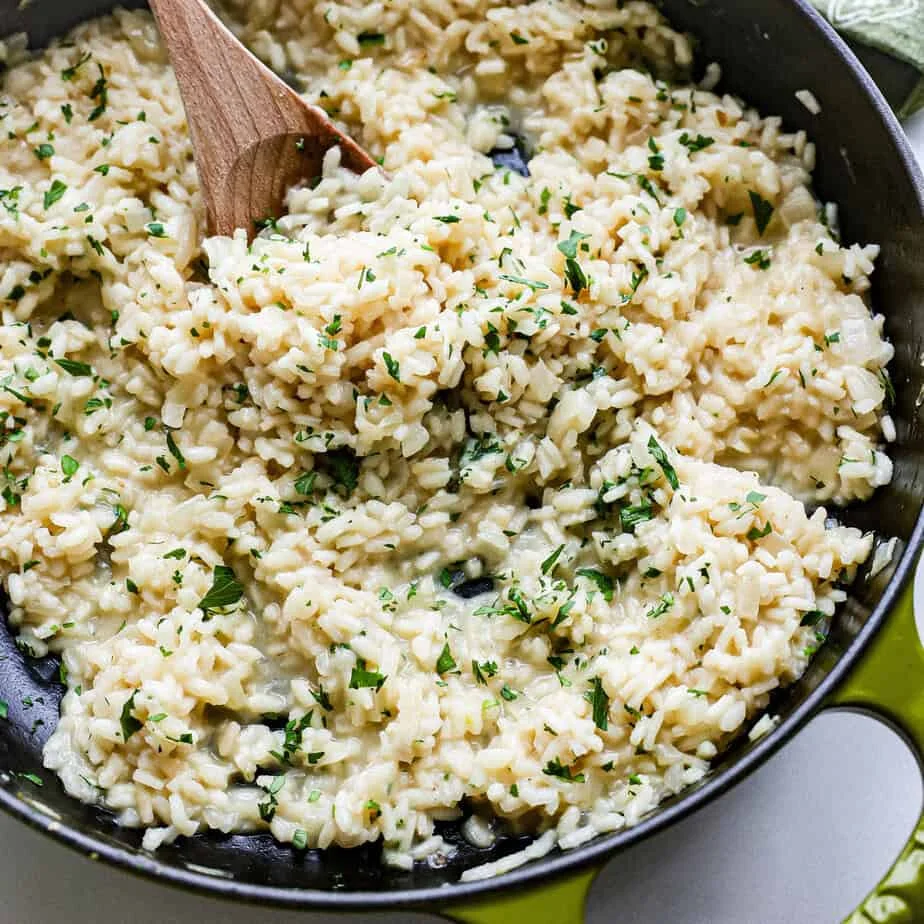
Parmesan risotto is a creamy Italian rice dish built around sweet onion, garlic, white wine and freshly grated cheese. It makes a comforting meal from simple ingredients, with steady stirring bringing the rice to a soft, silky finish.
Ingredients
- 28 g (2 tablespoons)butter, salted or unsalted
- 15 ml (1 tablespoon)olive oil
- 1 mediumyellow onion, finely chopped
- 200 g (1 cup)Arborio rice
- 3 clovesgarlic, minced
- 120 ml (1/2 cup)dry white wine
- 960 ml (4 cups)chicken or vegetable stock, warmed
- 75 g (3/4 cup)freshly grated Parmesan cheese
- to tastesalt
- to tastefreshly ground black pepper
- 1 1/2 tablespoonsfresh parsley, chopped
Instructions
- 1
Soften the onion
Melt the butter with the olive oil in a skillet over medium heat. Add the onion and cook, stirring a couple of times, until almost soft.
- 2
Toast the rice
Add the Arborio rice and stir constantly for about 2–3 minutes, until it just begins to brown lightly.
- 3
Cook the garlic
Turn the heat down to low, add the garlic and cook for 1 minute, stirring.
- 4
Add wine and stock
Raise the heat to medium and pour in the wine. Stir constantly until it has evaporated and been absorbed by the rice. Add the warmed stock 80–120 ml (1/3–1/2 cup) at a time, stirring as it cooks and letting each addition absorb before adding the next. Leave the final addition slightly unabsorbed so the risotto stays creamy.
- 5
Finish and serve
Stir in the Parmesan until it melts and combines with the rice. Season with salt and freshly ground black pepper to taste, then scatter over the chopped parsley.
What is Parmesan risotto?
Risotto is a northern Italian way of cooking rice gradually with stock until it turns tender and creamy. This version layers in onion, garlic, white wine and Parmesan for a savoury, nutty finish.
Arborio rice releases starch as it cooks, giving the dish its characteristic texture without needing cream. Adding the stock in small amounts and stirring regularly helps that happen evenly.
Nutrition and macros by portion
The nutrition label shows one serving as written: 465 calories, 15g protein, 55g carbs, 18g fat.
| Portion | Adjustment | kcal | Protein | Carbs | Fat |
|---|---|---|---|---|---|
| Lighter | Use less butter and Parmesan | 326 kcal | 11g | 39g | 13g |
| This serving | As written | 465 kcal | 15g | 55g | 18g |
| Hungry | Serve a larger portion | 698 kcal | 23g | 83g | 27g |
The rice supplies most of the carbohydrates, while butter, olive oil and Parmesan contribute much of the fat. Parmesan also provides protein, alongside a smaller amount from the rice. Pair a serving with salad or vegetables for a fresh, substantial plate.
Why Arborio rice works
Rice choice: Arborio's plump grains soften while releasing starch into the stock. That starch is what makes the liquid cling to the rice and create a creamy result.
Toasting: Stirring the grains in the butter and oil for a few minutes gives them a light coating and starts the cooking evenly. Stop when they begin to colour rather than letting them brown deeply.
Build flavour gently
Onion: Cook it until nearly soft before adding the rice, so it becomes sweet and tender without taking on much colour.
Garlic: Add it over low heat for just 1 minute. This brief cooking releases its aroma while helping prevent it from scorching.
Wine: Let the wine cook away before adding the stock. It leaves a bright, subtle note among the richer butter and Parmesan flavours.
Add stock gradually
Warm stock: Keep the stock warm so each addition does not cool the pan and interrupt the rice's cooking.
Small additions: Add 80–120 ml at a time, stirring and waiting for most of the liquid to be absorbed before adding more. The rice should remain moist, not dry out between additions.
Look for a creamy finish
Doneness: The rice should be tender but still have a slight bite at its centre. Taste a grain as the risotto nears the end of cooking, since the exact time can vary.
Consistency: Keep the final addition of stock from absorbing completely. The risotto should settle softly on the plate rather than hold a stiff shape.
Finish with Parmesan
Cheese: Freshly grated Parmesan melts readily and gives the risotto a savoury, nutty flavour. Stir it in after the rice is cooked so it blends smoothly.
Seasoning: Parmesan and stock can both be salty, so taste before adding salt. Freshly ground black pepper and parsley bring a final lift.
What to serve with it
For a simple meal, serve the risotto straight away with a green salad or steamed vegetables. The fresh, crisp side contrasts with the soft, rich rice.
It also works alongside roasted vegetables or a plainly cooked protein. Keep accompaniments simply seasoned so they do not overshadow the Parmesan.
Recipe notes & tips
- Warm the stock before you start adding it to the rice.
- Stir regularly and keep the rice moist as it cooks.
- Grate the Parmesan fresh so it melts readily into the risotto.
- Taste the rice near the end to check for a tender centre with a slight bite.
- Taste before adding salt, as the stock and cheese may already be salty.
- Serve as soon as the cheese has melted for the creamiest texture.
Variations
- Use vegetable stock: Choose it instead of chicken stock for a meat-free version.
- Add peas: Stir in cooked peas near the end for a sweet, fresh addition.
- Try mushrooms: Cook sliced mushrooms separately and fold them in before serving.
- Add lemon: Finish with a little lemon zest for a brighter flavour.
- Use extra herbs: Replace or supplement the parsley with chopped chives.
Common mistakes to avoid
- Adding cold stock: Warm it first so the rice continues cooking steadily.
- Pouring in all the stock: Add it gradually so the grains cook evenly and release their starch.
- Leaving the pan unattended: Stir regularly and watch the liquid so the rice does not catch.
- Cooking the garlic too hot: Keep the heat low and limit it to 1 minute to avoid a bitter taste.
- Overcooking the rice: Taste it as it nears the end and stop when it is tender with a slight bite.
- Letting the risotto turn stiff: Leave the final stock addition partly unabsorbed for a creamy consistency.
How to store
Refrigerate leftovers in an airtight container for up to 3 days. Reheat gently in a pan with a splash of stock or water, stirring until hot and creamy; the texture will be thicker than when freshly made.
Frequently asked questions
Can I use another type of rice?
Arborio is best for this method because its starch helps make the risotto creamy. Other risotto rice varieties can work, but ordinary long-grain rice will give a different texture.
Do I need to stir risotto constantly?
The method calls for constant stirring while toasting the rice and cooking with wine, then regular stirring as stock is added. Stay close to the pan so the rice cooks evenly and does not stick.
Can I make this without wine?
You can leave out the wine and use a little extra stock instead. The finished risotto will lack the wine's subtle acidity but will still be creamy and savoury.
How can I tell when the risotto is done?
Taste a grain: it should be tender with a slight bite in the centre. The mixture should remain loose and creamy rather than dry or firm.
Can I make it ahead?
Risotto is at its creamiest when served straight away. You can prepare it in advance, but it will thicken as it stands; reheat it gently with a splash of stock or water.
Cook it from the original
This recipe comes from smalltownwoman.com. Their page has the author’s own photos, notes and tips — the best place to cook it from.
Open the recipe on smalltownwoman.com