
Chicken Saltimbocca
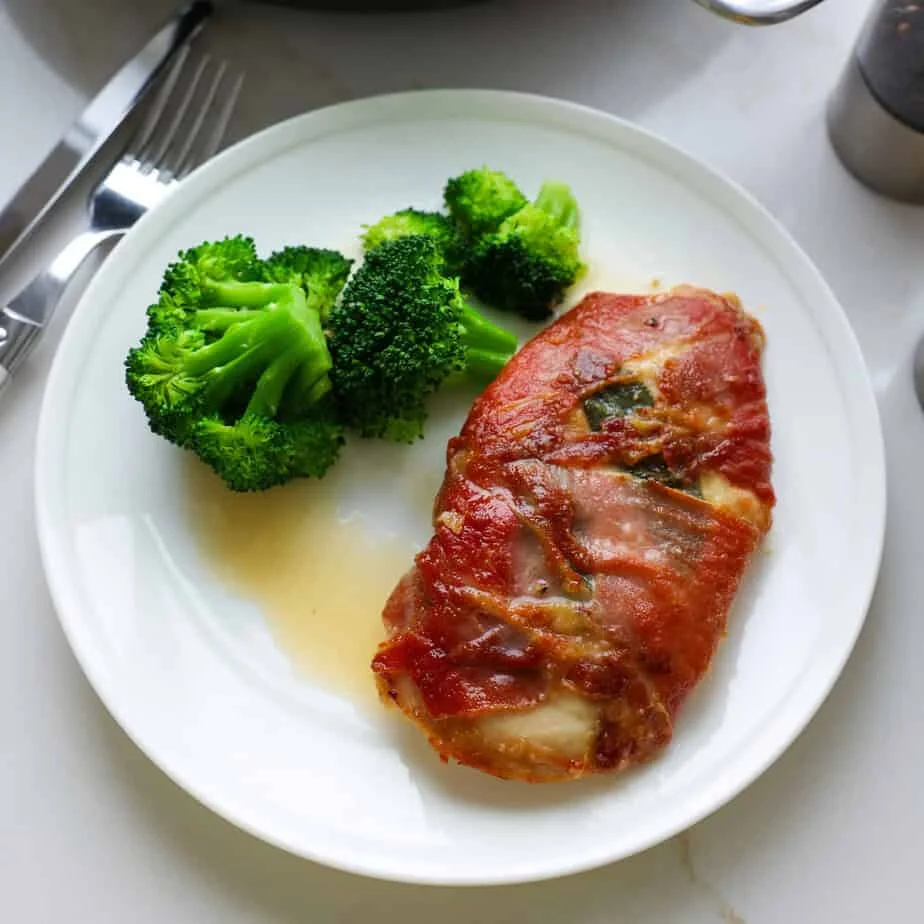
Chicken saltimbocca pairs thin chicken cutlets with sage and prosciutto, finished in a savoury white wine and chicken broth sauce. It cooks quickly in one pan and makes a smart choice when you want an Italian-inspired meal without a long preparation.
Ingredients
- 4 (about 170 g each)chicken cutlets
- 8 thin slicesprosciutto
- 8fresh sage leaves
- 30 g (¼ cup)plain flour
- 22.5 ml (1½ tablespoons)olive oil
- 28 g (2 tablespoons)butter, salted or unsalted
- 120 ml (½ cup)dry white wine
- 120 ml (½ cup)low-sodium chicken stock
- to tastesalt
- to tastefreshly ground black pepper
Instructions
- 1
Flatten the chicken
If needed, pound the chicken breasts until they are about 1.25 cm (½ inch) thick.
- 2
Wrap and flour
Put two sage leaves on each cutlet, then wrap each one in prosciutto. Secure with toothpicks if needed, then coat both sides of the chicken in flour.
- 3
Brown the chicken
Warm the olive oil and melt 7 g (½ tablespoon) of the butter in a large frying pan over medium heat. Cook the chicken until golden on both sides and cooked through, then transfer it to a plate.
- 4
Reduce the wine
Deglaze the pan with the white wine and reduce it by half. Add the chicken stock and simmer for a few minutes.
- 5
Reduce the wine
Deglaze the pan with the white wine and reduce it by half. Add the chicken stock and simmer for a few minutes.
- 6
Finish the sauce
Swirl in the remaining butter and season with salt and freshly ground black pepper to taste. Return the chicken to the pan and simmer for a few minutes to warm it through. Serve promptly.
What is chicken saltimbocca?
Saltimbocca is an Italian-style preparation traditionally associated with veal, sage and prosciutto. The name is often translated as “jumps in the mouth”, reflecting its punchy combination of savoury meat and aromatic herbs.
This American Italian version uses chicken cutlets instead of veal. A light flour coating helps the chicken brown, while the pan sauce brings together the browned flavours, wine and stock.
Nutrition and macros by portion
The nutrition label shows one serving as written: 357 calories, 38g protein, 7g carbs, 16g fat.
| Portion | Adjustment | kcal | Protein | Carbs | Fat |
|---|---|---|---|---|---|
| Lighter | Less butter, extra greens | 250 kcal | 27g | 5g | 11g |
| This serving | As written | 357 kcal | 38g | 7g | 16g |
| Hungry | Add potatoes or bread | 536 kcal | 57g | 11g | 24g |
The chicken supplies most of the protein, while the flour contributes some of the carbohydrates. Prosciutto, olive oil and butter account for much of the fat; serve a generous portion of vegetables alongside the cutlet to balance the plate.
Why sage and prosciutto work
Sage leaves: Place two on each cutlet so their herbal aroma sits between the chicken and its prosciutto wrapping.
Prosciutto: Its thin slices wrap neatly around the cutlets and contribute a salty, savoury note. Taste the sauce before adding much salt, as the prosciutto and stock may already season it.
Getting an even cook
Even thickness: Pound the cutlets to about 1.25 cm if they are uneven. Thin, uniform pieces cook more consistently and are easier to brown without leaving the centre underdone.
Flour coating: Shake off any excess flour before the chicken goes into the pan. A light coating helps create a golden surface without making the crust heavy.
Building the pan sauce
Wine reduction: The wine loosens the browned bits left in the pan; reducing it by half concentrates its flavour. Add the stock afterwards and let it simmer briefly.
Butter finish: Swirl in the butter at the end to give the sauce a smooth, glossy finish. Return the chicken to the pan only long enough to warm it through.
Checking doneness and texture
The chicken should be cooked through and golden on both sides, with the prosciutto snug around each piece. Avoid leaving it in the pan longer than needed, as thin cutlets can become dry.
The sauce should be savoury and pourable, rather than thick like gravy. Serve soon after the final brief simmer so the coating stays at its best.
What to serve alongside
A simple green vegetable, such as broccoli or green beans, provides a fresh contrast to the rich pan sauce. Spoon a little sauce over the chicken and vegetables just before serving.
For a more filling plate, pair the cutlets with potatoes, rice or crusty bread to catch the sauce. Keep any extra seasoning on the side until you have tasted the finished dish.
Recipe notes & tips
- Use toothpicks to secure any prosciutto that slips while you coat the chicken.
- Have the wine and stock measured before you start cooking so they are ready for the pan.
- Season cautiously at first and adjust the salt after tasting the sauce.
- Use a large frying pan so the cutlets can brown without being crowded.
- Remove the toothpicks before serving.
Variations
- Use chicken thighs: Choose thin, boneless pieces and flatten them evenly before wrapping.
- Add lemon: Finish the sauce with a small squeeze of lemon for a brighter flavour.
- Try another herb: Use a small amount of thyme in place of sage for a different aromatic note.
- Skip the wine: Replace it with more chicken stock, though the sauce will have a different flavour.
- Serve with greens: Add cooked spinach or green beans to the plate for a simple vegetable side.
Common mistakes to avoid
- Uneven cutlets: Pound thicker areas to about 1.25 cm so the chicken cooks more evenly.
- Too much flour: Shake off the excess before frying to keep the coating light.
- Crowded pan: Cook in batches if needed so the cutlets can brown rather than steam.
- Over-salting the sauce: Taste it before adding salt because prosciutto and stock bring seasoning.
- Long final simmer: Warm the chicken briefly in the sauce to help keep the cutlets tender.
How to store
Refrigerate leftovers in a covered container and use within 3 days. Reheat gently in a covered pan over low heat with a splash of stock or water, until hot throughout.
Frequently asked questions
Can I make chicken saltimbocca without toothpicks?
Yes, if the prosciutto stays wrapped around the cutlet. Use toothpicks only where needed to keep it in place while cooking.
How do I know the chicken is cooked through?
Cut into the thickest part and check that it is opaque throughout, or use a food thermometer. Take care not to overcook the thin cutlets.
Can I use chicken breasts instead of cutlets?
Yes. Slice them into cutlets or pound them to about 1.25 cm (½ inch) thick so they cook evenly.
What can I use instead of white wine?
Use additional chicken stock in place of the wine. The sauce will still work, though it will not have the same wine flavour.
Can I prepare the chicken ahead?
You can wrap and flour the cutlets shortly before cooking, then keep them covered in the refrigerator. Cook them just before serving for the best browned texture.
Cook it from the original
This recipe comes from smalltownwoman.com. Their page has the author’s own photos, notes and tips — the best place to cook it from.
Open the recipe on smalltownwoman.com