
Peppercorn Sauce Pork Chops
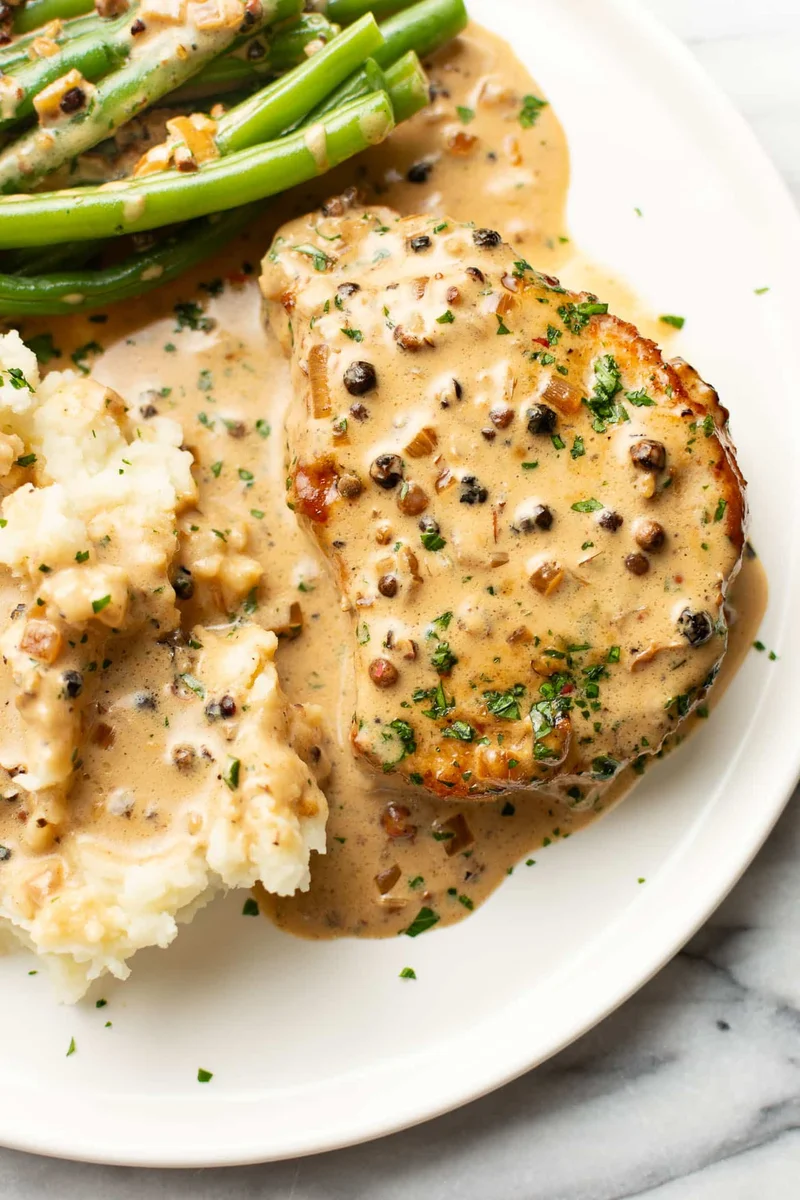
Golden-seared pork chops are finished in a creamy brandy sauce with crushed peppercorns and shallots. This elegant-tasting skillet dinner comes together in about 30 minutes.
Ingredients
- 4pork chops (see note)
- to tastesalt and pepper
- 15–30 ml (1–2 tablespoons)peppercorns (see note)
- 15 ml (1 tablespoon)olive oil
- 42 g (3 tablespoons), dividedbutter
- 1shallot, finely chopped
- 60 ml (¼ cup)brandy
- 120 ml (½ cup)beef broth or stock
- 180 ml (¾ cup)heavy or whipping cream
- 5 ml (1 teaspoon)cornstarch
- 15 ml (1 tablespoon)fresh parsley, chopped
Instructions
- 1
Season the chops
If possible, take the pork chops out of the fridge 15–30 minutes before you begin. Pat them dry and season with salt and pepper.
- 2
Crush peppercorns
Put the peppercorns in a resealable bag and crush them with a rolling pin, heavy skillet or meat mallet, or use a pestle and mortar. Leave some pieces intact rather than grinding them completely; larger pieces give the sauce a stronger peppery flavour.
- 3
Sear the pork
Heat the olive oil and 1 tablespoon of butter in a skillet over medium-high heat for a few minutes. Cook the chops for 3–5 minutes per side, until golden: about 3 minutes for thinner chops and up to 5 minutes for chops up to 1 inch thick. Transfer them to a plate.
- 4
Cool the skillet
Take the skillet off the heat for about 1 minute to let it cool slightly.
- 5
Soften the shallot
Return the skillet to medium heat. Add the remaining butter and the shallot, and sauté for about 4–5 minutes, until softened and lightly browned.
- 6
Reduce the brandy
Pour the brandy into the skillet and let it bubble for about 1–2 minutes, until much of it has reduced.
- 7
Simmer the stock
Add the beef broth and crushed peppercorns. Simmer for 2–3 minutes.
- 8
Mix the slurry
While the broth simmers, stir the cornstarch together with 2 teaspoons of cold water in a small bowl.
- 9
Add cream
Pour in the cream and cornstarch slurry, then stir to combine.
- 10
Finish the chops
Return the pork chops and any juices from the plate to the skillet. Cook for another 3–5 minutes, until the sauce thickens a little more and the chops are cooked through to at least 145°F (63°C).
- 11
Season and serve
Scatter the parsley over the top, add salt if needed, and serve.
What is peppercorn sauce pork?
This American-style skillet dinner pairs seared pork chops with a rich pan sauce made from brandy, stock, cream and peppercorns. Creamy peppercorn sauces are also familiar in steakhouse cooking, where the pepper adds a punch to a smooth, savoury base.
Here, shallot brings sweetness and the browned bits left by the pork deepen the sauce. Cooking the chops and sauce in one skillet also makes this an efficient meal for a weeknight.
Nutrition and macros by portion
The nutrition label shows one serving as written: 515 calories, 31g protein, 4g carbs, 38g fat.
| Portion | Adjustment | kcal | Protein | Carbs | Fat |
|---|---|---|---|---|---|
| Lighter | Less cream, more vegetables | 361 kcal | 22g | 3g | 27g |
| This serving | As written | 515 kcal | 31g | 4g | 38g |
| Hungry | Add a larger side | 773 kcal | 47g | 6g | 57g |
The pork provides most of the protein, while the cream and butter contribute much of the fat. Brandy and broth add relatively little carbohydrate, with the small amount of cornstarch supplying some of the sauce’s carbs. Pair a chop with a generous serving of vegetables for a more balanced plate.
Choose and season the chops
Pork chops: The recipe works with chops of different thicknesses, but cooking time depends on their size. The suggested searing time is about 3 minutes per side for thinner chops and up to 5 minutes for chops as thick as 1 inch.
Dry surface: Patting the meat dry before seasoning helps it brown in the hot pan. If you have time, letting the chops sit out for 15–30 minutes takes the chill off before cooking.
Crush the peppercorns
Coarse pieces: Crush the peppercorns enough to crack them, but leave some pieces recognisable. Larger pieces make the sauce more assertively peppery, while finer pieces spread the flavour more evenly.
Amount: The recipe gives a range of 1–2 tablespoons, so use the lower amount for a milder sauce or the higher amount for more pepper heat.
Build the sauce in stages
Shallot and brandy: After searing the chops, let the skillet cool off the heat for about a minute, then soften the shallot in butter. The brandy bubbles for 1–2 minutes and reduces before the broth goes in.
Cream and thickener: Stir the cream and cornstarch slurry into the simmering base. Mixing the cornstarch with cold water first helps it blend into the sauce without dry lumps.
Check the texture and doneness
Sauce: It should thicken slightly after the cream and slurry are added, then coat the chops as they finish cooking. If it still looks thin, continue cooking within the recipe’s 3–5-minute finishing window, checking the pork as you go.
Pork: The method specifies a minimum internal temperature of 145°F (63°C). Check the thickest part of a chop with a food thermometer rather than relying only on the searing time.
Serve it with
Something starchy: Spoon the sauce over mashed potatoes, rice or crusty bread to catch every bit. These sides also make the creamy sauce feel like part of a complete plate.
A fresh contrast: Serve with green beans, a crisp salad or another simple vegetable. Their lighter texture balances the richness of the cream sauce.
Recipe notes & tips
- Bring the chops out of the fridge 15–30 minutes before cooking if your schedule allows.
- Use a heavy skillet that gives the chops room to sear rather than crowding them.
- Crush the peppercorns coarsely if you want a pronounced peppery bite.
- Keep the brandy bubbling for 1–2 minutes so it reduces before you add the broth.
- Stir the cornstarch with cold water before adding it to the sauce.
- Check the thickest part of the chops with a thermometer for the stated 145°F (63°C) minimum.
Variations
- Milder pepper: Use 1 tablespoon of peppercorns for a gentler peppery finish.
- More pepper heat: Use 2 tablespoons of peppercorns and keep the pieces fairly coarse.
- Herb finish: Add extra chopped parsley at the table for a fresher finish.
- No brandy: Leave it out and proceed with the beef broth, keeping in mind the sauce will have a different flavour.
- Vegetable side: Serve with green beans or a simple salad to add a fresh contrast.
Common mistakes to avoid
- Wet chops: Pat them dry before seasoning so they can brown properly.
- Over-crushed peppercorns: Avoid grinding them to dust if you want the textured, peppery finish described in the recipe.
- Hot pan after searing: Take the skillet off the heat for about a minute before adding the butter and shallot.
- Rushed brandy reduction: Let it bubble for 1–2 minutes before adding the broth.
- Lumpy thickener: Mix the cornstarch with 2 teaspoons of cold water before stirring it into the cream.
- Guessing doneness: Check the chops for at least 145°F (63°C) at the thickest part.
How to store
Refrigerate leftover pork and sauce in a covered container for up to 3 days. Reheat gently in a covered pan over low heat, stirring the sauce and adding a small splash of broth if it has thickened too much.
Frequently asked questions
Can I use a different type of pork chop?
Yes. The method allows for different thicknesses; adjust the searing time within the suggested range, then check the thickest part for at least 145°F (63°C).
How much pepper should I use?
Use 1 tablespoon for a milder sauce or up to 2 tablespoons for a stronger peppery flavour. Coarser pieces will taste more peppery.
Can I make the sauce without brandy?
You can omit it and continue with the broth, though the finished sauce will taste different from the brandy version.
How do I stop the cornstarch from clumping?
Stir it into 2 teaspoons of cold water in a small bowl first, then add the slurry with the cream.
What temperature should pork chops reach?
The recipe specifies at least 145°F (63°C). Check the thickest part of a chop with a food thermometer.
What should I serve with the chops?
Mashed potatoes, rice or crusty bread work well with the sauce. Add a green vegetable or salad for a fresh contrast.
Cook it from the original
This recipe comes from saltandlavender.com. Their page has the author’s own photos, notes and tips — the best place to cook it from.
Open the recipe on saltandlavender.com