
Pork Saute With Vegetables (Easy Pork Recipe)
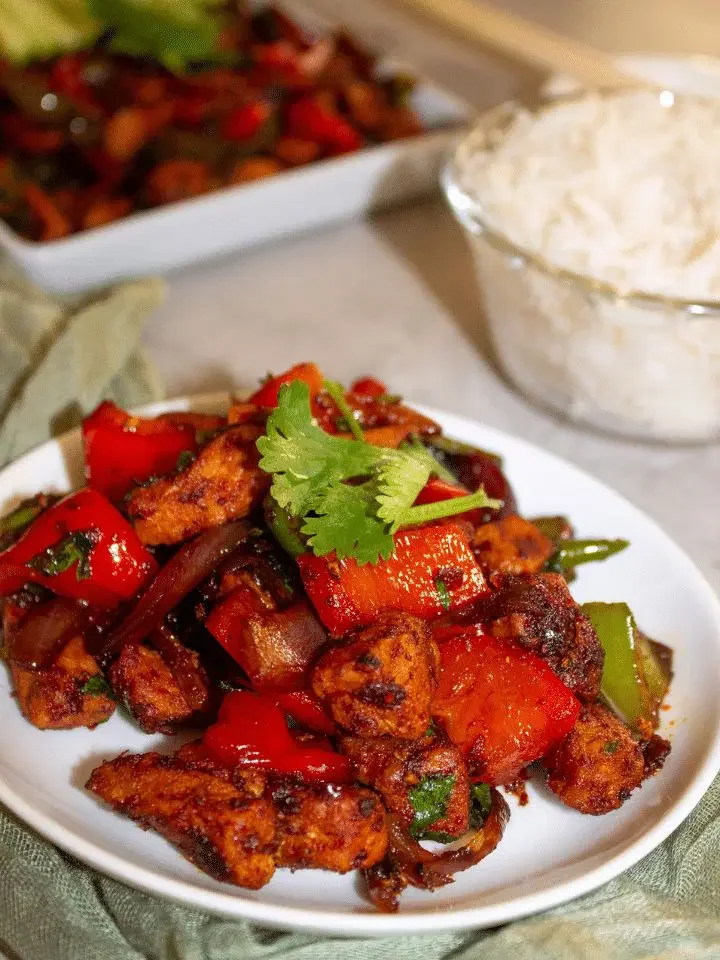
This quick pork sauté pairs tender pork loin with peppers, onion, chilli, ginger and garlic in a savoury soy-seasoned pan. It makes a colourful weeknight dinner and is ready in about 30 minutes.
Ingredients
- 227 g (0.5 lb)boneless pork loin
- 75 g (1/2 cup)red pepper
- 75 g (1/2 cup)green pepper
- 80 g (1/2 cup)chopped onion
- 2green chillies, chopped
- 15 ml (1 tbsp)dark soy sauce
- 2.5 ml (1/2 tsp)black pepper
- 7.5 ml (1/2 tbsp)red chilli flakes
- to tastesalt
- 15 g (1/4 cup)chopped coriander
- 15 ml (1 tbsp)vegetable oil
- 7.5 ml (1/2 tbsp)minced ginger
- 2 clovesgarlic, finely sliced
Instructions
- 1
Brown the pork
Heat the oil in a pan over medium heat. Add the sliced pork and cook until its colour changes and it is lightly browned.
- 2
Add aromatics
Stir in the ginger and garlic and sauté for 2 minutes.
- 3
Stir-fry vegetables
Add the green chillies, onion and both peppers. Stir-fry over medium-high heat for 2–4 minutes.
- 4
Season the pork
Add the red chilli flakes and black pepper, then sauté for 1 minute.
- 5
Coat with soy
Pour in the soy sauce and mix so it coats the ingredients evenly. Cook for 2–4 minutes.
- 6
Finish and serve
Season with salt to taste and garnish with coriander before serving.
What is pork sauté?
A sauté is a quick-cooked dish made by stirring ingredients in a hot pan. This version takes an Asian-inspired flavour direction with soy sauce, ginger, garlic and chilli.
Thinly sliced pork and crisp-tender vegetables make it a straightforward dinner that comes together in stages in one pan.
Nutrition and macros by portion
The nutrition label shows one serving as written: 261 calories, 26g protein, 14g carbs, 11g fat.
| Portion | Adjustment | kcal | Protein | Carbs | Fat |
|---|---|---|---|---|---|
| Lighter | Use less oil | 183 kcal | 18g | 10g | 8g |
| This serving | As written | 261 kcal | 26g | 14g | 11g |
| Hungry | Add steamed rice | 392 kcal | 39g | 21g | 17g |
Pork loin provides most of the protein, while the peppers and onion contribute much of the carbohydrate. The vegetable oil supplies most of the fat, with soy sauce contributing sodium. Serve with extra vegetables or a measured portion of rice to balance the plate to your appetite.
Choosing the pork and vegetables
Pork loin: its boneless, relatively lean meat suits a short cooking time. Slice it evenly so the pieces cook at a similar pace.
Vegetables: peppers and onion bring sweetness and colour, while green chillies add extra heat. Keep the pieces fairly uniform for even stir-frying.
Build flavour in stages
Aromatics: ginger and garlic go in after the pork has started browning, then cook for 2 minutes. This gives them time to release their flavour without starting the recipe in the pan.
Seasoning: chilli flakes and black pepper get a brief minute in the pan before the soy sauce is added. Stir well after adding the sauce so it coats the pork and vegetables.
Watch the cooking cues
Pork: cook it until the colour changes and the outside is lightly browned before adding the aromatics. Avoid cutting the slices too thick, as they may need longer than the vegetables.
Vegetables: the 2–4 minute stir-fry is brief, so check their texture as they cook. They should be heated through while retaining some bite.
Keep the pan moving
Use medium heat for browning the pork and cooking the ginger and garlic, then raise the heat to medium-high for the vegetables. Stir regularly during the vegetable stage so the pieces cook evenly.
The recipe uses several short cooking stages, so have the chopped ingredients ready before heating the pan.
Serve it as a meal
Serve the sauté hot, with the coriander added just before it reaches the table. Steamed rice is a simple accompaniment, or serve it with noodles for a more filling plate.
For extra vegetables, add a simple side of greens without crowding the pan used for the pork.
Recipe notes & tips
- Slice the pork into evenly sized pieces so they brown at a similar rate.
- Prepare all the vegetables and aromatics before you start cooking.
- Use a wide pan so the pork and vegetables can be stirred without piling up.
- Taste before adding salt because dark soy sauce is already salty.
- Add the coriander at the end to keep its fresh flavour.
Variations
- Milder heat: Use fewer green chillies and reduce the chilli flakes.
- More vegetables: Add sliced mushrooms or another quick-cooking vegetable with the peppers.
- Rice bowl: Spoon the finished sauté over steamed rice.
- Noodle serving: Toss the pork and vegetables with cooked noodles at the table.
- Fresh finish: Add a squeeze of lime when serving for a bright contrast.
Common mistakes to avoid
- Uneven pork slices: They cook at different speeds; slice them to a similar thickness.
- Crowded pan: Ingredients may steam rather than brown; use a wide pan and stir in batches if needed.
- Burnt garlic: It can turn bitter; add it after the pork has begun to brown and sauté for the stated 2 minutes.
- Overcooked vegetables: They can lose their bite; check them during the 2–4 minute stir-fry.
- Too much salt: Soy sauce adds saltiness; taste the dish before seasoning.
How to store
Refrigerate leftovers in a covered container and eat within 2 days. Reheat in a pan until piping hot, stirring so the pork and vegetables warm evenly.
Frequently asked questions
Can I use another cut of pork?
Yes, use another boneless cut that can be sliced thinly. Cooking time may vary depending on the cut and thickness.
How can I make it less spicy?
Use fewer green chillies and reduce or omit the chilli flakes. You can adjust the heat before adding the soy sauce.
Can I prepare the ingredients ahead?
Yes. Slice the pork and chop the vegetables, ginger and garlic in advance, then keep them covered in the refrigerator until cooking.
How do I know when the pork is done?
Follow the stated stages and make sure the pork is cooked through before serving. If using a food thermometer, check the centre of a piece.
What can I serve with this sauté?
Steamed rice or noodles both work well. For a lighter accompaniment, serve it with extra vegetables.
Cook it from the original
This recipe comes from spoonbun.com. Their page has the author’s own photos, notes and tips — the best place to cook it from.
Open the recipe on spoonbun.com