
Spanish Lamb Neck Stew (Caldereta de Cordero)
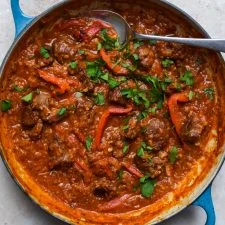
This Spanish lamb neck stew is slowly simmered until the meat is tender, then thickened with a savoury paste of toasted bread, almonds and sherry vinegar. Serve it with potatoes, rice or crusty bread to make a warming, satisfying meal.
Ingredients
- 1 tbsplight oil
- 300 glamb neck, diced
- to tastefreshly ground sea salt and black pepper
- 1brown onion
- 1 large clovegarlic
- 2 sprigsfresh thyme
- 1bay leaf
- 1/2 tbsptomato purée
- 1 x 400 g tinchopped tomatoes
- 100 mlred wine
- 200 mlchicken stock
- 70 gjarred red peppers (approximately 1 pepper)
- to tasteflat-leaf parsley, roughly chopped, for serving
- 25 galmonds
- 1 tbsplight oil
- 40 gstale bread
- 1/2 tbspsherry vinegar
Instructions
- 1
Brown the lamb
Soak the almonds for the breadcrumb paste in a small bowl of cold water. Heat the oil over a medium-high heat in a large lidded frying pan or shallow casserole. Season the lamb well and brown it deeply, working in batches if needed. Keep an eye on the pan base; lower the heat and cook more slowly if the browned bits look in danger of burning.
- 2
Soften the onion
Meanwhile, peel and finely chop the onion, then peel and slice the garlic. Once the lamb is browned, add the onion and lower the heat to medium in a regular frying pan or low in a cast-iron casserole. Add a good pinch of salt and cook for 5 minutes, until the onion begins to soften and colour.
- 3
Add aromatics
Add the sliced garlic and cook for 1 minute, until fragrant. Stir in the thyme, bay leaf and tomato purée, mixing until everything is coated.
- 4
Reduce the sauce
Add the tinned tomatoes and wine, measuring the wine into the empty tomato tin to collect any remaining tomato juices. Raise the heat to high and let the sauce bubble for about 5 minutes, until noticeably reduced.
- 5
Simmer the stew
Pour in the stock and season well with salt and pepper. Turn the heat to low, cover the pan and simmer for 2 hours.
- 6
Make the paste
Towards the end of the cooking time, heat the oil in a small saucepan over a medium-high heat. Tear in the bread and cook for about 5 minutes, stirring regularly, until golden. Transfer it to a mini chopper or bullet blender with the drained almonds, peeled and minced garlic, and sherry vinegar. Blend to a fairly smooth paste.
- 7
Thicken the stew
Raise the heat to medium-high and stir the breadcrumb paste into the stew. Cook for 5 minutes, stirring occasionally, until the sauce has thickened.
- 8
Add the peppers
Meanwhile, cut the roasted peppers into thin strips. Stir them into the sauce and let them warm through while you taste and adjust the seasoning.
- 9
Serve the stew
Serve with potatoes, rice or crusty bread, and scatter over the fresh parsley.
What is caldereta de cordero?
Caldereta is a Spanish name for a rustic stew, and caldereta de cordero is made with lamb. This version builds its flavour by browning the meat, simmering it slowly with tomato and wine, and finishing with a bread-and-almond paste.
The paste gives the sauce body and a distinctive savoury finish, while sherry vinegar and red peppers bring brightness to the rich lamb.
Nutrition and macros by portion
The nutrition label shows one serving as written: 750 calories, 38g protein, 27g carbs, 49g fat.
| Portion | Adjustment | kcal | Protein | Carbs | Fat |
|---|---|---|---|---|---|
| Lighter | Use less oil | 525 kcal | 27g | 19g | 34g |
| This serving | As written | 750 kcal | 38g | 27g | 49g |
| Hungry | Add potatoes or rice | 1125 kcal | 57g | 41g | 74g |
Lamb provides most of the protein and a substantial share of the fat, while the bread, tomatoes and wine contribute carbohydrates. The cooking oil and almonds add further fat, and the stock and seasoning can contribute sodium. Serve with a generous portion of vegetables alongside the suggested potatoes, rice or bread for a more balanced plate.
Building flavour in the pan
Lamb neck: Browning the pieces well at the start creates a deeply savoury base. Work in batches if the pan is crowded, and reduce the heat if the fond on the bottom starts to darken too quickly.
Onion and garlic: The onion softens in the lamb’s cooking juices, while the sliced garlic needs only a brief cook to become fragrant without scorching.
Why the stew simmers slowly
Low heat: A gentle, covered simmer gives the lamb time to become tender and lets the tomato, wine and stock meld. Keep the heat low enough that the liquid barely bubbles rather than boiling hard.
Timing: The recipe calls for 2 hours of simmering before the paste is added. Check that the meat is tender before moving on; if it still feels firm, continue cooking gently.
Making the almond and bread paste
Golden bread: Toasting the torn bread in oil adds flavour as well as helping thicken the sauce. Stir often so the pieces colour evenly.
Smooth texture: Soaking the almonds first helps them blend more easily. Blitz the bread, almonds, garlic and vinegar until the mixture is fairly smooth, then stir it thoroughly into the stew.
Getting the sauce right
Reduction: Let the tomatoes and wine bubble for about 5 minutes before adding the stock. This step concentrates the sauce, so look for a noticeable change rather than relying only on the clock.
Final thickness: After the paste goes in, cook for 5 minutes and stir from time to time. The sauce should cling to the lamb; add a small splash of water or stock if it becomes thicker than you like.
Peppers and serving
Red peppers: Add the sliced roasted peppers near the end so they warm through without losing their shape. Taste the finished stew and adjust the salt and pepper before serving.
On the side: Potatoes, rice and crusty bread are all suggested accompaniments. Each gives you a way to catch the thick, aromatic sauce.
Recipe notes & tips
- Pat the lamb dry before browning so it colours rather than steams.
- Brown the lamb in batches if the pieces would otherwise crowd the pan.
- Lower the heat if the browned residue on the pan base starts to burn.
- Use the empty tomato tin to measure the wine and collect leftover tomato juices.
- Blend the paste until fairly smooth so it thickens the sauce evenly.
- Taste the stew after adding the peppers, then adjust the seasoning before serving.
Variations
- Add smoked paprika: Stir a little in with the tomato purée for a smoky note.
- Use a different pepper: Swap the jarred red pepper for roasted red pepper from a jar.
- Try another herb: Replace the thyme with rosemary for a more resinous aroma.
- Change the vinegar: Use red wine vinegar if you do not have sherry vinegar.
- Add vegetables: Serve with cooked greens or carrots on the side.
- Choose your starch: Pair the stew with potatoes, rice or crusty bread as suggested.
Common mistakes to avoid
- Crowding the pan: The lamb can steam instead of browning; cook it in batches.
- Burning the fond: The browned bits add flavour, but can turn bitter; lower the heat if they darken too fast.
- Boiling too hard: A vigorous simmer can reduce the liquid too quickly; keep the stew covered over low heat.
- Skipping the reduction: The tomato and wine need about 5 minutes to bubble down before the stock is added.
- Adding the paste too early: Stir it in after the 2-hour simmer so it thickens the finished stew.
- Under-seasoning at the end: Taste after adding the peppers and adjust the salt and pepper before serving.
How to store
Cool leftovers promptly and keep them covered in the fridge for up to 3 days. Reheat gently in a covered pan until piping hot, adding a splash of water or stock if the sauce has thickened in storage.
Frequently asked questions
Can I make this stew ahead?
Yes. Cool it and refrigerate it in a covered container, then reheat gently until piping hot. The sauce may thicken while chilled, so loosen it with a little water or stock if needed.
How do I know when the lamb is tender?
After the 2-hour simmer, it should yield easily when pressed with a fork. If it is still firm, continue simmering gently and check again.
Can I use a frying pan instead of a casserole?
Yes, as long as it is large enough and has a lid. Use the medium heat specified for a regular frying pan when cooking the onion.
What can I serve with caldereta de cordero?
The recipe suggests potatoes, rice or crusty bread. They all work well for catching the thick sauce.
Can I freeze the leftovers?
The stew can be frozen in a sealed, freezer-safe container, though the texture of the peppers may soften after thawing. Defrost it in the fridge and reheat gently until piping hot.
What if I do not have a mini chopper?
Use a small food processor or blender that can handle the paste. Blend the toasted bread, soaked almonds, garlic and sherry vinegar until fairly smooth.
Cook it from the original
This recipe comes from rachelphipps.com. Their page has the author’s own photos, notes and tips — the best place to cook it from.
Open the recipe on rachelphipps.com