
Fish chicharrón
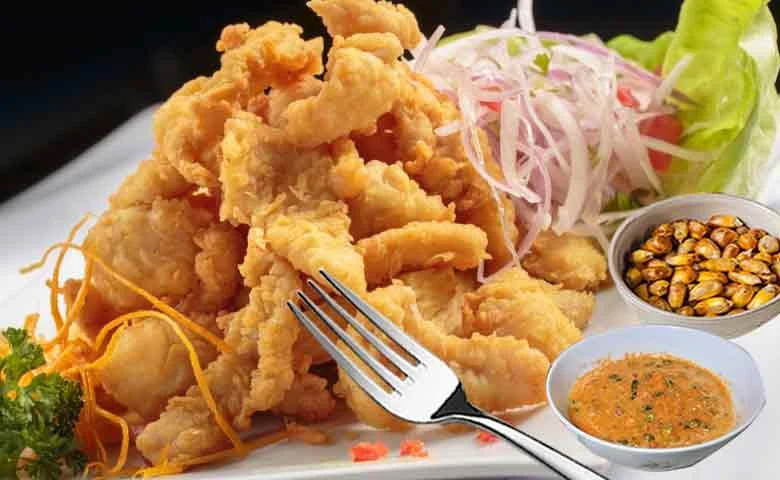
Peruvian fish chicharrón is made from seasoned pieces of fish coated in a crisp flour-and-starch batter and fried until golden. Serve it hot with lime, salsa criolla and traditional sides for a satisfying, shareable meal.
Ingredients
- 1 kgfresh fish fillet
- 125 g (1 cup)wheat flour
- 60 g (½ cup)chuño or potato starch
- 2eggs
- 120 ml (½ cup)evaporated milk or water
- 2 clovesgarlic
- 5 ml (1 teaspoon)ground cumin
- 2.5 ml (½ teaspoon)black pepper
- 5 ml (1 teaspoon)salt
- 2.5 ml (½ teaspoon)paprika or ground ají panca
- Juice of 1lime
- As neededvegetable oil, for frying
- As neededhake
- As neededcroaker
- As neededsole
- As neededbonito
- As neededmahi-mahi
- As neededtilapia
- As neededgrouper
- As neededcabrilla
- 2 clovescrushed garlic
- 5 ml (1 teaspoon)salt
- 2.5 ml (½ teaspoon)ground cumin
- 2.5 ml (½ teaspoon)pepper
- 2.5 ml (½ teaspoon)paprika
- Juice of 1lime
- To tastesalsa criolla
- As neededlimes, halved
- To tastefried or boiled yuca
- To tastefried sweet potato
- To tastecooked corn on the cob
- To tasteAndean cancha corn
- To tastelettuce
- To tastemayonnaise or tartare sauce
- To tasteají amarillo
Instructions
- 1
Cut the fish
Cut the fillets into medium-sized pieces, about 3–4 cm across. Avoid making them too small, as they may dry out during frying. Aim for evenly sized pieces so they cook at the same rate. This takes about 5 minutes.
- 2
Dry the fish
Set the pieces on kitchen paper and pat away surface moisture thoroughly. Dry fish helps the coating stay in place and reduces splattering when it meets the hot oil. This takes about 3 minutes.
- 3
Mix the seasoning
Put the crushed garlic, salt, pepper, cumin, paprika and lime juice in a bowl. Stir them together into an aromatic paste. This takes about 2 minutes.
- 4
Season the fish
Add the fish pieces to the seasoning and turn them gently until coated. A few minutes is enough; there is no need for a long marinade. Avoid adding too much lime, which can change the fish’s texture before frying. Allow about 5 minutes.
- 5
Make the coating
In one bowl, combine the wheat flour and chuño or potato starch with a small pinch of salt and pepper to taste. In a second bowl, beat the eggs with the evaporated milk or water. The starch helps make the coating crisp.
- 6
Coat the fish
Dip each piece into the egg mixture, then coat it in the flour mixture, pressing lightly so the coating adheres. Shake off any excess flour. Fry the pieces soon after coating rather than leaving them to sit. This takes about 5 minutes.
- 7
Heat the oil
Pour plenty of oil into a deep frying pan or pot and heat over medium-high heat to about 175–180°C. If you do not have a thermometer, drop in a little coating mixture: it should bubble straight away without browning too quickly.
- 8
Fry the fish
Carefully add the fish pieces to the hot oil in batches, taking care not to crowd the pan. Fry each batch for about 3–5 minutes, depending on the size of the pieces, until golden and crisp.
- 9
Drain the pieces
Lift out the fish and drain it on kitchen paper or, preferably, a wire rack to help preserve its crisp texture. Leave it to drain for 1–2 minutes.
- 10
Serve straight away
Serve the fish chicharrón while it is still hot and crisp, with salsa criolla, lime, yuca, sweet potato, corn or cancha, and tartare sauce or mayonnaise.
What is fish chicharrón?
Chicharrón is widely associated with fried foods in Latin American cooking; in Peru, fish chicharrón brings that crisp, golden treatment to seafood. Bite-sized pieces of seasoned fish are coated and fried, then served with bright, savoury accompaniments.
This version uses a wheat-flour and chuño or potato-starch coating. The starch helps create a crisp shell around tender fish, while garlic, cumin, paprika and lime add flavour.
Nutrition and macros by portion
The nutrition label shows one serving as written: 450 calories, 0g protein, 0g carbs, 0g fat.
| Portion | Adjustment | kcal | Protein | Carbs | Fat |
|---|---|---|---|---|---|
| Lighter | Less coating, more lettuce | 315 kcal | 0g | 0g | 0g |
| This serving | As written | 450 kcal | 0g | 0g | 0g |
| Hungry | Add yuca and corn | 675 kcal | 0g | 0g | 0g |
The fish supplies most of the protein, while the flour and starch contribute carbohydrates. The frying oil, eggs and optional mayonnaise or tartare sauce add much of the fat; serve with lettuce or salsa criolla and choose a moderate portion of starchy sides to balance the plate.
Choosing the fish
Firm fillets: Hake, croaker, sole, bonito, mahi-mahi, tilapia, grouper or cabrilla are among the options listed. Choose a fresh fillet that can be cut into pieces without falling apart.
Even pieces: Cut the fish into 3–4 cm chunks. Similar-sized pieces are easier to fry evenly and are less likely to overcook while larger ones finish.
Drying and seasoning
Dry surface: Pat the fish thoroughly with kitchen paper before adding the seasoning. Excess moisture can cause oil to splutter and make the coating less likely to stick.
Brief marinade: Toss the fish with the garlic, salt, pepper, cumin, paprika and lime juice, then leave it only for a few minutes. Too much lime or a long rest can affect the fish’s texture before cooking.
Getting a crisp coating
Two bowls: Keep the beaten eggs and evaporated milk or water separate from the flour and chuño mixture. Dip each piece in the liquid first, then coat it with the dry mixture.
Shake off excess: Press the flour mixture lightly onto each piece, then shake away loose flour. Coat the fish shortly before frying so the outside does not become damp as it sits.
Frying in batches
Hot oil: Aim for 175–180°C. A small drop of batter should bubble immediately but not darken too fast.
Room to fry: Add the fish in batches rather than filling the pan. Fry each batch for about 3–5 minutes, depending on piece size, until golden and crisp; a crowded pan can cool the oil.
Serving the Peruvian way
Fresh and tangy: Serve the fish as soon as it has drained, with lime and salsa criolla. Their acidity and freshness complement the fried coating.
Classic sides: Pair it with yuca, fried sweet potato, cooked corn or cancha. Lettuce, ají amarillo and mayonnaise or tartare sauce are also listed as accompaniments.
Recipe notes & tips
- Dry the fish well before seasoning to help the coating adhere.
- Keep the fish pieces close to 3–4 cm so they cook at a similar pace.
- Use lime sparingly in the brief marinade to avoid changing the fish’s texture.
- Coat the fish shortly before it goes into the oil.
- Fry in batches and leave space around the pieces.
- Drain the cooked fish on a wire rack to help it stay crisp.
Variations
- Try another fish: Use one of the listed options, such as hake, sole or tilapia, in place of your usual fillet.
- Use water: Replace evaporated milk with water in the egg mixture for a different batter.
- Add ají panca: Choose ground ají panca instead of paprika in the seasoning.
- Serve with yuca: Add boiled or fried yuca for a traditional-style side.
- Choose a sauce: Offer salsa criolla, mayonnaise or tartare sauce alongside the fish.
Common mistakes to avoid
- Wet fish: The coating may slip and the oil can splatter; pat the pieces dry before seasoning.
- Uneven pieces: Small pieces may dry out before large ones cook; cut the fish into similar 3–4 cm chunks.
- Too much lime: A heavy or lengthy marinade can affect the fish’s texture; season briefly with the stated lime juice.
- Coating too early: The flour can become damp while it waits; coat the pieces shortly before frying.
- Crowded pan: The oil temperature may drop; fry the fish in batches with room around each piece.
- Overcooking: Fish can lose its tender texture; check from about 3 minutes and remove it when golden and crisp.
How to store
For the best texture, serve the fish immediately. Refrigerate leftovers in a covered container for up to 2 days; reheat in an oven or air fryer until hot, as microwaving softens the coating.
Frequently asked questions
Which fish can I use?
The recipe lists hake, croaker, sole, bonito, mahi-mahi, tilapia, grouper and cabrilla. Choose a fresh fillet firm enough to cut into pieces.
Can I use water instead of evaporated milk?
Yes. The recipe allows either evaporated milk or water to beat with the eggs.
What is chuño?
Chuño is a traditional Andean potato product. For this coating, the recipe gives potato starch as an alternative.
How do I know the oil is hot enough?
The target is 175–180°C. Without a thermometer, test with a little coating mixture; it should bubble at once without browning rapidly.
How long should the fish fry?
Fry in batches for about 3–5 minutes, depending on the size of the pieces. Take them out when golden and crisp.
What should I serve with fish chicharrón?
Serve it with salsa criolla and lime, plus yuca, sweet potato, cooked corn or cancha. Lettuce, mayonnaise, tartare sauce and ají amarillo are also listed.
Cook it from the original
This recipe comes from recetascocinaperuana.com. Their page has the author’s own photos, notes and tips — the best place to cook it from.
Open the recipe on recetascocinaperuana.com