
Baked White Wine Chicken Breasts
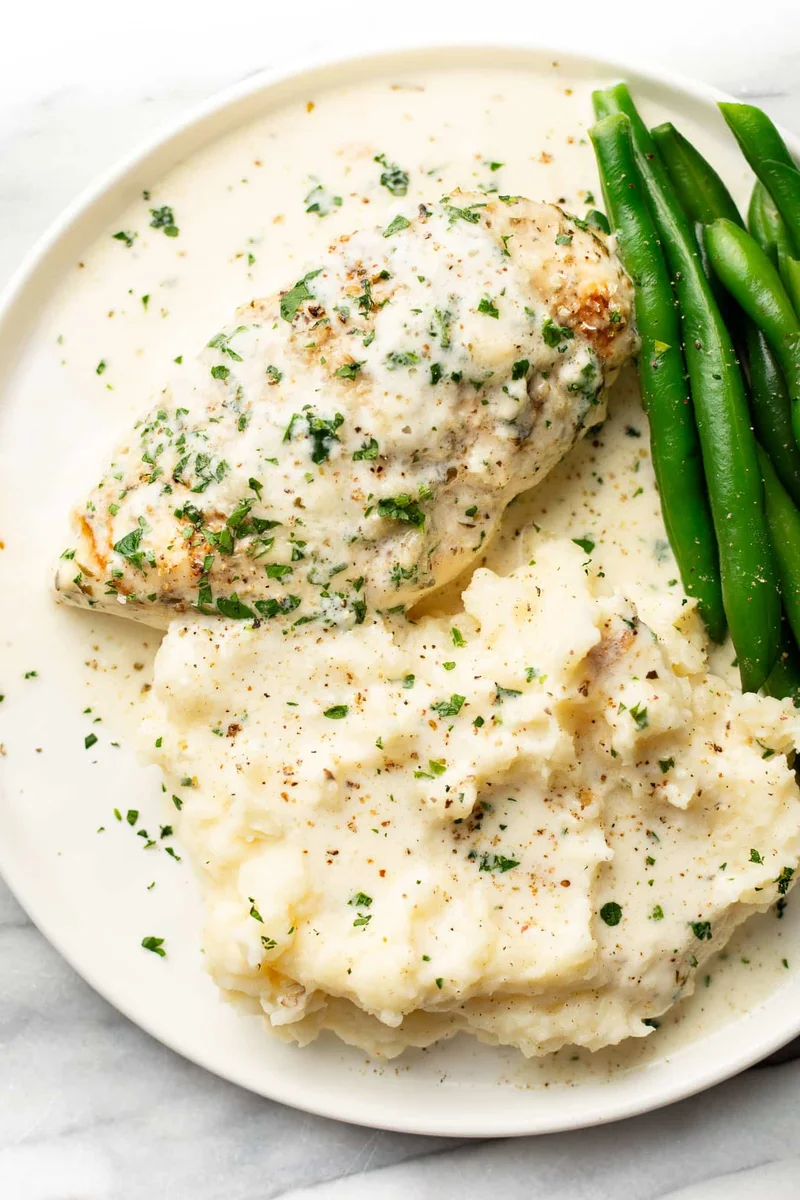
These baked chicken breasts are cooked in a creamy white wine sauce flavoured with garlic and Italian seasoning. The oven does the work, so you get a comforting main without frying or a separate pan for the sauce.
Ingredients
- 907 g (2 lb; about 4 chicken breasts, roughly 227 g/8 oz each)boneless, skinless chicken breasts
- ½ teaspoongarlic powder
- ½ teaspoonItalian seasoning
- to tastesalt and pepper
- 33 g (⅓ cup)freshly grated Parmesan
- 1 tablespoonfinely chopped fresh parsley
- 240 ml (1 cup)double cream or whipping cream
- 60 ml (¼ cup)chicken stock
- 60 ml (¼ cup)dry white wine
- 6 g (¾ tablespoon)cornflour
- 2 clovesgarlic, minced
- ½ teaspoonItalian seasoning
- ¼ teaspoonsalt
Instructions
- 1
Heat the oven
Preheat the oven to 200°C (400°F) and position a rack in the top third.
- 2
Season the chicken
Arrange the chicken breasts side by side in a 23 × 33 cm (9 × 13-inch) baking dish. Sprinkle with the garlic powder, Italian seasoning, and salt and pepper.
- 3
Mix the sauce
In a medium bowl, whisk together the cream, chicken stock, white wine, cornflour, minced garlic, Italian seasoning and ¼ teaspoon salt.
- 4
Add the sauce
Pour the sauce around the chicken in the baking dish.
- 5
Bake the chicken
Bake uncovered for 30–35 minutes, until the chicken is cooked through and reaches 74°C (165°F). Ovens and breast thickness vary, so check it early.
- 6
Finish and rest
Remove the dish from the oven, stir the sauce and spoon it over the chicken. Scatter the Parmesan and parsley over the top, then leave the chicken to rest for 5 minutes before serving or slicing. Add more salt and pepper if needed.
What is baked white wine chicken?
This is an American-style baked chicken supper, with chicken breasts cooked in a creamy sauce rather than browned in a pan. White wine brings a little acidity to the rich cream, while garlic and Italian seasoning give the sauce its savoury flavour.
The method keeps the preparation simple: the chicken and sauce bake together, then Parmesan and parsley go on at the end. That makes it a practical choice when you want a substantial, sauce-led main without messy frying.
Nutrition and macros by portion
The nutrition label shows one serving as written: 520 calories, 58g protein, 6g carbs, 28g fat.
| Portion | Adjustment | kcal | Protein | Carbs | Fat |
|---|---|---|---|---|---|
| Lighter | Use less cream | 364 kcal | 41g | 4g | 20g |
| This serving | As written | 520 kcal | 58g | 6g | 28g |
| Hungry | Serve with extra potatoes | 780 kcal | 87g | 9g | 42g |
The chicken supplies most of the protein, while the cream and Parmesan contribute much of the fat and saturated fat. The small amount of cornflour and the cream provide most of the carbohydrates; serve with vegetables and a measured portion of potatoes or rice to round out the plate.
Choosing the chicken
Size matters: the recipe uses four breasts of roughly 227 g each. If yours differ considerably in thickness, check the smaller pieces first so they do not dry out while the thicker ones finish.
Seasoning first: garlic powder and Italian seasoning are sprinkled directly over the chicken. This gives the meat flavour even where it is not covered by sauce.
Getting the sauce right
Whisking: combine the cream, stock, wine, cornflour, garlic, seasoning and salt thoroughly before pouring. A smooth mixture helps the cornflour disperse through the sauce as it bakes.
Wine choice: use a dry white wine, not a sweet one, to keep the sauce savoury. The chicken stock adds depth, while the cream softens the wine's sharper edge.
Check for doneness
Temperature: the chicken is ready when the thickest part reaches 74°C (165°F). A thermometer is more dependable than judging by the outside, especially when the breasts are uneven in size.
Timing: start checking before the 30-minute mark if your chicken is on the smaller or thinner side. The recipe's 30–35 minutes is a guide, since ovens and pieces of chicken vary.
Finish for flavour
Stir and spoon: stir the sauce once the dish comes out, then spoon it over the chicken so the coating is evenly distributed. The sauce will be hot, so take care when handling the dish.
Resting: leave the chicken for 5 minutes before cutting or serving. Add the Parmesan and parsley after baking, as directed, for a savoury finish and a fresh herbal note.
What to serve with it
A starchy side such as mashed potatoes, rice or crusty bread is useful for catching the creamy sauce. Keep the side simply seasoned so it does not compete with the garlic, wine and herbs.
For balance, add a green vegetable such as broccoli, green beans or a crisp salad. Serve the chicken with some sauce, rather than pouring all of it onto the plate at once.
Recipe notes & tips
- Use a baking dish that holds the breasts in one layer so they cook evenly.
- Grate the Parmesan fresh for a more even sprinkle over the finished chicken.
- Measure the cornflour carefully and whisk until no lumps remain.
- Check the thickest breast first and take the dish out as soon as the chicken reaches 74°C (165°F).
- Let the chicken rest for the full 5 minutes before slicing so it stays juicy.
Variations
- Add mushrooms: stir sliced mushrooms into the sauce before pouring it around the chicken.
- Use fresh herbs: replace the dried Italian seasoning with a suitable mix of chopped fresh herbs.
- Add greens: serve with spinach or wilted kale on the side rather than baking it in the sauce.
- Swap the wine: use extra chicken stock in place of the white wine for a wine-free version.
- Add a little lemon: finish with a small squeeze of lemon juice for a brighter sauce.
Common mistakes to avoid
- Crowding the dish: overlapping breasts cook unevenly; arrange them side by side in a single layer.
- Skipping the thermometer: appearance can be misleading; check the thickest part for 74°C (165°F).
- Using sweet wine: it can make the cream sauce taste cloying; choose a dry white wine.
- Leaving cornflour lumpy: it may thicken unevenly; whisk it thoroughly into the sauce ingredients.
- Cutting straight away: the juices can run out; rest the chicken for 5 minutes before slicing.
How to store
Refrigerate leftovers in a covered container for up to 3 days. Reheat gently in the oven or in a covered pan until piping hot, adding a splash of stock or cream if the sauce has thickened.
Frequently asked questions
Can I use chicken thighs instead of breasts?
Yes, boneless, skinless thighs can be used, but their cooking time may differ. Check that the thickest piece reaches 74°C (165°F).
Can I leave out the white wine?
Yes. Replace it with the same amount of chicken stock; the sauce will have a less wine-forward flavour.
How can I tell when the chicken is done?
Check the thickest part with a food thermometer. It should reach 74°C (165°F).
Can I prepare the sauce ahead?
You can whisk the sauce ingredients together shortly ahead and keep them covered in the fridge. Whisk again before pouring, as the cornflour may settle.
Why check the chicken early?
Breast thickness and oven temperatures vary, so thinner pieces can finish before the stated 30–35 minutes. Checking early helps prevent overcooking.
Cook it from the original
This recipe comes from saltandlavender.com. Their page has the author’s own photos, notes and tips — the best place to cook it from.
Open the recipe on saltandlavender.com