
Classic Tourtière
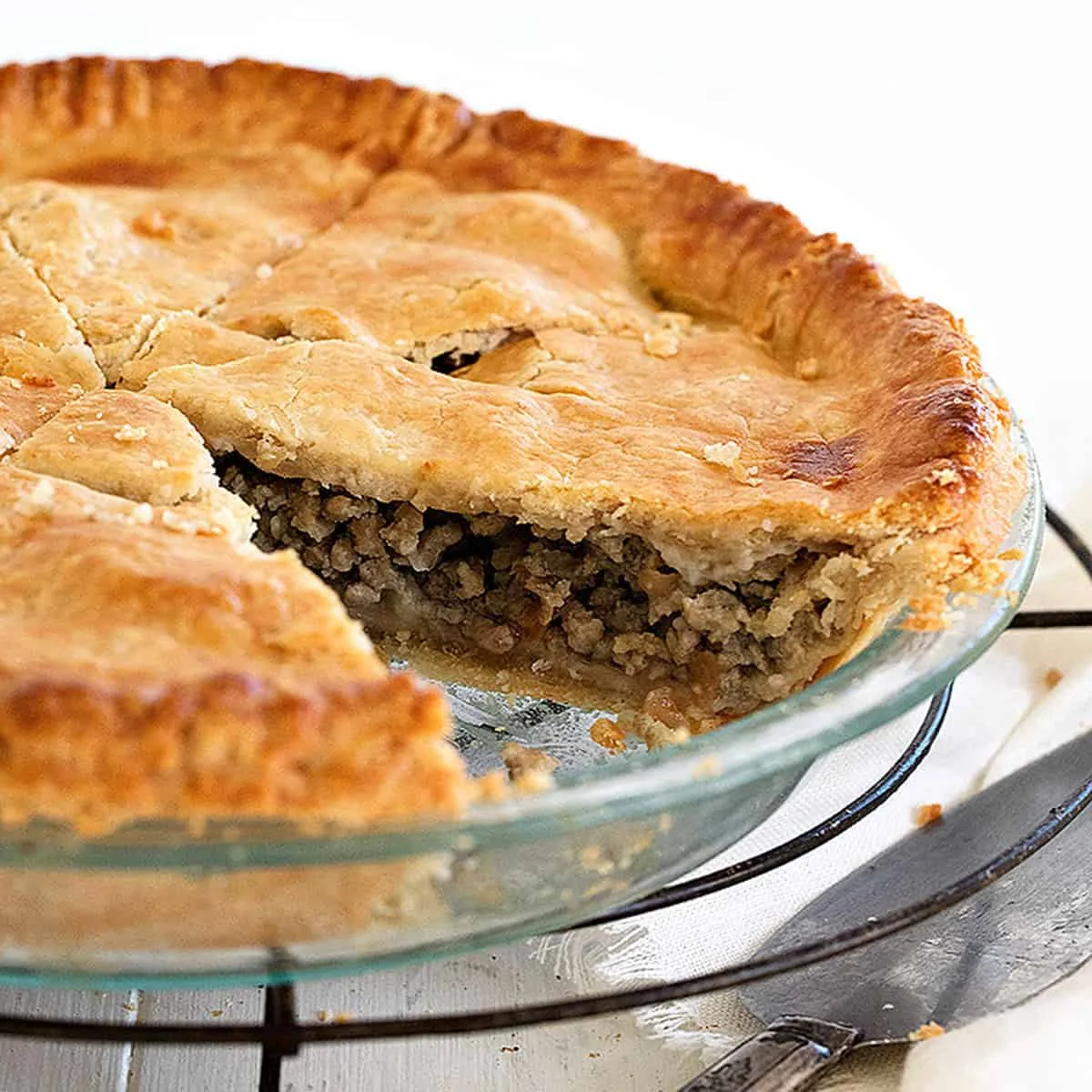
Classic tourtière is a French-Canadian meat pie filled with gently simmered pork and warming herbs, enclosed in a rich pastry. Make two pies for a festive meal, or serve them warm as a hearty centrepiece at Christmas.
Ingredients
- 907 g (2 lb)ground pork
- 1 mediumonion, finely diced
- 2 teaspoonssalt
- 1 teaspoondry mustard
- 1 teaspoondried thyme leaves
- ½ teaspoondried sage leaves
- ¼ teaspoonsavory, marjoram, or omit
- 240 ml (1 cup)water
- Crust from 4 or 5 slicesbread, crumbled
- 454 g (1 lb)lard
- 660 g (5½ cups)cake and pastry flour
- 4 tablespoonsbrown sugar
- ½ teaspoonbaking soda
- 1 teaspoonsalt
- 1 largeegg
- 1 tablespoonvinegar
- As neededwater
- 1 largeegg
- 1 tablespoonwater
Instructions
- 1
Cook the filling
Combine the pork, onion, salt, dry mustard, thyme, sage, savory and 240 ml water in a saucepan. Cook over medium heat, stirring constantly, until the meat is no longer pink, taking care not to brown it. Reduce the heat and simmer uncovered for 30 minutes. Stir in the crumbled bread crusts until they are absorbed, then transfer the filling to a bowl, cover and refrigerate until chilled.
- 2
Make the pastry
In a large bowl, mix the flour, brown sugar, baking soda and salt. Cut in the lard with a pastry blender or two knives until incorporated. Beat the egg and vinegar in a 1-cup measuring cup, then add enough water to bring the mixture to 1 cup. Add about two-thirds of it to the flour mixture and stir; add only as much more as needed to make a moist dough. Divide the dough into 4 pieces, wrap each in plastic wrap and chill for at least 1 hour.
- 3
Heat the oven
Preheat the oven to 200°C (400°F), using the regular bake setting rather than fan-assisted.
- 4
Assemble the pies
Take one piece of dough and roll it on a well-floured surface into a circle large enough for a 23 cm (9-inch) pie plate. Trim away excess dough as needed and line the plate. Add half the meat filling. Roll out another piece of dough to cover the pie, then pinch or fork the edges together to seal. Repeat with the remaining dough and filling to make a second pie. Refrigerate or freeze any excess pastry for another use, if desired.
- 5
Glaze the pastry
Beat one egg with 1 tablespoon water and brush the tops of the pies generously. Cut a few slits in the centre of each pie to let steam escape.
- 6
Bake until golden
Bake at 200°C (400°F) for 35–40 minutes, or until golden. If using glass pie plates, reduce the oven to 190°C (375°F) after putting the pies in and bake for about 40–45 minutes. If the pastry looks as though it may over-brown, cover it with a sheet of aluminium foil for the final part of baking.
- 7
Serve warm
Serve the pies warm.
What is tourtière?
Tourtière is a French-Canadian meat pie, traditionally associated with Christmas and other special gatherings. Recipes vary by family and region, but this version uses seasoned ground pork in a pastry crust.
Gently simmering the pork with herbs keeps the filling savoury rather than browned, while crumbled bread helps it hold together. The recipe makes two pies and a generous quantity of pastry.
Nutrition and macros by portion
The nutrition label shows one serving as written: 450 calories, 14g protein, 26g carbs, 32g fat.
| Portion | Adjustment | kcal | Protein | Carbs | Fat |
|---|---|---|---|---|---|
| Lighter | Serve a smaller slice | 315 kcal | 10g | 18g | 22g |
| This serving | As written | 450 kcal | 14g | 26g | 32g |
| Hungry | Larger slice with salad | 675 kcal | 21g | 39g | 48g |
The pork provides most of the protein, while the flour and brown sugar contribute carbohydrates; lard makes the pastry the main source of fat. Balance a slice with a generous serving of vegetables or salad.
The pork filling
Seasoning: Thyme, sage, dry mustard and a little savory give the pork its aromatic character. Marjoram can stand in for savory, or you can leave it out.
Simmering: Stir the meat constantly at first and stop cooking once it is no longer pink; the method specifically avoids browning. The 30-minute uncovered simmer lets the flavours mingle before the bread is stirred in.
Why the bread crusts matter
Bread: Crumbled crusts are stirred into the cooked filling until absorbed, helping it become cohesive rather than loose in the pie. Add them after simmering, as directed.
Chilling: Cool the filling in the refrigerator before assembling. A chilled filling is easier to handle and gives the pastry less time to warm while you work.
Handling the pastry
Lard: Cut it into the flour mixture with a pastry blender or two knives until incorporated. Work steadily so the pastry comes together without unnecessary handling.
Moisture: Start with about two-thirds of the egg, vinegar and water mixture, then add only enough of the remainder to make a moist dough. The recipe may not need all of the liquid.
Resting: Divide the dough into four pieces and chill them for at least an hour. Keep the unused pieces chilled while you roll and assemble the pies.
Rolling and sealing
Base: Roll each piece on a well-floured surface into a circle large enough for a 23 cm pie plate, then trim off excess pastry. The recipe makes two pies, using two pieces of dough for each.
Edges: Place half the filling in each lined plate, cover with another round of pastry and seal the edges by pinching or pressing with a fork. Cut a few slits in the centre of each top so steam can escape.
Baking cues
Oven: Use regular, non-fan-assisted baking at 200°C. If your pie plates are glass, lower the temperature to 190°C once the pies are in the oven and allow about 40–45 minutes.
Colour: For standard pie plates, bake for 35–40 minutes, looking for a golden top. If the pastry is darkening too quickly, lay foil over it for the final part of baking.
Serving the pies
Rest: Serve the tourtière warm, so the filling is hot and the pastry is easy to cut. The recipe gives no separate resting time.
On the side: Pair a slice with a crisp green salad or cooked vegetables to bring freshness to the rich pastry and pork filling. A spoonful of tangy chutney or relish can also provide contrast.
Recipe notes & tips
- Chill the filling fully before assembling so it is easier to portion into the pastry cases.
- Add the pastry liquid gradually; stop when the dough is moist rather than using it all automatically.
- Flour the work surface well to help roll the dough without sticking.
- Keep the pastry pieces you are not using chilled while assembling the pies.
- Use the egg-and-water glaze generously for an evenly coloured top.
- Cover the pastry loosely with foil if it is browning too quickly before the filling is ready.
Variations
- Use marjoram: Replace the savory with marjoram as suggested in the ingredient list.
- Omit the savory: Leave it out if you do not have it; the other herbs still season the pork.
- Save spare pastry: Refrigerate or freeze the excess dough for another use.
- Serve with relish: Add a tangy relish or chutney alongside each warm slice.
- Add a salad: Pair the pie with crisp salad leaves for a fresh contrast.
Common mistakes to avoid
- Browning the pork: Cook only until it is no longer pink, then lower the heat and simmer as directed.
- Using warm filling: Refrigerate the filling until chilled before putting it into the pastry.
- Adding all the liquid: Start with about two-thirds and add only enough to make a moist dough.
- Skipping the pastry chill: Refrigerate the wrapped dough for at least 1 hour before rolling.
- Leaving the edges open: Pinch or fork the pastry edges together to seal in the filling.
- Over-browning the crust: Cover the tops with foil for the final part of baking if needed.
How to store
Refrigerate leftover pie covered or in an airtight container and use within 3–4 days. Reheat portions in the oven until hot throughout; the pastry may soften slightly after storage. Excess pastry can be refrigerated or frozen for another use.
Frequently asked questions
How many pies does this recipe make?
It makes two pies, each in a 23 cm (9-inch) pie plate, using half the filling per pie.
Can I make the filling ahead?
Yes. Cook it as directed, transfer it to a bowl, cover and refrigerate until chilled before assembling the pies.
Do I have to use savory?
No. The recipe allows marjoram instead, or you can omit the savory.
Why is the meat not browned?
The method calls for cooking it only until it is no longer pink, then simmering it uncovered. Follow that cue rather than browning the pork.
Can I use glass pie plates?
Yes. When using glass plates, lower the oven to 190°C (375°F) after putting the pies in and bake for about 40–45 minutes.
What should I do with leftover pastry?
The recipe makes more pastry than needed for the two pies. Wrap and refrigerate or freeze the excess for another time and purpose.
Cook it from the original
This recipe comes from seasonsandsuppers.ca. Their page has the author’s own photos, notes and tips — the best place to cook it from.
Open the recipe on seasonsandsuppers.ca