
French Toast Bagels
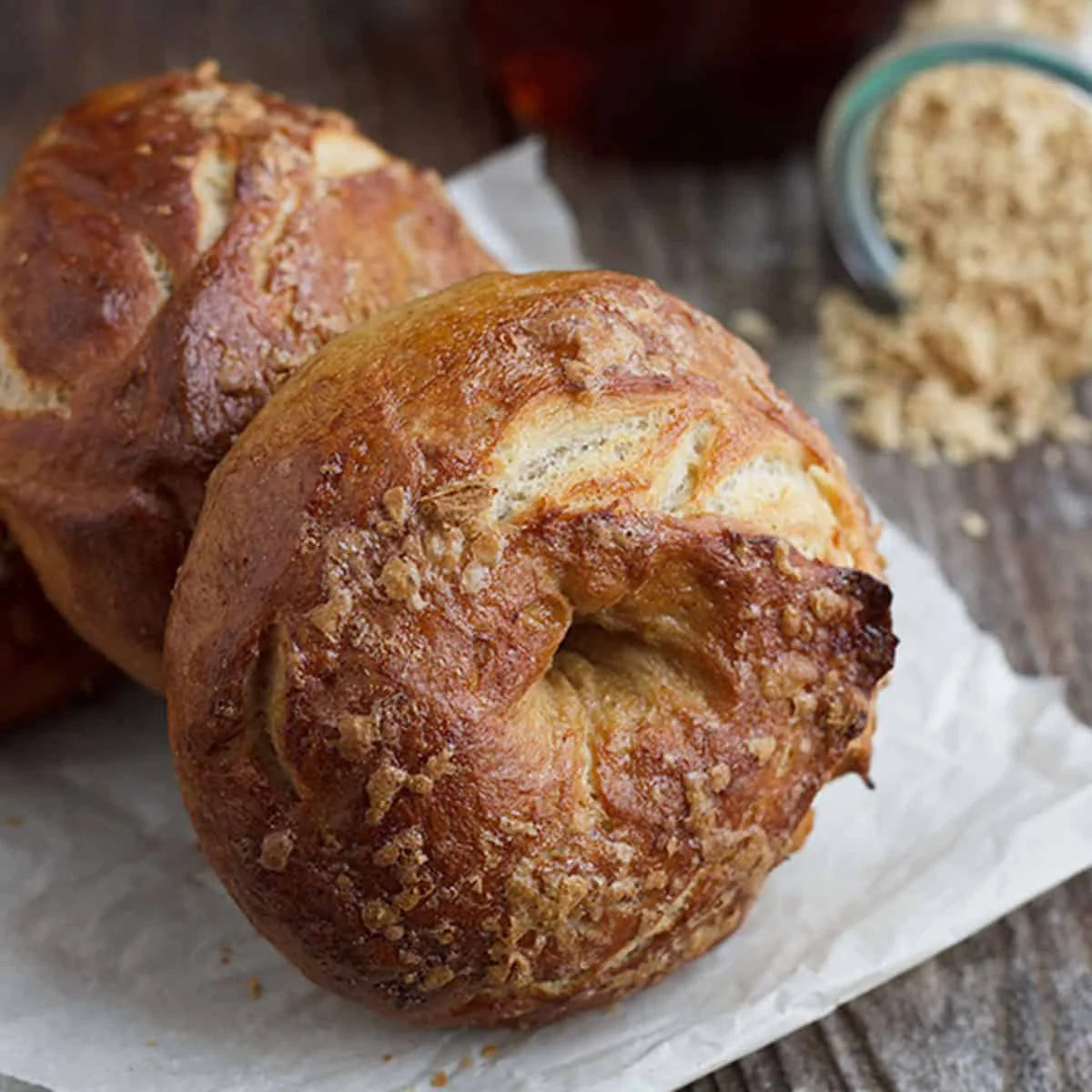
These soft, chewy bagels bring French toast flavours to a yeasted dough, with cinnamon, vanilla and maple syrup, then a sweet maple-sugar topping. Make a batch for breakfast or brunch; the shaped bagels can chill overnight before boiling and baking.
Ingredients
- 125 g (1 cup)plain flour or strong white bread flour, spooned and levelled
- 240 ml (1 cup)lukewarm water, about 41°C (105°F)
- 1 teaspooninstant yeast or active dry yeast
- 1¼ teaspoonsinstant yeast or active dry yeast
- 67 g (⅓ cup), packedlight brown sugar
- 1 teaspoonground cinnamon
- 1¾ teaspoonskosher salt (use slightly less if using fine table salt)
- 2 largeeggs
- 1½ teaspoonsvanilla extract
- 80 ml (⅓ cup)maple syrup
- 375–440 g (3–3½ cups)plain flour or strong white bread flour, spooned and levelled
- 1 tablespoonbicarbonate of soda, for boiling
- 1 largeegg, for the egg wash
- To tastemaple sugar or light brown sugar, for sprinkling
Instructions
- 1
Proof the yeast
If using active dry yeast, dissolve it in the lukewarm water before adding it to the dough. The method also suggests proofing it in a couple of tablespoons of water; you may need a little extra flour.
- 2
Mix the starter
In a large bowl or stand-mixer bowl, combine the first quantity of flour, the water and yeast with the paddle attachment. Leave for 20–30 minutes, until bubbly.
- 3
Knead the dough
Add the remaining ingredients except the additional flour and mix with the paddle. Switch to the dough hook, add 2 cups of the additional flour and knead until combined. Add more flour ¼ cup at a time until the dough is smooth, clears the bowl and is no longer sticky. Transfer to a greased bowl, cover and leave to rise until doubled, 1½–2 hours.
- 4
Shape the bagels
Turn the risen dough onto a lightly floured surface and gently press out the gas. Divide into 8–10 equal pieces, shape each into a ball and leave to rest for a few minutes. With a floured index finger, make a hole in the centre of each ball and stretch it into a bagel shape. Arrange on a parchment-lined baking sheet, cover with greased plastic wrap and leave at room temperature for 10–15 minutes. Refrigerate for at least 1 hour, or up to 12 hours.
- 5
Boil the bagels
Bring a large pot of water to the boil and preheat the oven to 220°C (425°F), without the fan, with racks in the upper and lower thirds. Line two baking sheets with parchment. Add the bicarbonate of soda to the boiling water. Take the bagels from the fridge and boil 2–3 at a time for 1 minute on each side. Lift them onto the lined baking sheets, arranging 4–5 per sheet, and repeat.
- 6
Top and bake
Beat the egg with 1 tablespoon of water and brush each bagel generously with the egg wash. Sprinkle generously with maple sugar or brown sugar. Bake on the upper and lower racks for 10 minutes, then swap the trays between racks and turn them front to back. Bake for another 8–10 minutes, until golden, then cool on a rack.
What are French toast bagels?
Bagels are ring-shaped, yeasted breads traditionally boiled before baking, a method associated with Jewish communities in Central and Eastern Europe. This American-style version borrows the familiar sweet notes of French toast rather than using a separate topping or filling.
Cinnamon, vanilla, brown sugar and maple syrup flavour the dough, while a maple-sugar finish adds sweetness to the crust. The brief boil helps set the outside so the baked bagels have a chewy texture.
Nutrition and macros by portion
The nutrition label shows one serving as written: 124 calories, 2g protein, 24g carbs, 1g fat.
| Portion | Adjustment | kcal | Protein | Carbs | Fat |
|---|---|---|---|---|---|
| Lighter | Smaller bagel portion | 87 kcal | 1g | 17g | 1g |
| This serving | As written | 124 kcal | 2g | 24g | 1g |
| Hungry | Serve two bagels | 186 kcal | 3g | 36g | 2g |
The recipe's listed nutrition per serving is 124 kcal, with most of the carbohydrates coming from the flour, brown sugar and maple syrup. The eggs contribute some protein and fat, while the overall protein and fat figures are modest; serve a bagel with yoghurt or eggs and fruit for a more balanced plate.
The dough ingredients
Flour choice: Plain flour works, while strong white bread flour can give the dough more chew. Add the final flour gradually, as the dough should become smooth and stop sticking rather than turn stiff.
Maple and spice: Maple syrup, cinnamon and vanilla give the dough its French toast character. Brown sugar adds sweetness and helps round out the maple flavour.
Getting the dough texture right
Initial rest: The flour, water and yeast mixture sits for 20–30 minutes until bubbly. That visible bubbling is the cue to continue with the remaining ingredients.
Kneading: Add the extra flour in stages, stopping when the dough is smooth, clears the bowl and is not sticky. Flour absorption varies, so the full listed range may not be needed.
Shaping and chilling
Even pieces: Divide the dough into 8–10 equal portions for bagels that bake at a similar rate. Resting the balls briefly makes them easier to shape.
The hole: Make a hole with a floured finger and stretch it gently; it should look generous, as the dough will expand. Cover the shaped bagels well before chilling so their surfaces do not dry out.
Boiling before baking
Small batches: Boil only 2–3 bagels at a time so they have room to move in the pot. Give each side 1 minute, then lift them carefully onto the lined trays.
Oven setup: Bake at 220°C on racks in the upper and lower thirds, then swap and rotate the trays after 10 minutes. This helps the batch brown more evenly.
Serving ideas
Warm bagels are good on their own or split and toasted, with butter or cream cheese if you like. For a more substantial breakfast, serve one with fruit and a source of protein such as yoghurt or eggs.
Recipe notes & tips
- Weigh the divided dough if you want the bagels to be a similar size.
- Use a lightly floured finger to make and stretch each centre hole.
- Keep the shaped bagels covered during their room-temperature rest and refrigeration.
- Boil in batches of 2–3 so the bagels are not crowded.
- Swap the baking sheets between racks and turn them front to back after 10 minutes.
- Cool the bagels on a rack to avoid trapping steam underneath.
Variations
- Brown sugar topping: Use light brown sugar instead of maple sugar for a familiar sweet finish.
- Maple-forward finish: Sprinkle with maple sugar for a stronger maple note on the crust.
- Extra cinnamon: Add a little more cinnamon to the dough for a more pronounced spice flavour.
- Smaller bagels: Divide the dough into 10 pieces rather than 8 and keep an eye on browning near the end.
- Overnight schedule: Chill the shaped bagels for up to 12 hours, then boil and bake them straight from the fridge.
Common mistakes to avoid
- Adding all the flour at once: The dough can become too firm; add it gradually and stop when the dough clears the bowl.
- Skipping the bubbly rest: Wait the full 20–30 minutes and check for bubbles before mixing in the remaining ingredients.
- Making tiny holes: Stretch the centre opening generously, as the dough expands during proofing and baking.
- Crowding the pot: Boil only 2–3 bagels at a time so they cook evenly.
- Leaving bagels uncovered: Cover them during chilling to prevent a dry surface.
- Forgetting to rotate the trays: Swap their positions and turn them front to back after the first 10 minutes.
How to store
Cool completely, then store in an airtight container at room temperature for up to 2 days. Freeze well wrapped for longer storage; thaw and warm or toast before serving.
Frequently asked questions
Can I make the bagels the night before?
Yes. After shaping, cover them and refrigerate for at least 1 hour and up to 12 hours, then boil and bake.
Can I use active dry yeast?
Yes. Proof it in lukewarm water before mixing it into the dough, as directed in the method.
How many bagels does the recipe make?
The dough is divided into 8–10 pieces. The recipe lists 10 servings, with the final size depending on how many bagels you shape.
How do I know when the dough has enough flour?
It should be smooth, clear the sides of the bowl and no longer feel sticky. Add the flour in ¼-cup increments rather than tipping it all in at once.
Can I use brown sugar on top?
Yes. The topping can be maple sugar or light brown sugar; sprinkle it over the egg-washed bagels before baking.
Why are the bagels boiled before baking?
The brief boil sets the outside of the dough and helps give the bagels their characteristic chewy crust.
Cook it from the original
This recipe comes from seasonsandsuppers.ca. Their page has the author’s own photos, notes and tips — the best place to cook it from.
Open the recipe on seasonsandsuppers.ca