
Braised Pork
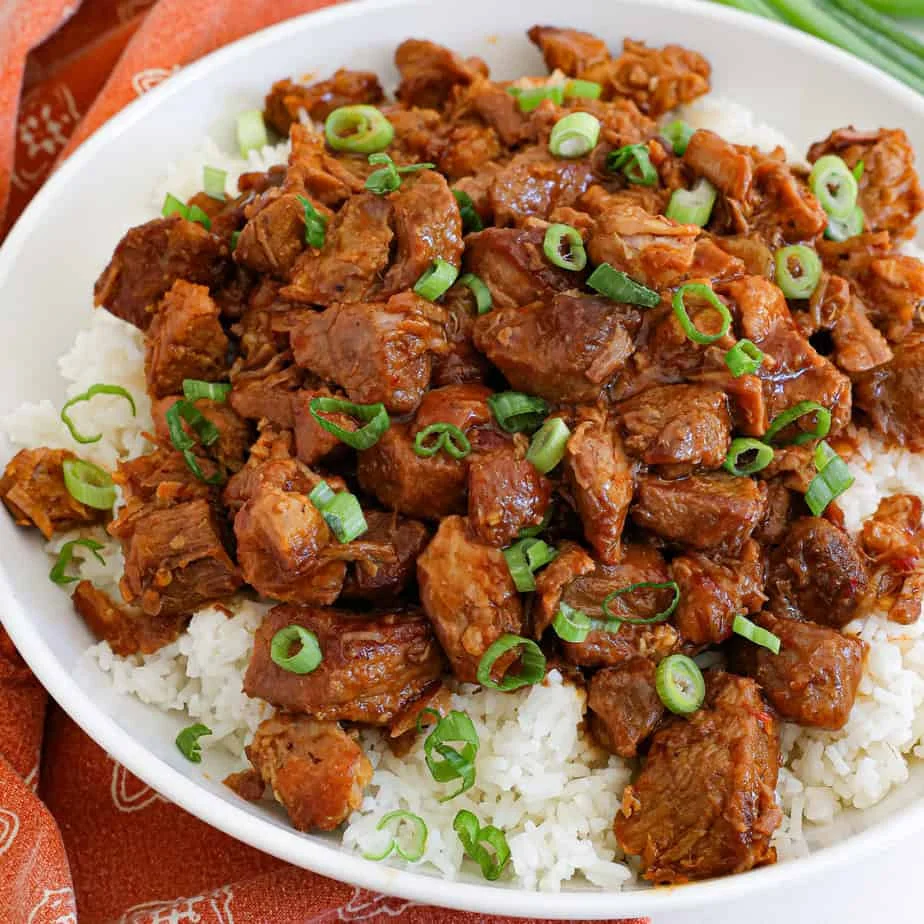
This American-style braised pork pairs browned pork shoulder with onions and a savoury, gently sweet soy, ginger and chilli sauce. Slow oven cooking makes the pork tender, while a final uncovered bake helps the thickened sauce cling to each piece.
Ingredients
- 2.7–3.6 kg (6–8 lb)pork butt or pork shoulder, trimmed and cut into 2.5 cm pieces
- 3 tablespoons (45 ml)olive oil
- 2yellow onions, halved and sliced 1.25 cm thick
- 3 clovesgarlic, minced
- 240 ml (1 cup)low-sodium chicken broth
- 60 ml (¼ cup)low-sodium soy sauce
- 45 ml (3 tablespoons)mirin or honey
- 30 ml (2 tablespoons)rice vinegar
- 15 ml (1 tablespoon)grated ginger or ginger paste
- 15 ml (1 tablespoon)chilli paste
- 15 ml (1 tablespoon)sesame oil
- 8 g (1 tablespoon)cornflour
- 3spring onions, thinly sliced
Instructions
- 1
Brown the pork
Heat 1 tablespoon of the olive oil in a large Dutch oven or heavy-based pot over a medium-high heat. Brown the pork in a single layer, working in batches and adding more oil as needed. Transfer each batch to a plate.
- 2
Soften the onions
Add a little more oil to the pot and cook the onions over a medium-low heat until soft. Lower the heat, add the garlic and cook for 1 minute, stirring. Pour in the chicken broth and scrape up the browned bits from the base of the pot.
- 3
Braise the pork
Return the browned pork to the pot with the broth and onions. Cover and bake at 163°C (325°F) for 2 hours.
- 4
Season the liquid
Carefully drain most of the liquid from the pork into a saucepan. Stir in the soy sauce, mirin or honey, rice vinegar, ginger, chilli paste and sesame oil. Bring to the boil, then reduce the heat and simmer.
- 5
Thicken the sauce
Mix the cornflour with 15–30 ml (1–2 tablespoons) of cold water and whisk it into the simmering liquid. Simmer until thickened. Pour the sauce over the pork and stir gently to coat. Return the pot to the oven uncovered for 30 minutes.
- 6
Garnish and serve
Serve over rice if desired, garnished with the sliced spring onions.
What is braised pork?
Braising is a method of browning meat before cooking it slowly in a covered pot with liquid. This American-style version draws on soy, ginger, sesame and chilli flavours for a savoury, sweet-edged finish.
Pork shoulder suits the long cooking time because it becomes tender as it braises. The sauce is thickened separately, then returned to the pot for an uncovered finish.
Nutrition and macros by portion
The nutrition label shows one serving as written: 442 calories, 66g protein, 8g carbs, 27g fat.
| Portion | Adjustment | kcal | Protein | Carbs | Fat |
|---|---|---|---|---|---|
| Lighter | Smaller pork portion | 309 kcal | 46g | 6g | 19g |
| This serving | As written | 442 kcal | 66g | 8g | 27g |
| Hungry | Add a larger rice portion | 663 kcal | 99g | 12g | 41g |
Pork provides most of the protein and a substantial share of the fat, while the mirin or honey and onions contribute some carbohydrate. Rice, if served alongside, adds further carbohydrate; balance the plate with a generous serving of vegetables.
Choose the right pork
Pork shoulder: its marbling and connective tissue suit slow cooking and help give the finished meat a tender texture. Trim it and cut it into evenly sized pieces so they cook at a similar rate.
Batch size: the recipe uses a large quantity of pork, so brown it in batches rather than crowding the pot. If the pieces touch too closely, they are more likely to steam than to develop a browned surface.
Build flavour in the pot
Browned bits: scrape them up with the chicken broth after softening the onions; they add flavour to the braising liquid. Keep the heat moderate while the garlic cooks, stirring it for the stated minute so it does not burn.
Seasonings: soy sauce, mirin or honey, rice vinegar, ginger, chilli paste and sesame oil go into the drained cooking liquid. Taste the sauce once it simmers, bearing in mind that the soy sauce is already salty.
Thicken the sauce smoothly
Cornflour slurry: stir the cornflour into cold water before adding it to the simmering liquid. Whisk as you pour to help it disperse without lumps.
Gentle coating: once thickened, pour the sauce over the pork and stir carefully. The final uncovered 30 minutes in the oven helps the sauce coat the meat rather than remain thin and separate.
Check the texture and timing
After the covered 2-hour braise, the pork should be tender; handle it gently as you drain off most of the liquid. If pieces still feel firm, the method does not specify extra cooking time, so check their tenderness before moving on to thicken the sauce.
The final 30 minutes are uncovered, after the sauce has been thickened and returned to the pot. Keep to that order so the pork can finish in the coated sauce.
Serve it with
Rice: the method suggests serving the pork over rice, which catches the savoury sauce. Add the spring onions just before serving for a fresh garnish.
Vegetables: serve with a simply cooked green vegetable or a crisp salad alongside. Their freshness provides contrast to the rich, slow-cooked pork.
Recipe notes & tips
- Pat the pork dry before browning to help it colour in the pot.
- Brown the pork in batches and add oil as needed rather than overcrowding the pot.
- Keep the heat low when cooking the garlic and stir it for the full minute.
- Scrape the browned bits from the base of the pot when adding the broth.
- Whisk the cornflour into cold water before adding the slurry to the simmering liquid.
- Stir gently after pouring the sauce over the pork to keep the pieces intact.
Variations
- Use honey: choose it instead of mirin for the sweetening ingredient.
- Adjust the heat: use less chilli paste for a milder sauce.
- Add more ginger: increase the ginger for a sharper aromatic note.
- Serve with rice: spoon the pork and sauce over cooked rice.
- Finish with spring onions: scatter them over the pork just before serving.
Common mistakes to avoid
- Crowding the pot: the pork may steam instead of brown; cook it in batches.
- Burning the garlic: it can turn bitter; lower the heat before adding it and stir for 1 minute.
- Skipping the pan scraping: browned bits add flavour to the broth; loosen them when you pour it in.
- Adding dry cornflour: it can form lumps; first mix it with 15–30 ml cold water.
- Stirring too vigorously: the pork may break apart; fold the sauce through gently.
- Leaving the pot covered for the finish: the recipe calls for an uncovered 30-minute bake after adding the thickened sauce.
How to store
Refrigerate leftover pork in an airtight container and eat within 3–4 days. Reheat gently in a saucepan or microwave until piping hot, adding a splash of water if the sauce has thickened too much.
Frequently asked questions
Can I use pork shoulder instead of pork butt?
Yes. The recipe lists pork butt or pork shoulder, trimmed and cut into 2.5 cm pieces.
Can I use honey instead of mirin?
Yes. The recipe gives mirin or honey as alternatives; use the same stated amount.
Can I make this without a Dutch oven?
Use a large oven-safe pot with a lid, as the pork needs to be covered for the braising stage and uncovered for the final bake.
How do I know when the pork is tender?
After the 2-hour covered braise, check that the pieces feel tender when pierced. Handle them gently as you continue with the sauce.
Can I make the sauce less spicy?
Yes. Use less chilli paste to reduce the heat.
What should I serve with braised pork?
Rice is suggested in the recipe. A green vegetable or salad also makes a fresh accompaniment.
Cook it from the original
This recipe comes from smalltownwoman.com. Their page has the author’s own photos, notes and tips — the best place to cook it from.
Open the recipe on smalltownwoman.com