
Stuffed Pork Tenderloin
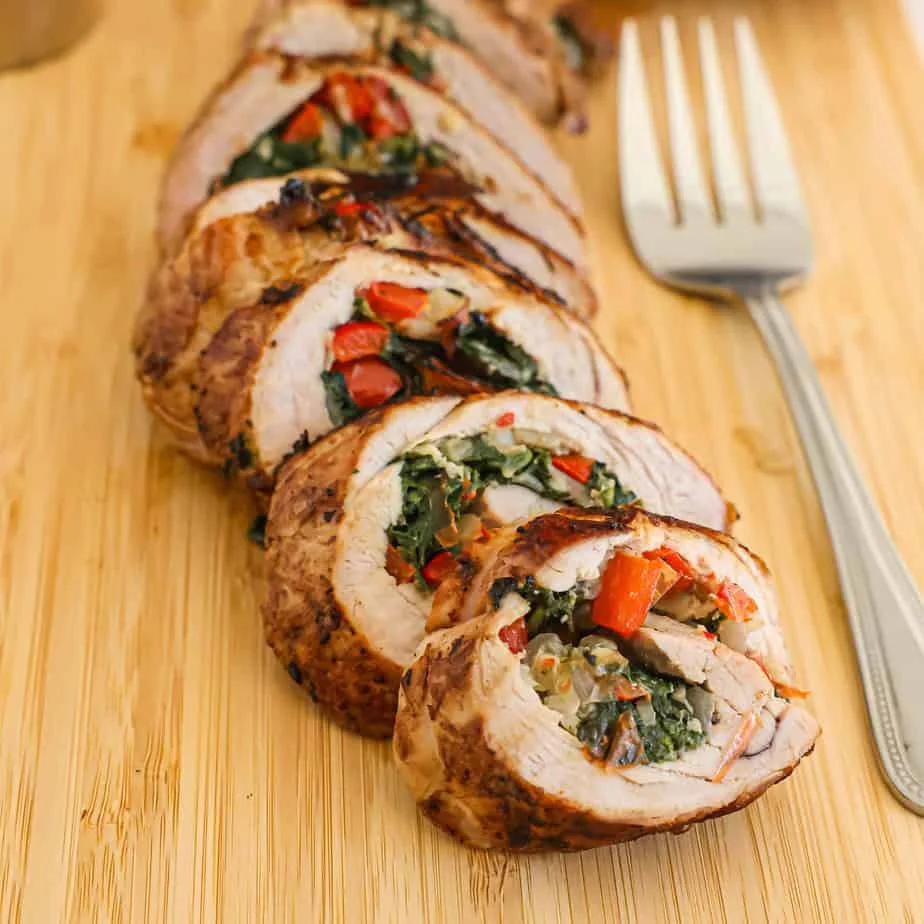
This stuffed pork tenderloin pairs lean pork with a savoury filling of shallots, red pepper, spinach, rosemary and Parmesan. It makes an attractive roast for a weekend meal, while slicing it into rounds makes serving straightforward.
Ingredients
- 28 g (2 tablespoons)butter, salted or unsalted
- 3shallots, chopped
- 1 mediumred pepper, finely diced
- 3 clovesgarlic, minced
- 15 ml (1 tablespoon)fresh rosemary, chopped
- 170 g (6 oz)baby spinach
- 50 g (½ cup)Parmesan, freshly grated
- to tastesalt
- to tasteblack pepper, freshly ground
- 680 g (1½ lb)pork tenderloin, silver skin removed
- 22.5 ml (1½ tablespoons)olive oil
- as neededkitchen twine
Instructions
- 1
Cook the filling
Melt the butter in a large frying pan over medium heat. Cook the shallots and red pepper until soft. Turn the heat to low, add the garlic, rosemary and spinach, and cook, stirring often, until the spinach wilts. Take the pan off the heat and mix in the Parmesan. Season to taste with salt and freshly ground black pepper.
- 2
Prepare the pork
Remove any remaining silver skin from the tenderloin. Cut lengthways through the centre without slicing all the way through, then open it like a book. Cover with cling film and pound with a meat mallet until 0.6–1.3 cm (¼–½ inch) thick.
- 3
Fill and roll
Spread the cooked vegetable mixture over the pork. Roll it lengthways as tightly as possible, then tie it with kitchen twine or secure it with toothpicks.
- 4
Sear and roast
Heat the olive oil over medium-high heat in an ovenproof frying pan and sear the tenderloin on both sides. Transfer the pan to the oven and roast for 10–12 minutes. Turn the tenderloin and cook for another 10–12 minutes, or until its internal temperature reaches 63°C (145°F).
- 5
Rest and slice
Move the stuffed tenderloin to a chopping board and cover it loosely with foil. Leave it to rest for 10–15 minutes, then remove the twine or toothpicks and slice.
What is stuffed pork tenderloin?
Pork tenderloin is a lean, tender cut that can be opened out, filled and rolled before cooking. This American-style preparation combines it with a simple vegetable and cheese filling.
The filling brings savoury, sweet and green notes to the mild pork. Searing before roasting also gives the outside colour while the rolled shape keeps the filling tucked inside.
Nutrition and macros by portion
The nutrition label shows one serving as written: 371 calories, 42g protein, 9g carbs, 18g fat.
| Portion | Adjustment | kcal | Protein | Carbs | Fat |
|---|---|---|---|---|---|
| Lighter | Use less butter and Parmesan | 260 kcal | 29g | 6g | 13g |
| This serving | As written | 371 kcal | 42g | 9g | 18g |
| Hungry | Serve with extra potatoes | 557 kcal | 63g | 14g | 27g |
The pork provides most of the protein, while the Parmesan and butter contribute much of the fat. The shallots, pepper and spinach account for most of the carbohydrates. Pair a slice with extra vegetables and a modest serving of potatoes or bread for a balanced plate.
Building the filling
Soft vegetables: cook the shallots and red pepper until tender before adding the more delicate ingredients. This gives them a head start and helps the filling spread evenly.
Spinach and cheese: wilt the spinach over low heat, then stir in the Parmesan off the heat. Season the mixture before filling the pork so its flavour is balanced throughout.
Opening the tenderloin
Butterfly cut: slice lengthways through the middle, stopping short of cutting all the way through, then open the meat like a book. This creates a broad surface for the filling.
Even thickness: cover the pork and pound it gently to 0.6–1.3 cm (¼–½ inch). Aim for an even layer so it rolls neatly and cooks at a more consistent rate.
Rolling and securing
Tight roll: spread the filling in an even layer, leaving the pork manageable to roll lengthways. Roll firmly without squeezing the filling out at the ends.
Secure the seam: tie the roll with kitchen twine or use toothpicks to keep it closed. Remove the fasteners before slicing and serving.
Searing and checking doneness
Sear first: brown the tenderloin on both sides in the ovenproof pan before transferring it to the oven. Turn it after the first 10–12 minutes of roasting, as directed.
Temperature cue: check the centre of the pork with a thermometer and cook until it reaches 63°C (145°F). Resting it for 10–15 minutes before cutting gives the meat time to settle.
Serving the slices
Slice across the roll into rounds so each piece shows the filling. A sharp knife helps keep the spirals tidy.
Serve with roast potatoes, mashed potatoes or crusty bread, plus a green vegetable or a crisp salad. The accompaniments can be prepared while the pork roasts and rests.
Recipe notes & tips
- Remove the silver skin before butterflying the tenderloin.
- Pound the pork gently and evenly to avoid making holes in the meat.
- Let the filling cool slightly before spreading it over the pork.
- Tie the roll at several points so it stays secure while searing and roasting.
- Use a meat thermometer to check the centre reaches 63°C (145°F).
- Rest the roast for the full 10–15 minutes before slicing.
Variations
- Add mushrooms: sauté finely chopped mushrooms with the shallots until their moisture has cooked off.
- Use sage: replace the rosemary with chopped fresh sage for a different herb flavour.
- Try another cheese: swap the Parmesan for finely grated Gruyère.
- Add chilli: stir a pinch of chilli flakes into the vegetable filling.
- Include breadcrumbs: mix a small handful into the filling to make it more substantial.
Common mistakes to avoid
- Cutting all the way through: stop before the knife reaches the other side so the tenderloin opens like a book.
- Overfilling the pork: spread the filling in a moderate layer so the roll can close securely.
- Loose tying: secure the roll firmly at intervals to help it hold its shape.
- Skipping the temperature check: use a thermometer at the centre rather than judging doneness by colour alone.
- Slicing too soon: rest the tenderloin for 10–15 minutes to make it easier to cut neatly.
How to store
Refrigerate leftovers in an airtight container within 2 hours and use within 3 days. Reheat gently in the oven, covered, or in the microwave until piping hot throughout; the pork may become less tender if overheated.
Frequently asked questions
Can I prepare the filling ahead?
Yes. Cook the filling in advance, cool it, and refrigerate it in a covered container. Use it once chilled or bring it closer to room temperature before spreading.
Can I use toothpicks instead of kitchen twine?
Yes. Secure the rolled tenderloin with toothpicks if you do not have twine, and remove them before slicing.
How do I know when the pork is cooked?
Check the thickest part of the pork with a meat thermometer; the recipe calls for 63°C (145°F). Rest it for 10–15 minutes before slicing.
Can I make this without an ovenproof frying pan?
Sear the tenderloin in a frying pan, then transfer it to an oven-safe dish for roasting.
What should I serve with stuffed pork tenderloin?
Try it with roast or mashed potatoes, bread, and a green vegetable or salad. Choose sides that suit the richness of the Parmesan filling.
Cook it from the original
This recipe comes from smalltownwoman.com. Their page has the author’s own photos, notes and tips — the best place to cook it from.
Open the recipe on smalltownwoman.com