
Pork Chop Suey
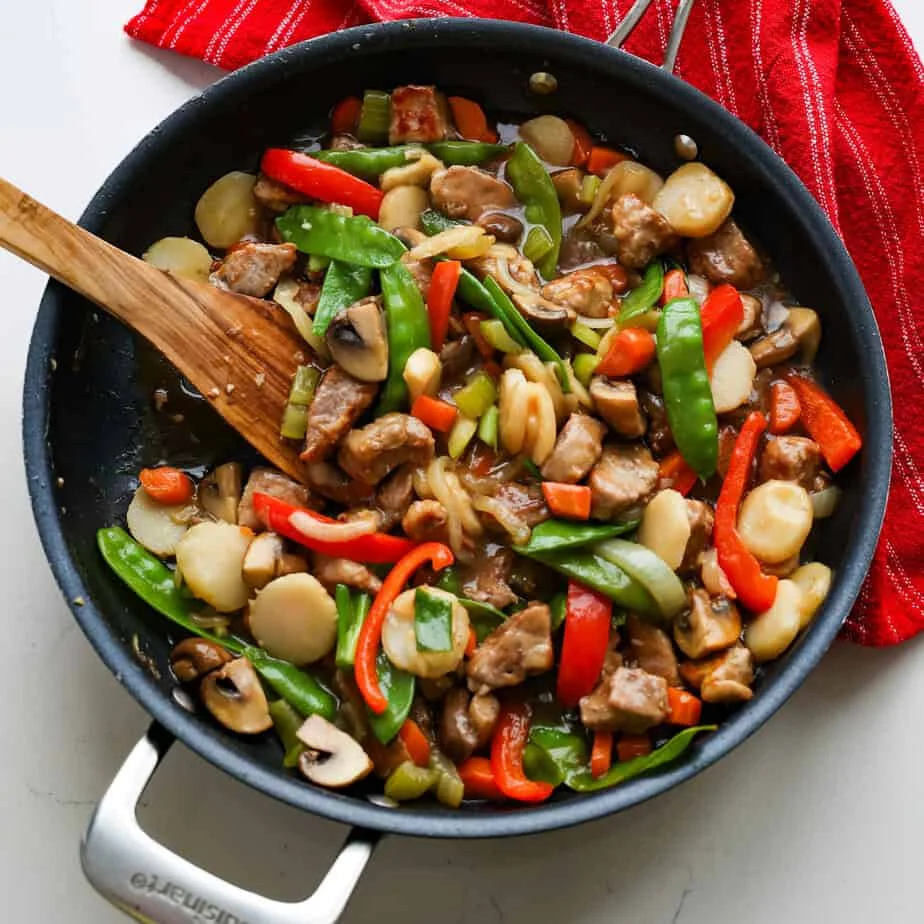
Pork chop suey is a quick stir-fry of browned pork and crisp-tender vegetables in a savoury, thickened sauce. It brings plenty of colour and crunch to the table and is ready in about 35 minutes.
Ingredients
- 180 ml (¾ cup)low-sodium chicken broth
- 45 ml (3 tablespoons)low-sodium soy sauce
- 30 ml (2 tablespoons)mirin
- 2.5 ml (½ teaspoon)sesame oil
- 8 g (1 tablespoon)cornflour
- 567–680 g (1¼–1½ lb)pork tenderloin, cut into bite-sized pieces
- 8 g (1 tablespoon)cornflour
- 30 ml (2 tablespoons)olive oil
- 1 mediumyellow onion, sliced into thin half-moons
- 1 mediumred bell pepper, cut into thin strips
- 2 ribscelery, chopped
- 2 largecarrots, peeled and chopped
- 227 g (8 oz)cremini mushrooms, halved
- 227 g (2 cups; about 8 oz)snow peas
- 2 clovesgarlic, minced
- 1 can (227 g; 8 oz), drainedwater chestnuts
Instructions
- 1
Mix the sauce
In a small bowl, whisk together the chicken broth, soy sauce, mirin, sesame oil and 1 tablespoon cornflour.
- 2
Coat the pork
Place the pork pieces in a medium bowl, sprinkle with the remaining 1 tablespoon cornflour and toss until coated.
- 3
Brown the pork
Heat 1½ tablespoons olive oil in a large skillet. Add the pork and brown it on both sides, then transfer it to a plate.
- 4
Cook the vegetables
Over medium-high heat, cook the onion, bell pepper, celery, carrots and mushrooms for 5–8 minutes, until the vegetables are crisp-tender and the mushrooms are browned. Add the snow peas and cook for 1–1½ minutes.
- 5
Add garlic
Lower the heat, then stir in the garlic and water chestnuts. Cook for 1–2 minutes, stirring, and transfer the vegetables to a plate.
- 6
Thicken and combine
Whisk the sauce again and pour it into the skillet. Whisk and cook over medium heat until thickened. Return the pork and vegetables to the skillet, then toss to coat and warm through.
What is pork chop suey?
Chop suey is a Chinese-American style of stir-fry, commonly made with meat and a mix of vegetables in a savoury sauce. This version pairs tender pork with a colourful assortment of vegetables and water chestnuts.
The method cooks the pork and vegetables separately before bringing them together in the sauce. That helps brown the meat while keeping the vegetables lively rather than stewed.
Nutrition and macros by portion
The nutrition label shows one serving as written: 231 calories, 23g protein, 15g carbs, 9g fat.
| Portion | Adjustment | kcal | Protein | Carbs | Fat |
|---|---|---|---|---|---|
| Lighter | More vegetables, less oil | 162 kcal | 16g | 11g | 6g |
| This serving | As written | 231 kcal | 23g | 15g | 9g |
| Hungry | Serve with extra rice | 347 kcal | 35g | 23g | 14g |
The pork supplies most of the protein, while the carrots, vegetables and sauce contribute carbohydrates. Olive oil and sesame oil provide much of the fat. Serve it with a generous portion of vegetables or greens, and add rice if you want a more filling meal.
The sauce ingredients
Broth and soy sauce form the savoury base, while mirin contributes a gentle sweetness. Sesame oil adds a toasty note, and cornflour thickens the mixture as it heats.
Whisk the sauce again just before pouring it into the pan, as the cornflour can settle while it stands.
Cut and coat the pork
Even, bite-sized pieces cook more consistently and are easy to eat with the vegetables. A light coating of cornflour helps the pork brown and gives the finished dish a little extra body.
Brown the pieces on both sides, then take them out of the skillet while the vegetables cook. Avoid crowding the pan, which can make the pork release moisture instead of browning.
Keep the vegetables crisp-tender
The onion, pepper, celery, carrots and mushrooms go in first because they need the longer cooking time. Cook them until the vegetables are still a little crisp and the mushrooms have browned, using the stated 5–8 minutes as a guide.
Snow peas need only 1–1½ minutes. Garlic and water chestnuts go in later still, so the garlic can cook briefly without burning and the water chestnuts retain their crunch.
Thicken without lumps
After the sauce goes into the skillet, whisk it over medium heat until it thickens. Keep it moving so the cornflour disperses smoothly and does not catch on the bottom.
Return the meat and vegetables once the sauce is ready, then toss just long enough to coat everything and warm it through.
Serving ideas
Serve the chop suey straight from the pan while the vegetables are still crisp-tender. Steamed rice is a straightforward accompaniment that catches the savoury sauce.
For a meal with more vegetables on the plate, add a simple side of greens. Keep the side mild so it does not compete with the soy, mirin and sesame flavours.
Recipe notes & tips
- Prepare and cut all the vegetables before heating the skillet, as the cooking stages move quickly.
- Use a large skillet so the pork and vegetables have room to brown.
- Keep the pork pieces similar in size for more even cooking.
- Whisk the sauce immediately before adding it to the pan so the cornflour is evenly mixed.
- Add the snow peas at the end of the vegetable cooking so they keep some bite.
Variations
- Use chicken: Swap the pork for bite-sized chicken pieces and brown them in the same way.
- Change the mushrooms: Use another firm mushroom variety, halving or slicing it to a similar size.
- Add ginger: Stir a little freshly grated ginger in with the garlic for a warmer aromatic note.
- Adjust the vegetables: Replace one vegetable with another quick-cooking stir-fry vegetable, keeping the overall mix similar.
- Make it spicier: Add chilli to the sauce or vegetables to give the dish some heat.
Common mistakes to avoid
- Crowding the skillet: The pork can steam rather than brown; cook in batches if the pan is too full.
- Overcooking the snow peas: They lose their fresh bite; add them only for the final 1–1½ minutes of vegetable cooking.
- Adding garlic too early: It can burn during the longer vegetable cook; follow the method and add it after lowering the heat.
- Skipping the second whisk: Cornflour can settle at the bottom of the sauce bowl; whisk again before pouring.
- Leaving the sauce unattended: It can thicken unevenly or catch; whisk it as it cooks.
How to store
Refrigerate leftovers in a covered container and eat within 3 days. Reheat in a skillet over a moderate heat, stirring until piping hot; add a small splash of water if the sauce has thickened too much.
Frequently asked questions
Can I prepare the ingredients ahead?
Yes. Cut the pork and vegetables ahead and keep them covered in the fridge. Mix the sauce separately, then whisk it again just before using.
Can I use another cut of pork?
Yes, use a tender cut that suits quick cooking and cut it into bite-sized pieces. Cooking time may vary depending on the cut and piece size.
How do I know when the pork is cooked?
The pieces should be browned on both sides and cooked through. If unsure, check the thickest piece with a food thermometer.
Can I make the sauce gluten-free?
Use a gluten-free soy sauce or tamari and check that the broth and other packaged ingredients are labelled gluten-free.
What can I serve with chop suey?
Steamed rice works well with the savoury sauce. You can also serve it with extra greens or another mild vegetable side.
Can I freeze the leftovers?
You can freeze them in a sealed container, though the vegetables may soften when thawed and reheated. Thaw in the fridge before reheating until piping hot.
Cook it from the original
This recipe comes from smalltownwoman.com. Their page has the author’s own photos, notes and tips — the best place to cook it from.
Open the recipe on smalltownwoman.com