
The Perfect Greek Salad
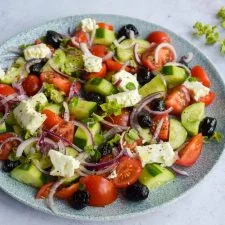
This Greek-style salad brings together juicy tomatoes, cucumber, black olives, feta and oregano with a lemon and olive oil dressing. It takes just 10 minutes to assemble and is best served at room temperature.
Ingredients
- 1/2small red onion
- 1/2English cucumber
- 200 g (7 oz)mixed tomatoes
- 1 handfuldried black olives
- 60 g (2.5 oz)feta
- To tastefreshly ground sea salt and black pepper
- 15 ml (1 tbsp)extra virgin olive oil
- 15 ml (1 tbsp)freshly squeezed lemon juice
- 1 small handfulfresh oregano leaves, picked
Instructions
- 1
Soak the onion
Peel the red onion and slice it finely into half moons. Separate the slices, place them in a bowl of cold water and set aside.
- 2
Prepare cucumber
Peel the cucumber and cut it into half-moon chunks, then scatter them over a serving platter. The seeds can stay in; for a striped look, run a vegetable peeler down the cucumber to make lines in the peel before cutting it.
- 3
Add tomatoes
Cut the tomatoes into uneven chunks and scatter them over the platter with the dried black olives.
- 4
Dry the onion
Drain the onion slices and pat them dry with kitchen towel, then scatter them over the salad.
- 5
Add feta
Break the feta into generous chunks and add it to the platter. Season with a little sea salt and a generous amount of black pepper.
- 6
Dress and serve
Whisk together the olive oil and lemon juice, then drizzle over the salad. Scatter over the oregano leaves, chopping them only if they are particularly large, and serve at room temperature.
What is Greek salad?
Greek salad, often called horiatiki, is a combination of fresh vegetables, olives and feta dressed simply with olive oil and herbs. This version is described as almost traditional and includes lemon juice alongside the oil.
The salad works because its contrasting ingredients need little preparation: crisp cucumber and sharp onion meet sweet tomatoes, salty olives and creamy feta. Oregano gives the platter a distinctive herbal finish.
Nutrition and macros by portion
The nutrition label shows one serving as written: 220 calories, 6g protein, 12g carbs, 17g fat.
| Portion | Adjustment | kcal | Protein | Carbs | Fat |
|---|---|---|---|---|---|
| Lighter | Use less olive oil | 154 kcal | 4g | 8g | 12g |
| This serving | As written | 220 kcal | 6g | 12g | 17g |
| Hungry | Add bread alongside | 330 kcal | 9g | 18g | 26g |
The tomatoes and cucumber provide most of the carbohydrates, while olive oil carries much of the fat; feta contributes both fat and protein. For a more filling balanced plate, serve a portion alongside a protein-rich main and bread or another grain.
Choosing the ingredients
Tomatoes: Use ripe tomatoes with enough firmness to hold their shape when cut. Mixed varieties make the platter colourful, but a single type works too.
Feta and olives: Their saltiness seasons the vegetables, so taste before adding much salt. Dried black olives bring a concentrated flavour to the fresh ingredients.
Take the edge off the onion
Cold water: Letting the sliced onion sit in cold water is a simple way to soften its sharp bite. Drain it well and pat it dry so excess water does not run onto the platter.
Fine slices: Thin half moons spread through the salad more evenly than thick pieces. Separate the slices before soaking so they are easier to scatter later.
Keep the vegetables chunky
Cucumber: Half-moon chunks make the salad easy to serve and keep a pleasant crunch. The seeds can remain, as in this method; peeling stripes into the skin is an optional presentation detail.
Tomatoes: Uneven chunks give the platter a relaxed appearance and provide varied-sized bites. Scatter rather than stir to keep the feta and vegetables distinct.
Dress just before serving
Emulsion: Whisking the olive oil and lemon juice briefly combines them before they go over the salad. Drizzle the dressing across the platter so it reaches the different ingredients.
Oregano: Add the leaves at the end to preserve their fresh aroma. Leave small leaves whole and chop only those that are particularly large.
Serve at room temperature
This salad comes together in about 10 minutes and is served at room temperature, so it does not need cooking or a lengthy rest. If preparing components ahead, keep them separate and assemble close to serving.
It makes a fresh side for grilled vegetables, fish or meat, or can be served with bread to catch the dressing. A simple main alongside it makes the meal more substantial.
Recipe notes & tips
- Pat the drained onion dry to avoid watering down the dressing.
- Cut the tomatoes into bite-sized chunks, but keep their shapes varied.
- Taste before adding salt because feta and olives are already salty.
- Add the oregano just before serving to keep its aroma fresh.
- Serve the salad at room temperature rather than straight from the fridge.
Variations
- Add green pepper: Slice it thinly and scatter it over the platter for extra crunch.
- Use red wine vinegar: Swap it for the lemon juice for a sharper dressing.
- Try fresh mint: Add a few leaves alongside the oregano for a different herbal note.
- Make it more substantial: Serve with crusty bread to mop up the dressing.
- Change the tomatoes: Use one ripe tomato variety if mixed tomatoes are unavailable.
Common mistakes to avoid
- Wet onion: Drain and pat the slices dry before adding them so they do not dilute the dressing.
- Too much salt: Taste the feta and olives first, then season sparingly.
- Overmixing: Scatter the ingredients on the platter rather than tossing them and breaking up the feta.
- Dressing too early: Add the oil and lemon shortly before serving to keep the vegetables fresh.
- Chopping small oregano leaves: Leave them whole and chop only particularly large leaves.
How to store
Store leftovers in an airtight container in the fridge and eat within 1 day for the best texture. The vegetables will release liquid over time, so this salad is best made fresh; it does not need reheating.
Frequently asked questions
Can I make this Greek salad ahead?
You can prepare and refrigerate the chopped vegetables separately, but keep the dressing, feta and oregano aside. Assemble and dress the platter close to serving for the freshest texture.
Should I remove the cucumber seeds?
No, the method leaves them in. If you prefer a less juicy salad, you can scoop them out before cutting the cucumber.
Why soak the red onion?
A short soak in cold water softens the onion's sharp flavour. Drain and dry the slices well before adding them.
Can I use dried oregano?
Fresh oregano is specified for this salad and gives a fresh finish. If using dried oregano instead, add only a small pinch to the dressing, as its flavour is more concentrated.
Can I serve this salad chilled?
You can, but the recipe calls for serving it at room temperature. Taking the chill off helps the flavours come through.
What goes well with Greek salad?
Serve it with grilled fish, meat or vegetables, or alongside bread. It also works as part of a spread of small dishes.
Cook it from the original
This recipe comes from rachelphipps.com. Their page has the author’s own photos, notes and tips — the best place to cook it from.
Open the recipe on rachelphipps.com