
Chicken and Vegetable Stir-Fry
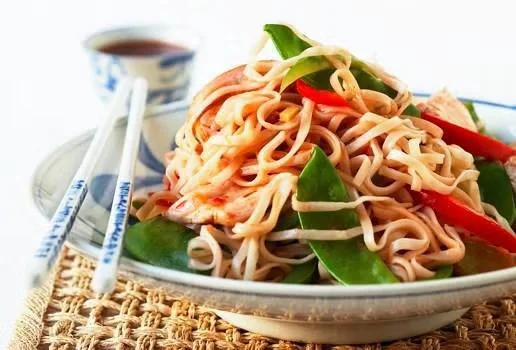
This chicken and vegetable stir-fry pairs thin egg noodles with chicken, crisp vegetables and a sweet-and-savoury sauce. It is a quick weeknight-style meal, with the high-heat cooking helping the vegetables stay tender with a little bite.
Ingredients
- 250 gdried thin egg noodles
- as neededspray oil, for cooking
- 500 gchicken breast fillet, cut into thin strips
- 2 tspchopped ginger
- 1 clovegarlic, crushed
- 1 mediumonion, chopped
- 1 mediumred capsicum, thinly sliced
- 1 mediumgreen capsicum, thinly sliced
- 250 gsnow peas, trimmed
- 2 tbspMAGGI Sweet Chilli Sauce
- 1 tbspMAGGI Oyster Sauce 275mL
- 60 ml (¼ cup)plum sauce
- 75 ml (0.3 cup)chicken stock
Instructions
- 1
Cook the noodles
Cook the noodles following the packet directions. Drain thoroughly, then set aside and keep warm.
- 2
Brown the chicken
Heat a non-stick wok or frying pan over high heat and spray it with oil. Cook the chicken in two batches for 2–3 minutes, or until browned. Set aside and keep warm.
- 3
Stir-fry vegetables
Reheat the wok. Add the ginger, garlic and onion, then stir-fry for 2 minutes or until the onion softens. Add the capsicums and snow peas and stir-fry for 3 minutes, until just tender.
What is chicken and vegetable stir-fry?
Stir-frying is a cooking technique associated with Chinese cooking: ingredients are cooked quickly over high heat while being moved around the pan. This version combines chicken, noodles and vegetables with sweet chilli, oyster and plum sauces.
Thinly sliced ingredients and a hot pan help keep the cooking time short. The recipe's supplied method ends after cooking the vegetables, however, and does not explain when to add the sauces, stock, chicken or noodles back to the wok.
Nutrition and macros by portion
The nutrition label shows one serving as written: 310 calories, 26g protein, 44g carbs, 3g fat.
| Portion | Adjustment | kcal | Protein | Carbs | Fat |
|---|---|---|---|---|---|
| Lighter | More vegetables, fewer noodles | 217 kcal | 18g | 31g | 2g |
| This serving | As written | 310 kcal | 26g | 44g | 3g |
| Hungry | Larger noodle portion | 465 kcal | 39g | 66g | 5g |
The noodles provide most of the carbohydrates, while chicken breast supplies much of the protein. The sauces and cooking oil contribute fat and can also affect the dish's sodium; a side of fresh vegetables is a practical way to round out the plate.
Getting the chicken ready
Thin strips: cut the chicken into similarly sized pieces so they cook at roughly the same rate. Patting them dry can also help them brown rather than release excess moisture.
Two batches: cooking the chicken in batches gives the pieces more contact with the hot pan. Keep the cooked chicken aside as directed while you cook the vegetables.
Why the vegetables go in stages
Aromatics: ginger, garlic and onion are cooked first, giving them time to soften and release their fragrance before the other vegetables are added.
Capsicums and snow peas: the method gives these vegetables 3 minutes in the wok, aiming for a tender result that still has some bite. Keep them moving so they cook evenly.
Managing the heat
Hot pan: preheating the wok or frying pan over high heat is central to the quick cooking method. Have the ingredients ready before you start, as there is little time to prepare them once cooking begins.
Noodle timing: the noodles are cooked separately according to their packet directions, then drained well and kept warm. This avoids adding excess cooking water to the pan.
The sauce and method gap
Sauce ingredients: sweet chilli sauce, oyster sauce, plum sauce and chicken stock are listed, but the supplied method does not say how or when to use them. It also does not include a final step for returning the chicken and noodles to the wok.
For a complete, reliable cooking sequence, check the original publisher's recipe for the missing instructions rather than guessing the quantities or timing.
Serving the stir-fry
The ingredients suggest a noodle-based main meal, with chicken for substance and snow peas and capsicums for colour and crunch. The recipe does not specify a garnish or side dish.
If serving with an extra side, choose a simple vegetable dish so the meal's sweet-and-savoury sauces remain the main flavour.
Recipe notes & tips
- Slice the chicken and vegetables before heating the wok so you can cook without pausing.
- Cook the chicken in two batches as directed to avoid crowding the pan.
- Drain the noodles thoroughly so they do not carry excess water into the dish.
- Keep the chicken warm while cooking the vegetables, as the method instructs.
- Follow the original publisher's full directions for the listed sauces, stock and final assembly.
Variations
- Use mixed vegetables: swap in similarly sized vegetables you have available, allowing for their cooking time.
- Adjust the heat: use less sweet chilli sauce if you prefer a milder flavour, following the original method for when to add it.
- Add extra ginger: increase the ginger for a more pronounced aromatic note.
- Try another noodle: use a different thin noodle, cooking it according to its packet directions.
- Make it vegetarian: replace the chicken with firm tofu and use a suitable vegetable stock, checking the sauce ingredients.
Common mistakes to avoid
- Crowding the wok: the chicken may steam instead of brown; cook it in the two batches specified.
- Overcooking the vegetables: they can lose their bite; use the stated 3-minute stir-fry as a cue and check for just-tender texture.
- Leaving the noodles wet: excess water can dilute the dish; drain them well before setting them aside.
- Starting before prep is done: the high-heat steps move quickly; chop and measure everything first.
- Guessing the sauce sequence: the supplied method omits it; consult the original publisher's directions for how to finish the recipe.
How to store
Refrigerate leftovers promptly in a covered container and eat within 3 days. Reheat until piping hot, adding a small splash of water if the noodles seem dry; follow local food-safety guidance.
Frequently asked questions
Can I prepare the noodles ahead?
Yes. Cook them according to the packet directions, drain them thoroughly and keep them warm as the method says. If preparing them earlier, cool and refrigerate promptly, then reheat thoroughly.
How do I know when the chicken is cooked?
The supplied method says to cook it for 2–3 minutes per batch, or until browned, but browning alone does not confirm that the centre is cooked. Check that the thickest strips are fully cooked through.
Can I use a frying pan instead of a wok?
Yes. The method specifically allows a non-stick frying pan as an alternative to a wok; choose one large enough to stir the ingredients comfortably.
When do I add the sauces and stock?
The ingredients are listed, but the supplied method does not give instructions for adding them. Check the original publisher's recipe for the missing sauce and finishing steps.
Can I use frozen vegetables?
You can, but they may release more water and soften differently from fresh capsicums and snow peas. Follow the cooking cues and avoid overcrowding the pan.
Cook it from the original
This recipe comes from recipes.com.au. Their page has the author’s own photos, notes and tips — the best place to cook it from.
Open the recipe on recipes.com.au