
Peruvian sancochado
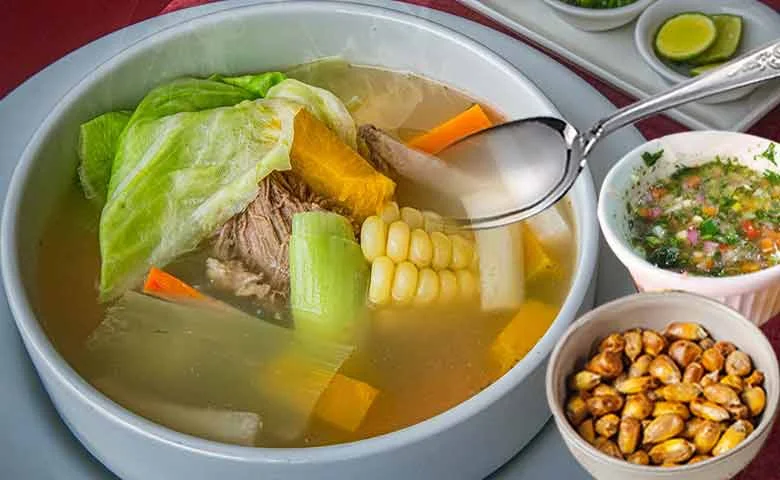
Peruvian sancochado is a hearty beef broth served with vegetables and substantial pieces of potato, cassava and corn. It is a good choice when you want a long-simmered, comforting meal with the broth and its ingredients cooked together.
Ingredients
- 1 kgbeef brisket or flank
- 3 litreswater
- 2carrots, cut into large pieces
- 1whole tomato
- 1turnip, peeled
- 1 stalkcelery
- 1leek
- 1/2cabbage, cut into large pieces
- 1whole onion
- 2 largepotatoes
- 1cassava, cut into pieces
- 2corn cobs, halved
- to tastesalt
- juice of 1–2lemons (optional, to finish)
Instructions
- 1
Start the broth
Put the water in a large pan and bring it to the boil. Add the beef once the water is boiling.
- 2
Skim the broth
As the beef starts to cook, foam will collect on the surface. Carefully skim it off with a slotted spoon for a clearer broth.
- 3
Season lightly
Once the foam has been removed, add a pinch of salt. Keep the seasoning restrained at this stage.
- 4
Add base vegetables
Add the carrots, tomato, turnip and celery. Cover the pan and cook over a medium heat for about 10–15 minutes.
- 5
Add more vegetables
Add the leek, whole onion and cabbage. Continue cooking until they begin to soften.
- 6
Add the roots
Add the cassava and potatoes, allowing for their cooking time so they become tender but remain firm.
- 7
Cook the corn
Cook the corn in the same pan or separately, as preferred, until tender.
- 8
Remove cooked vegetables
As the vegetables and root vegetables are ready, carefully lift them out to prevent them from overcooking.
- 9
Finish with lemon
Before serving, add a few drops of lemon juice to the broth to brighten its flavour.
- 10
Let it rest
Leave the sancochado to rest for a few minutes before serving so the flavours can come together.
What is Peruvian sancochado?
Sancochado is a Peruvian boiled-meat dish in which beef and vegetables cook in a generous amount of water to make a substantial broth. It belongs to Peru’s home-cooking tradition, where the broth and the cooked ingredients are served as parts of the same meal.
This version layers vegetables into the pot rather than adding them all at once. That order helps the beef flavour the broth while giving the more delicate vegetables a better chance of keeping their shape.
Nutrition and macros by portion
The nutrition label shows one serving as written: 500 calories, 0g protein, 0g carbs, 0g fat.
| Portion | Adjustment | kcal | Protein | Carbs | Fat |
|---|---|---|---|---|---|
| Lighter | More vegetables, less cassava | 350 kcal | 0g | 0g | 0g |
| This serving | As written | 500 kcal | 0g | 0g | 0g |
| Hungry | Larger beef and potato portions | 750 kcal | 0g | 0g | 0g |
The beef is the main source of protein and fat, while the potatoes, cassava and corn contribute most of the carbohydrates. For a balanced plate, serve a generous range of vegetables alongside the beef and choose a moderate portion of the starchy ingredients.
Building the broth
Beef: brisket or flank gives the pot its meaty base. Starting it in boiling water follows the recipe’s method, while skimming away the foam keeps the finished broth clearer.
Vegetable base: carrot, tomato, turnip and celery go in first, followed by leek, onion and cabbage. Add them in that order so they have time to flavour the liquid without all reaching tenderness at once.
Timing the vegetables
Root vegetables: cassava and potatoes need to become tender but should not be left until they fall apart. Check them as they cook and lift them from the pan once they are ready.
Corn: cook the cobs in the broth for a shared flavour, or use a separate pan as the method allows. Either way, take them out when tender.
Getting a clear, balanced broth
Skimming: watch the surface as the beef begins cooking and remove the foam carefully with a slotted spoon. This is easiest before adding the vegetables.
Seasoning: start with only a pinch of salt, then taste the broth near the end. A little lemon juice just before serving gives it a fresh finish.
Checking texture and doneness
Vegetables: look for tenderness while keeping the larger pieces intact. Remove each one as it is ready instead of waiting for the whole pot to finish together.
Beef: the method gives no separate cooking time for the meat, so use tenderness as your cue. If it is still firm, continue cooking it in the broth before serving.
Serving the sancochado
Serve the broth with portions of beef and a selection of the cooked vegetables, potatoes, cassava and corn. Keeping the pieces whole or large makes the different textures part of the meal.
Offer lemon at the table for anyone who would like a brighter broth. The dish is substantial on its own; a simple fresh salad can make a crisp contrast.
Recipe notes & tips
- Skim the broth as the foam appears, before adding the vegetables.
- Keep the beef pieces large so they are easier to lift out and serve.
- Add the vegetables in the listed order rather than putting everything into the pan at once.
- Check the potatoes and cassava for tenderness and remove them promptly.
- Taste the broth before adding more salt, then finish with lemon if you like.
Variations
- Extra lemon: serve additional lemon wedges at the table for a sharper finish.
- Separate corn: cook the corn cobs in another pan if you prefer to control their doneness independently.
- Different beef cut: use brisket or flank, as suggested, depending on what is available.
- More cabbage: add extra cabbage for a vegetable-forward bowl.
- Chunkier serving: keep the vegetables in large pieces so each portion has distinct textures.
Common mistakes to avoid
- Skipping the skimming: foam can cloud the broth; remove it carefully with a slotted spoon.
- Adding everything at once: vegetables can become overcooked; follow the recipe’s staged additions.
- Overcooking the roots: potatoes and cassava may lose their shape; lift them out once tender but firm.
- Over-seasoning early: the broth will continue to develop as it cooks; begin with just a pinch of salt.
- Adding lemon too soon: its fresh flavour is best preserved by stirring it in just before serving.
How to store
Cool leftovers promptly and store the broth, beef and vegetables in a covered container in the fridge for up to 3 days. Reheat gently until steaming hot, taking care not to boil the vegetables for long enough to make them break apart.
Frequently asked questions
Can I cook the corn in the same pot?
Yes. The recipe allows you to cook it in the broth or separately; remove it when tender.
How do I keep the broth clear?
Skim the foam from the surface as the beef starts cooking, before adding the vegetables.
When should I add the lemon juice?
Add a few drops to the broth just before serving. It is optional and can be adjusted to taste.
How do I stop the potatoes and cassava from going mushy?
Check them as they cook and remove them as soon as they are tender but still firm.
Can I prepare sancochado ahead?
Yes. Refrigerate the cooked broth and ingredients in a covered container, then reheat gently before serving.
Cook it from the original
This recipe comes from recetascocinaperuana.com. Their page has the author’s own photos, notes and tips — the best place to cook it from.
Open the recipe on recetascocinaperuana.com