
Lemon Salmon from the oven
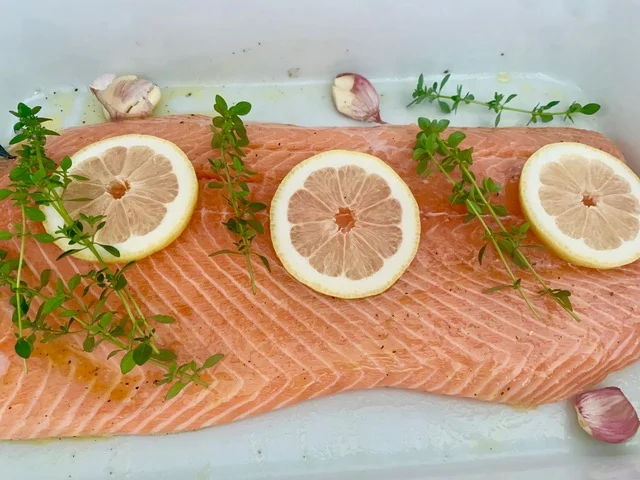
Oven-baked salmon is dressed with lemon, garlic and thyme for a simple, fragrant main course. It takes about 30 minutes and pairs easily with vegetables, potatoes or grains.
Ingredients
- 800 gsalmon
- 20 mlolive oil
- 10 ml and some sliceslemon juice and lemon
- 5 sprigsthyme
- 3garlic cloves, crushed but unpeeled
- to tastesalt and pepper
Instructions
- 1
Preheat the oven
Preheat the oven to 180 °C.
- 2
Check the salmon
Remove any bones from the salmon with tweezers.
- 3
Mix the marinade
In a small bowl, whisk together the olive oil, lemon juice, salt and pepper.
- 4
Brush the dish
Use some of the oil mixture to coat the bottom of an ovenproof ceramic dish.
- 5
Add the salmon
Set the salmon in the dish skin-side down and brush the remaining lemon mixture generously over the top.
- 6
Bake with aromatics
Arrange the crushed garlic, lemon slices and thyme on the salmon. Bake at 160 °C on the fan setting for 20 minutes.
- 7
Season and serve
Season with salt and pepper, then serve.
What is oven-baked lemon salmon?
This is a straightforward preparation of salmon baked with lemon, garlic and thyme. Salmon is cooked in many cuisines, and this combination of citrus and herbs is a familiar way to bring brightness to its rich flavour.
Here, a little oil and lemon juice coat the fish before it goes into the oven, while lemon slices and crushed garlic add aroma as it bakes.
Nutrition and macros by portion
The nutrition label shows one serving as written: 378 calories, 0g protein, 0g carbs, 0g fat.
| Portion | Adjustment | kcal | Protein | Carbs | Fat |
|---|---|---|---|---|---|
| Lighter | Less oil, more greens | 265 kcal | 0g | 0g | 0g |
| This serving | As written | 378 kcal | 0g | 0g | 0g |
| Hungry | Larger salmon portion | 567 kcal | 0g | 0g | 0g |
The salmon provides most of the protein and much of the fat, while the olive oil adds further fat; the lemon, garlic and thyme contribute little carbohydrate. Add vegetables and a measured portion of potatoes or grains to make a more complete plate.
Choosing and preparing the salmon
The fish: Use a piece or fillets that fit in the dish in a fairly even layer so they cook at a similar pace.
The bones: Run your fingers gently over the flesh and remove any pin bones with tweezers before seasoning.
Making the lemon coating
The oil: Whisk the olive oil and lemon juice together with salt and pepper, then brush some over the dish to help prevent sticking.
The topping: Brush the remaining mixture over the salmon and arrange the lemon, thyme and crushed garlic on top. The garlic is left unpeeled as specified, so there is less risk of the cloves scorching against the fish.
Getting the oven temperature right
The preheat: The method starts by preheating the oven to 180 °C, then specifies baking at 160 °C on the fan setting.
The bake: Cook for 20 minutes as directed, checking the thickest part towards the end. Fish thickness and oven performance can affect how quickly it cooks, so use the texture of the fish as well as the timer.
Checking texture and doneness
The texture: The salmon should separate into moist flakes when gently pressed with a fork, rather than feeling firm and dry.
The centre: Check the thickest part before serving; if it needs more time, return it to the oven briefly and check again.
What to serve with it
Vegetables: Serve with green beans, broccoli or a leafy salad for a fresh contrast to the salmon.
Something filling: Boiled or roasted potatoes, rice or bread make an easy accompaniment and can soak up the lemony juices from the dish.
Recipe notes & tips
- Pat the salmon dry before brushing it so the lemon mixture coats the surface evenly.
- Use a ceramic dish that holds the salmon without leaving a large empty area around it.
- Remove pin bones before cooking, when they are easier to locate and pull out.
- Keep the lemon slices and thyme on top so their aromas mingle with the fish as it bakes.
- Check the salmon near the end of the cooking time, especially if the pieces are thinner than usual.
Variations
- Add dill: Swap the thyme for dill for a different fresh herb flavour.
- Use orange: Replace some of the lemon slices with orange slices for a softer citrus note.
- Add chilli: Scatter a little chilli over the fish before baking for gentle heat.
- Include vegetables: Arrange quick-cooking vegetables around the salmon in the dish.
- Finish with parsley: Sprinkle chopped parsley over the cooked fish just before serving.
Common mistakes to avoid
- Skipping the bone check: Feel along the flesh and remove pin bones with tweezers before cooking.
- Using too large a dish: Choose a dish that fits the salmon reasonably closely so the oil mixture stays around the fish.
- Overbaking: Check the thickest part near the end of the 20 minutes and stop when it flakes moistly.
- Forgetting the fan setting: The method specifies 160 °C with fan after preheating the oven to 180 °C.
- Seasoning only the dish: Brush the remaining lemon mixture over the salmon, then season the fish as directed before serving.
How to store
Refrigerate leftover salmon in a covered container and eat within 2 days. Reheat gently in a low oven or microwave until hot, taking care not to cook it for longer than needed.
Frequently asked questions
Should I remove the salmon skin?
The method places the salmon skin-side down in the dish, so leave it on while baking. You can lift the cooked flesh away from the skin when serving if you prefer.
Can I use salmon fillets instead of one large piece?
Yes. Arrange the fillets skin-side down in the dish and use the same lemon, oil and herb topping. Check them near the end of the stated cooking time, as smaller pieces may cook sooner.
Why does the method give two oven temperatures?
It says to preheat to 180 °C, then bake at 160 °C on the fan setting. Follow the baking temperature for the 20-minute cook, and check the fish for doneness before serving.
How can I tell when the salmon is cooked?
The thickest part should separate into moist flakes when tested gently with a fork. If it is not ready, return it to the oven briefly and check again.
Can I prepare the salmon ahead?
You can remove the bones and mix the oil, lemon juice and seasoning in advance. For the freshest texture, add the topping and bake shortly before serving.
Cook it from the original
This recipe comes from sabrinastable.com. Their page has the author’s own photos, notes and tips — the best place to cook it from.
Open the recipe on sabrinastable.com