
Salmon Teriyaki
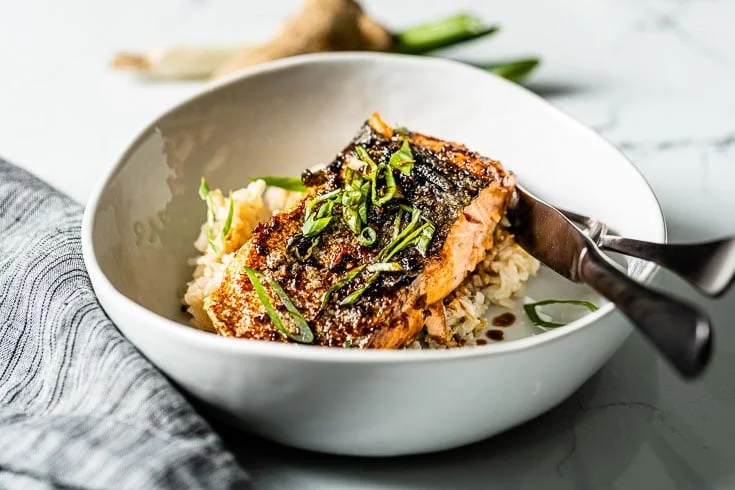
Salmon Teriyaki pairs pan-seared salmon with a quick, savoury-sweet soy, garlic and ginger glaze. It makes a speedy weeknight dinner, with crisp skin and a sauce that comes together while the fish cooks.
Ingredients
- 4salmon fillets
- to tastekosher salt
- 15 mlcanola oil, for searing the salmon
- 25 gbrown sugar
- 60 mlsoy sauce or tamari
- 2 clovesgarlic, finely chopped
- 2.5 mlfresh ginger, grated
- 1.25 mlcornflour
- 5 mlmirin or water
- to tastegreen onions, sliced, for garnish
- to tastesesame seeds, toasted, for garnish
Instructions
- 1
Heat the pan
Set a 30 cm non-stick frying pan over medium-high heat and add 15 ml canola oil.
- 2
Season the salmon
Pat the salmon fillets dry with kitchen paper, then season lightly with kosher salt on all sides.
- 3
Sear skin-side
Place the salmon skin-side down in the pan and cook for about 5 minutes, until the skin is crisp. Turn the fillets with a fish spatula and lower the heat to medium.
- 4
Cook the fish
Cook for about 2 minutes more, or until the centre reaches 52°C (125°F) for medium-rare or 54°C (130°F) for medium. Brush some teriyaki sauce over the salmon as the second side cooks, if you want to glaze it.
- 5
Boil the sauce
While the salmon cooks, combine the brown sugar, soy sauce, garlic and ginger in a separate pan over medium-low heat. Bring the mixture to a gentle boil.
- 6
Thicken the sauce
In a small bowl, whisk the cornflour and mirin together with a fork. Stir the mixture into the sauce and simmer over low heat for about 5 minutes, until it reaches your preferred consistency.
- 7
Finish and garnish
Drizzle the teriyaki sauce over the salmon and warm it through. Garnish with sliced green onions and toasted sesame seeds.
What is salmon teriyaki?
Teriyaki describes a Japanese style of cooking in which food is coated with a glossy, sweet-savoury glaze. This American-style weeknight version uses salmon fillets and a simple pan-made sauce rather than a long marinade.
Quick searing gives the fish crisp skin, while soy sauce, brown sugar, garlic and ginger build a punchy glaze. Making the sauce as the salmon cooks keeps the whole meal moving.
Nutrition and macros by portion
The nutrition label shows one serving as written: 370 calories, 35g protein, 9g carbs, 21g fat.
| Portion | Adjustment | kcal | Protein | Carbs | Fat |
|---|---|---|---|---|---|
| Lighter | Less glaze, more greens | 259 kcal | 25g | 6g | 15g |
| This serving | As written | 370 kcal | 35g | 9g | 21g |
| Hungry | Add rice on the side | 555 kcal | 53g | 14g | 32g |
Salmon supplies most of the protein and also contributes much of the fat; the brown sugar and soy sauce provide most of the carbohydrates, while the soy sauce is the main source of sodium. Serve with rice and a generous portion of vegetables to round out the plate.
Choosing the salmon
Fillet size: The recipe gives a count rather than a weight, so cooking time can vary with the thickness of your pieces. Use the temperature cues as your guide rather than relying on the clock alone.
Dry surface: Patting the fish dry helps it sear instead of steaming in the pan. Season it lightly, since the soy sauce in the glaze is already salty.
Getting a crisp sear
Skin-side first: Start with the skin against the hot pan and let it cook undisturbed for about 5 minutes. This gives the skin time to crisp before you turn the fish.
Gentle turn: A fish spatula can slide beneath the fillet with less risk of breaking it. Once turned, reduce the heat to medium for the shorter second side.
Making the glaze
Sauce base: The brown sugar dissolves into the soy sauce as the garlic and ginger infuse it. Keep the heat at medium-low and bring it only to a light boil.
Cornflour slurry: Whisk the cornflour with mirin before adding it, so it disperses smoothly. Simmer for about 5 minutes, stirring, until the sauce thickens to your liking.
Checking doneness
Temperature: The method gives 52°C (125°F) for medium-rare and 54°C (130°F) for medium. Insert a thermometer into the thickest part of the fillet for a useful reading.
Timing: The suggested searing and second-side times are a starting point, since thicker or thinner fillets cook at different speeds. Take the salmon off the heat when it reaches your chosen temperature.
Serving the salmon
Fresh finish: Scatter sliced green onions and toasted sesame seeds over the glazed fish just before serving. Their sharp, nutty flavours balance the sweet-savoury sauce.
On the plate: Serve with rice to catch the extra glaze, and add a green vegetable such as broccoli or pak choi for a fuller meal.
Recipe notes & tips
- Use a pan large enough to give the four fillets room to sear without crowding.
- Pat the salmon dry just before seasoning and cooking.
- Keep the seasoning light because the soy-based glaze is salty.
- Whisk the cornflour fully into the mirin before adding it to the sauce.
- Taste the glaze as it thickens and stop simmering when it reaches your preferred consistency.
Variations
- Use tamari: Choose tamari in place of soy sauce for the alternative listed in the recipe.
- Use water: Swap the mirin for water in the cornflour mixture.
- Add heat: Stir a little chilli into the sauce for a spicier finish.
- Serve with rice: Spoon extra glaze over rice alongside the salmon.
- Add vegetables: Serve with steamed broccoli or pak choi for a fresh side.
Common mistakes to avoid
- Wet salmon: It can steam rather than sear; pat the fillets dry before they go into the pan.
- Overcrowded pan: The fish may not brown evenly; use a pan that fits the fillets in a single layer.
- Moving it too soon: The skin needs time to crisp; leave the salmon skin-side down for about 5 minutes.
- Lumpy sauce: Cornflour added directly can clump; whisk it with the mirin first.
- Overcooked fish: Fillets vary in thickness; check the centre temperature instead of extending the cooking time automatically.
How to store
Refrigerate leftover salmon and sauce in an airtight container and eat within 2 days. Reheat gently in a covered pan over low heat until warmed through; avoid prolonged heating, which can dry out the fish.
Frequently asked questions
Can I use frozen salmon?
Yes, thaw it fully in the fridge first and pat it dry before seasoning. If it is still icy or wet, it will be harder to sear.
Can I make the sauce without mirin?
Yes. The recipe allows water instead of mirin in the cornflour mixture.
How do I know when the salmon is done?
Check the thickest part with a thermometer: the method gives 52°C for medium-rare or 54°C for medium. Thicker fillets may need longer than the approximate cooking times.
Can I make the teriyaki sauce ahead?
Yes, prepare it ahead and refrigerate it, then warm it gently before serving. If it has thickened considerably, stir in a little water to loosen it.
What can I serve with salmon teriyaki?
Rice is a practical match for the glaze. Broccoli, pak choi or another green vegetable makes a good accompaniment.
Cook it from the original
This recipe comes from saltpepperskillet.com. Their page has the author’s own photos, notes and tips — the best place to cook it from.
Open the recipe on saltpepperskillet.com