
Simple Baked Salmon
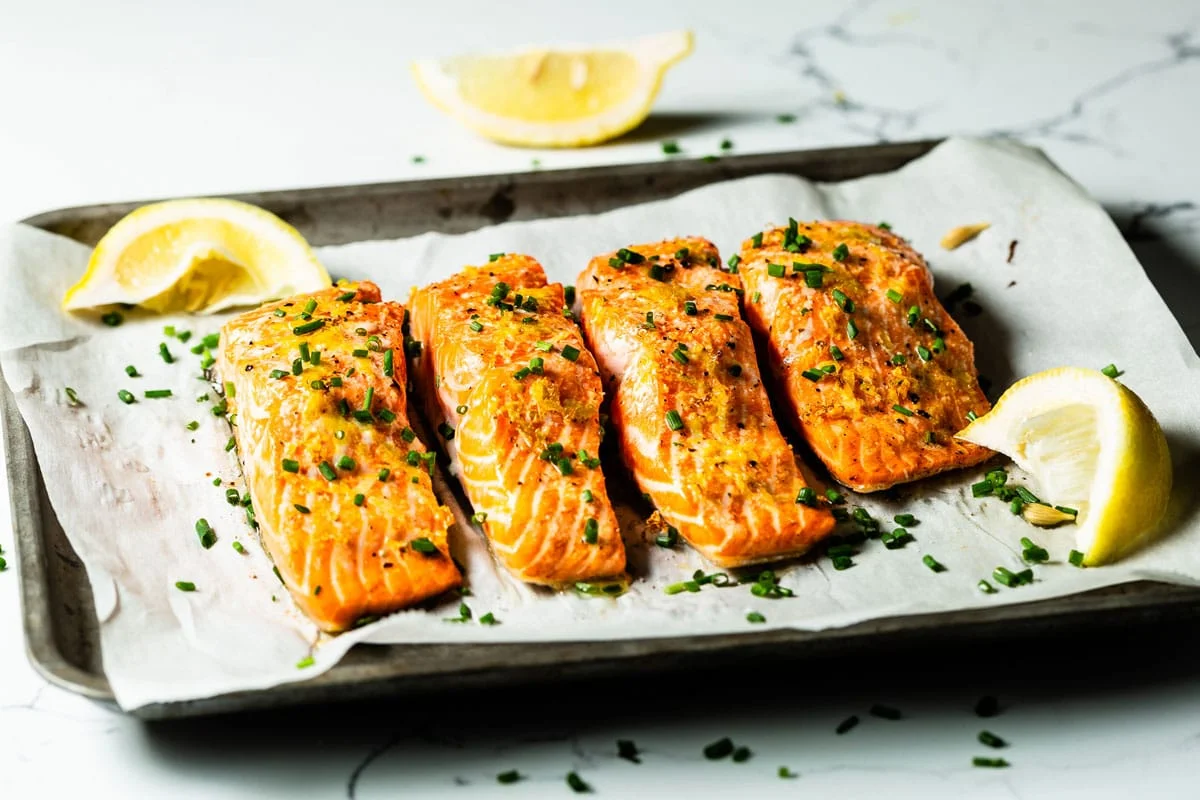
This simple baked salmon is seasoned with olive oil, salt, pepper and optional lemon zest, then cooked in the oven. It is a quick weeknight main that needs little preparation and is finished with lemon and fresh herbs.
Ingredients
- 4salmon fillets, preferably wild-caught
- to tasteolive oil
- to tastekosher salt and freshly ground pepper
- to taste (optional)lemon zest
- to tastelemon wedges
- to tastefresh herbs such as parsley or chives, chopped
Instructions
- 1
Preheat the oven
Heat the oven to 204°C.
- 2
Bring salmon to room temperature
While the oven heats, take the salmon out so it can lose its chill and cook more evenly. Leave it out only as long as needed.
- 3
Season the fillets
Pat the fillets dry with paper towels and set them on a baking sheet lined with parchment. Drizzle or brush olive oil over all sides, then season evenly with kosher salt, freshly ground pepper and lemon zest.
- 4
Bake the salmon
Place the fillets skin-side down on the baking sheet and bake for about 10–14 minutes, depending on their size. Check the centre with a probe thermometer: aim for 52–54°C for medium or 60°C for well done.
- 5
Finish and serve
Carefully move the salmon to plates. Drizzle with a little more extra-virgin olive oil and lemon juice, then add a sprinkle of sea salt and fresh herbs.
What is baked salmon?
Baked salmon is a straightforward way to cook the fish in the oven rather than on the hob or grill. This American-style version keeps the seasoning simple, using olive oil, salt and pepper, with lemon zest and herbs for freshness.
The method works because the fillets are dried before seasoning and baked skin-side down. A thermometer helps you judge the finish without relying only on appearance.
Nutrition and macros by portion
The nutrition label shows one serving as written: 241 calories, 34g protein, 0g carbs, 11g fat.
| Portion | Adjustment | kcal | Protein | Carbs | Fat |
|---|---|---|---|---|---|
| Lighter | Use less finishing oil | 169 kcal | 24g | 0g | 8g |
| This serving | As written | 241 kcal | 34g | 0g | 11g |
| Hungry | Add a larger side | 362 kcal | 51g | 0g | 17g |
The salmon provides most of the protein and fat, while the olive oil adds further fat; the listed ingredients contribute very little carbohydrate. Balance the plate with vegetables and, if you want a more filling meal, a portion of potatoes or a grain.
Choosing the salmon
Fillet size: The recipe leaves the fillets whole, and their thickness affects how quickly they cook. Try to choose pieces of similar size so they are ready at roughly the same time.
Skin: Keep the skin on for baking and place it against the lined tray. It helps hold the fillet together while it cooks.
Preparing the surface
Dry fillets: Blot the salmon with paper towels before adding oil and seasoning. This clears surface moisture and helps the seasoning sit evenly.
Oil and seasoning: Coat all sides lightly with olive oil, then distribute the salt, pepper and optional zest across the fish. Use lemon zest before baking; save the lemon juice for serving.
Checking doneness
Use a probe: Insert the thermometer into the thickest part of a fillet, avoiding the tray. The recipe gives 52–54°C for medium and 60°C for well done.
Watch the timing: Start checking at around 10 minutes; larger or thicker pieces may need closer to 14 minutes. The thermometer reading is the guide, rather than the clock alone.
Finishing the dish
Fresh finish: A little olive oil, lemon juice, sea salt and chopped herbs are added after baking. Parsley and chives are both suggested, so use whichever you have to hand.
Serving idea: Pair the salmon with a simple vegetable side and a grain or potatoes for a more substantial plate. Lemon wedges let everyone add extra sharpness at the table.
Timing and serving
The stated total time is 19 minutes, with about 10–14 minutes of baking. Preparing the tray and seasoning while the oven heats keeps the process moving.
Let the salmon sit out only while the oven preheats, as the method advises. Serve soon after baking for the best texture.
Recipe notes & tips
- Line the baking sheet with parchment to make transferring and tidying easier.
- Choose fillets of similar thickness so they are more likely to finish together.
- Pat the fish dry before adding oil and seasoning.
- Check the thickest part of each fillet with a probe thermometer.
- Add lemon juice and herbs just before serving for a fresh finish.
Variations
- Use chives: Scatter chopped chives over the salmon in place of parsley.
- Add lemon zest: Include the optional zest in the seasoning for a brighter citrus note.
- Change the herbs: Use chopped parsley instead of chives, or the other way round.
- Serve with extra lemon: Put lemon wedges on the table for anyone who wants more juice.
- Adjust the finish: Use a light or more generous drizzle of olive oil after baking to suit your preference.
Common mistakes to avoid
- Skipping the thermometer: Fillets vary in size, so check the thickest part rather than relying on time alone.
- Leaving the fish out too long: Let it lose its chill while the oven preheats, but do not keep it at room temperature longer than needed.
- Putting wet fish on the tray: Pat the fillets dry first so surface moisture does not interfere with the seasoning.
- Using uneven fillets: Pieces of very different thicknesses will cook at different rates; check each one separately.
- Overbaking by the clock: Begin checking around 10 minutes and remove each fillet when it reaches the chosen temperature.
How to store
Refrigerate leftover salmon in a covered container and eat within 3 days. Reheat gently until hot, or enjoy it cold; avoid prolonged reheating, which can dry it out.
Frequently asked questions
How long does salmon take to bake?
The recipe gives about 10–14 minutes at 204°C, depending on the size of the fillets. Check the centre with a probe thermometer.
What temperature should baked salmon reach?
For the doneness specified in this recipe, aim for 52–54°C for medium or 60°C for well done. Measure at the thickest point.
Should the salmon skin face up or down?
Place the fillets skin-side down on the baking sheet, as directed. The skin stays against the tray while the fish bakes.
Can I leave out the lemon zest?
Yes. The zest is optional, and the salmon can be seasoned without it; lemon wedges and juice are used for serving.
Can I use dried herbs instead of fresh?
The recipe calls for chopped fresh parsley or chives as a garnish. Dried herbs will have a different texture and are not specified in the method.
How can I tell when the salmon is done?
Use a probe thermometer in the thickest part of the fish and follow the recipe's temperature targets. The suggested 10–14 minutes is only an estimate because fillet size affects cooking time.
Cook it from the original
This recipe comes from saltpepperskillet.com. Their page has the author’s own photos, notes and tips — the best place to cook it from.
Open the recipe on saltpepperskillet.com