
Sweet Cherry Yeast Bread
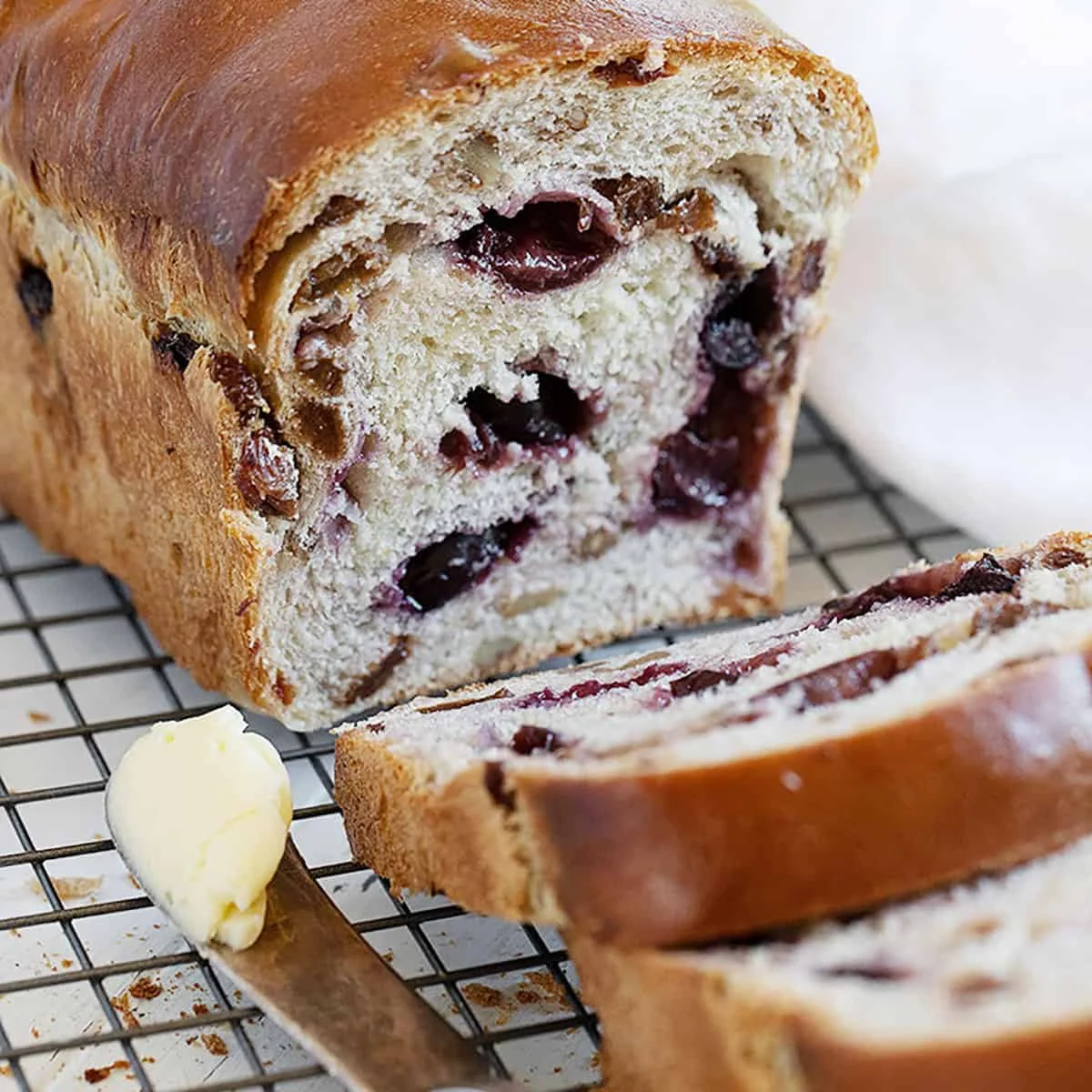
Sweet Cherry Yeast Bread is a soft, lightly sweet loaf studded with cherries, raisins and walnuts. It makes a fruit-filled breakfast or snack, with a gentle rise and a golden crust.
Ingredients
- 375 g (3 cups; approximately, spooned and levelled)plain flour
- 10 g (2 teaspoons)salt
- 6 g (2 teaspoons)instant yeast
- 50 g (1/4 cup)sugar
- 60 ml (1/4 cup)vegetable or rapeseed oil, or room-temperature butter
- 240 ml (1 cup)lukewarm water
- 75 g (1/2 cup)raisins
- 60 g (1/2 cup), choppedwalnuts
- 225 g (1 1/2 cups), pitted and halved, then lightly flouredfresh cherries
Instructions
- 1
Mix the dough
In a large mixing bowl or the bowl of a stand mixer, combine 250 g (2 cups) of the flour with the salt, instant yeast, sugar, oil and water. Mix to make a soft dough. Add more flour a little at a time, kneading well between additions, until the dough is moist and clears the sides of the bowl.
- 2
Add the fruit
Knead in the raisins and walnuts, adding a little more flour as needed. Turn the dough out onto a floured surface and knead briefly. Shape it into a ball, place it in a greased bowl and cover; leave to rise until doubled, about 60 minutes.
- 3
Shape the loaf
Turn the dough onto a lightly floured surface and gently deflate it. Roll it into a rectangle about 20 cm (8 inches) wide and 41 cm (16 inches) long. Scatter the floured cherries over the dough, then roll it up like a Swiss roll, starting at a short end. Put it in a greased 23 × 13 cm (9 × 5 inch) or 10 × 28 cm (4 × 11 inch) loaf tin. Cover and leave to rise until doubled, about 30–45 minutes.
- 4
Preheat the oven
Preheat the oven to 190°C (375°F), using the conventional setting rather than fan-assisted.
- 5
Bake and cool
Bake the loaf for 50–60 minutes. Check it at about 25 minutes and loosely cover it with foil if the top is browning too much. If using a thermometer, look for an internal temperature of around 88°C (190°F). Transfer the loaf to a cooling rack and let it cool completely before slicing.
What is sweet cherry yeast bread?
This is an American-style enriched yeast loaf, with a soft, mildly sweet crumb rather than a cake-like batter. It brings together cherries, raisins and walnuts in a rolled loaf.
The dough is mixed and risen before the cherries are added, which helps keep the pieces distinct. Lightly flouring the cherries also helps limit extra moisture where they meet the dough.
Nutrition and macros by portion
The nutrition label shows one serving as written: 196 calories, 4g protein, 31g carbs, 7g fat.
| Portion | Adjustment | kcal | Protein | Carbs | Fat |
|---|---|---|---|---|---|
| Lighter | Use less oil and walnuts | 137 kcal | 3g | 22g | 5g |
| This serving | As written | 196 kcal | 4g | 31g | 7g |
| Hungry | Serve a larger slice | 294 kcal | 6g | 47g | 11g |
The flour and sugar supply most of the carbohydrate, while the oil or butter and walnuts contribute much of the fat. Flour and walnuts also provide some protein, with smaller amounts from the other ingredients. Pair a slice with yoghurt or eggs and fresh fruit for a more balanced plate.
Build a soft dough
Flour first: start with 250 g (2 cups), then add the rest gradually as you knead. Flour absorbs moisture differently, so the dough should remain soft and slightly tacky rather than becoming stiff.
Water temperature: use lukewarm water, not hot, when mixing with the yeast. The recipe gives no exact temperature, so aim for water that feels gently warm to the touch.
Fold in the additions
Raisins and walnuts: knead these into the dough before the first rise so they are distributed through the loaf. Chop the walnuts beforehand for pieces that are easier to slice through.
Cherries: add them after the first rise, scattering them over the rolled-out dough. This keeps them from being crushed during the initial kneading.
Shape and prove
First rise: cover the greased bowl and wait until the dough has doubled, about 60 minutes. The dough's increase in size is a more useful cue than the clock alone.
Second rise: roll the dough up from a short end and place it seam-side down in the tin. Let it double again, about 30–45 minutes, before baking.
Check the bake
Colour: begin checking the top at about 25 minutes. A loose foil cover helps prevent over-browning while the centre continues to bake.
Doneness: the recipe gives a total baking time of 50–60 minutes and an optional internal temperature of around 88°C (190°F). Let the loaf cool completely on a rack before cutting so the crumb can set.
Serving ideas
Serve slices plain, lightly toasted or with a little butter. The cherries and raisins bring sweetness, while walnuts add a savoury, crunchy contrast.
For a more substantial breakfast, pair a slice with yoghurt or eggs and some fresh fruit. The loaf is also handy as an afternoon snack.
Recipe notes & tips
- Spoon the flour into the measuring cup and level it rather than packing it in.
- Add the extra flour gradually so the dough does not become dry.
- Pit and halve the cherries before lightly dusting them with flour.
- Grease the bowl and loaf tin well to make the dough easier to handle.
- Cover the loaf loosely with foil if its top is getting too dark.
- Wait until the loaf is completely cool before slicing it.
Variations
- Frozen cherries: thaw and drain them well before pitting is unnecessary and halving is not needed; lightly flour before adding.
- Butter dough: use room-temperature butter instead of the oil for a richer flavour.
- Extra spice: add a little ground cinnamon to the flour for a warm note.
- Other nuts: replace the walnuts with chopped pecans for a different crunch.
- Citrus lift: add finely grated orange zest to the dough for a brighter flavour.
Common mistakes to avoid
- Adding all the flour at once: the dough may turn stiff; work it in gradually and stop when it clears the bowl.
- Using wet cherries: excess juice can make the dough soggy; drain the fruit and lightly flour it.
- Rushing the first rise: the loaf may be dense; wait until the dough has doubled.
- Overfilling the tin: choose one of the stated tin sizes and allow room for the second rise.
- Skipping the foil check: the top can over-brown; check at about 25 minutes and cover loosely if needed.
- Slicing while warm: the crumb can compress; cool the loaf completely on a rack first.
How to store
Once completely cool, store the loaf wrapped or in an airtight container at room temperature for up to 3 days. Reheat individual slices briefly in a toaster or low oven; freeze well-wrapped slices for longer storage.
Frequently asked questions
Can I use frozen cherries?
Yes. Thaw and drain them well, then halve if needed and lightly flour before adding. Excess moisture can make the dough harder to handle.
Can I use active dry yeast?
The recipe refers to a note for active dry yeast, but that note is not included here. Follow the conversion and preparation directions on your yeast packet.
How do I know when the dough has risen enough?
For both rises, use the stated doubled-in-size cue. The first rise takes about 60 minutes, and the second about 30–45 minutes, though the dough's appearance is the main guide.
Do I need a thermometer to bake the loaf?
No. The thermometer is optional; the recipe gives a baking time of 50–60 minutes. If you have one, the suggested internal temperature is around 88°C (190°F).
Why does the loaf need to cool before slicing?
Cooling lets the crumb set, making the loaf easier to slice without squashing it. Leave it on a rack until completely cool.
Can I use butter instead of oil?
Yes. The ingredient list allows room-temperature butter as an alternative to vegetable or rapeseed oil.
Cook it from the original
This recipe comes from seasonsandsuppers.ca. Their page has the author’s own photos, notes and tips — the best place to cook it from.
Open the recipe on seasonsandsuppers.ca