
German Kässpätzle- Swabian comfort food at its best
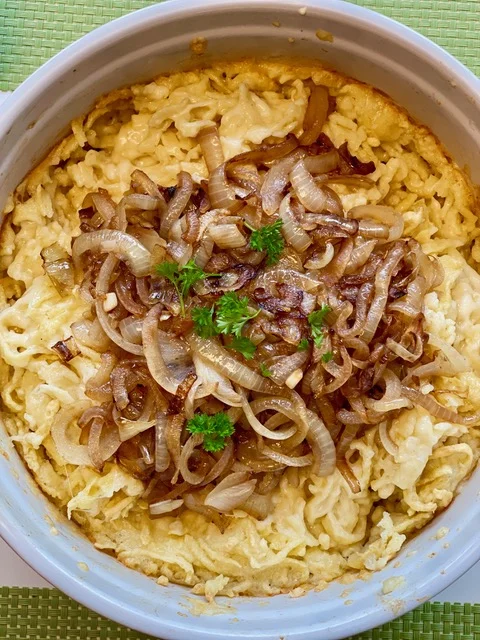
Kässpätzle is a Swabian comfort dish of soft egg noodles layered with melted cheese and topped with browned onions. It takes a little time to make the dough and cook the noodles, but the result is a warming, savoury meal to share.
Ingredients
- 400 gplain flour
- 4 largeeggs
- 2 tbspsemolina
- 1 tsp, plus extrasalt
- to tastefreshly ground black pepper
- ¼ tspground nutmeg
- 1 splashsparkling water
- 300 ggrated cheese, such as Emmental and mountain cheese or Gruyère
- 4 mediumonions
- 3 tbspsunflower oil
Instructions
- 1
Mix the eggs
Put the eggs in the bowl of a stand mixer, add the salt and stir to combine.
- 2
Rest the eggs
Leave the mixture to rest for 15 minutes; this helps give the Spätzle a brighter yellow colour.
- 3
Make the dough
Add the flour, semolina and ground nutmeg. Fit the dough hook and knead for 5 minutes, until the flour is incorporated into the dough.
- 4
Add sparkling water
Add a splash of sparkling water and beat the dough for a little longer.
- 5
Check the dough
Use a wooden spoon to scoop up and pull the dough. It is ready when bubbles appear.
- 6
Check the consistency
The dough should be quite thick. Traditionally, it was cut into the water from a wooden board using a knife.
- 7
Rest the dough
Leave the dough to rest while you continue with the recipe.
- 8
Heat the water
Bring a large pot of salted water to the boil, then lower the heat to a simmer.
- 9
Preheat the oven
Heat the oven to 180 °C.
- 10
Slice the onions
Peel the onions and slice them thinly.
- 11
Cook the Spätzle
Using a Spätzle maker, press the noodles into the simmering water. Cook for about 2–3 minutes, or until they float to the surface.
- 12
Drain the noodles
Lift the noodles out with a slotted spoon and transfer them to a sieve. Repeat until you have used all the dough.
- 13
Layer with cheese
After each batch, transfer the Spätzle to an ovenproof ceramic dish with a good splash of cooking water and some grated cheese. Mix, then repeat until the dish is full.
- 14
Melt the cheese
Bake the Spätzle for roughly 15–20 minutes, until the cheese has melted.
- 15
Heat the oil
While the Spätzle are in the oven, heat a frying pan over a high heat and add the oil.
- 16
Brown the onions
Cook the onions in the oil, stirring occasionally, until soft and lightly coloured.
- 17
Finish the dish
Carefully remove the hot Kässpätzle from the oven. Add a pinch of salt and some freshly cracked pepper, then top with the browned onions.
- 18
Serve straight away
Serve immediately with a side salad.
What is Kässpätzle?
Kässpätzle is a Swabian dish from southern Germany: small, soft egg noodles are combined with cheese and finished with onions. It is often compared with macaroni cheese, but the homemade noodles give it a distinctively tender, uneven texture.
This version makes the Spätzle from a thick egg dough, cooks them in batches and layers them with grated cheese. A mixture of Emmental and mountain cheese, or Gruyère, gives the dish a balance of melt and savoury flavour.
Nutrition and macros by portion
The nutrition label shows one serving as written: 890 calories, 40g protein, 99g carbs, 36g fat.
| Portion | Adjustment | kcal | Protein | Carbs | Fat |
|---|---|---|---|---|---|
| Lighter | More salad, smaller portion | 623 kcal | 28g | 69g | 25g |
| This serving | As written | 890 kcal | 40g | 99g | 36g |
| Hungry | Larger portion | 1335 kcal | 60g | 149g | 54g |
Most of the carbohydrates come from the flour and semolina, while the cheese, eggs and sunflower oil contribute much of the fat; the eggs and cheese also provide protein. Serve a moderate portion with a generous side salad to balance the rich, noodle-based dish.
Building the dough
Eggs first: letting the salted eggs stand for 15 minutes is part of the recipe’s method and helps the dough develop its colour.
Flour and semolina: kneading them with the eggs and nutmeg creates a thick dough. Add the sparkling water a splash at a time, keeping the dough substantial rather than runny.
Getting the texture right
The dough: scoop and pull it with a wooden spoon; the appearance of bubbles is the recipe’s cue that it is ready. It should still be thick enough to press through a Spätzle maker.
The noodles: cook them at a simmer, not a vigorous boil. They are ready when they rise to the surface, usually after 2–3 minutes.
Cooking in batches
Batch by batch: press the dough into the water in manageable amounts and lift each batch out with a slotted spoon. This lets you drain the noodles and keep the cooking water for the layers.
Keep some water: add a good splash of the cooking water to each layer of Spätzle and cheese. It helps the layers come together as the cheese melts in the oven.
Choosing the cheese
A blend: Emmental and mountain cheese are the suggested combination; Gruyère is another option. Grating the cheese helps it melt through the noodles during baking.
Layer as you go: combine each batch of hot noodles with grated cheese in the ovenproof dish, rather than leaving all the cheese on top. The result is cheese throughout, with a soft, cohesive texture.
Soft onions on top
Thin slices: cut the onions evenly so they soften at a similar pace in the pan.
Cook until tender: stir them occasionally in the hot oil and look for softness with a little colour. They finish the rich noodles with a savoury, gently sweet topping.
Timing and serving
Work in sequence: let the dough rest while you prepare the water and onions, then bake the assembled dish for roughly 15–20 minutes at 180 °C. Start the onions while the dish is in the oven.
Serve hot: bring the Kässpätzle straight to the table with a side salad. The fresh, crisp leaves make a simple contrast to the soft noodles and melted cheese.
Recipe notes & tips
- Use a mix of cheeses if you want both a good melt and a more pronounced savoury flavour.
- Keep the cooking water nearby so you can add a splash to each layer as you assemble the dish.
- Cook the noodles at a steady simmer to keep the water from becoming too turbulent.
- Slice the onions thinly so they soften evenly while browning.
- Use oven gloves when removing the hot ceramic dish from the oven.
Variations
- Try Gruyère: use it in place of, or alongside, the suggested cheese blend.
- Change the cheese mix: combine Emmental with another melting mountain cheese for a different balance of flavours.
- Add more pepper: finish with extra freshly cracked black pepper at the table.
- Serve with greens: pair the dish with a crisp salad for freshness alongside the rich noodles.
Common mistakes to avoid
- Runny dough: add the sparkling water sparingly so the dough stays thick enough to press through a Spätzle maker.
- Boiling too vigorously: lower the heat to a simmer before adding the noodles to keep them manageable.
- Overcooking the noodles: lift them out once they float, usually after 2–3 minutes.
- Dry layers: add a good splash of cooking water with each batch of noodles and cheese.
- Undercooked onions: keep cooking and stirring until they are soft and have taken on a little colour.
How to store
Refrigerate leftovers in a covered container and eat within 3 days. Reheat in an ovenproof dish at 180 °C until hot throughout, or warm portions in the microwave; add a small splash of water if they seem dry.
Frequently asked questions
Can I make the Spätzle without a Spätzle maker?
The recipe notes that traditionally the dough was cut into the water from a wooden board with a knife. A Spätzle maker is the tool used here, but the traditional board-and-knife method is an alternative.
How do I know when the dough is ready?
Scoop and pull it with a wooden spoon. The recipe’s cue is that bubbles appear; the dough should remain quite thick.
How can I tell when the noodles are cooked?
They should float to the top of the simmering water, which takes about 2–3 minutes.
Can I use just one type of cheese?
Yes. The recipe suggests Emmental and mountain cheese, or Gruyère, so you can choose one of those options if you prefer.
Why add cooking water to the dish?
A good splash goes in with each batch of noodles and cheese as you layer them. It helps the ingredients come together as they bake.
What should I serve with Kässpätzle?
The recipe recommends a side salad, which provides a fresh contrast to the cheesy noodles.
Cook it from the original
This recipe comes from sabrinastable.com. Their page has the author’s own photos, notes and tips — the best place to cook it from.
Open the recipe on sabrinastable.com