
Balsamic Vinaigrette
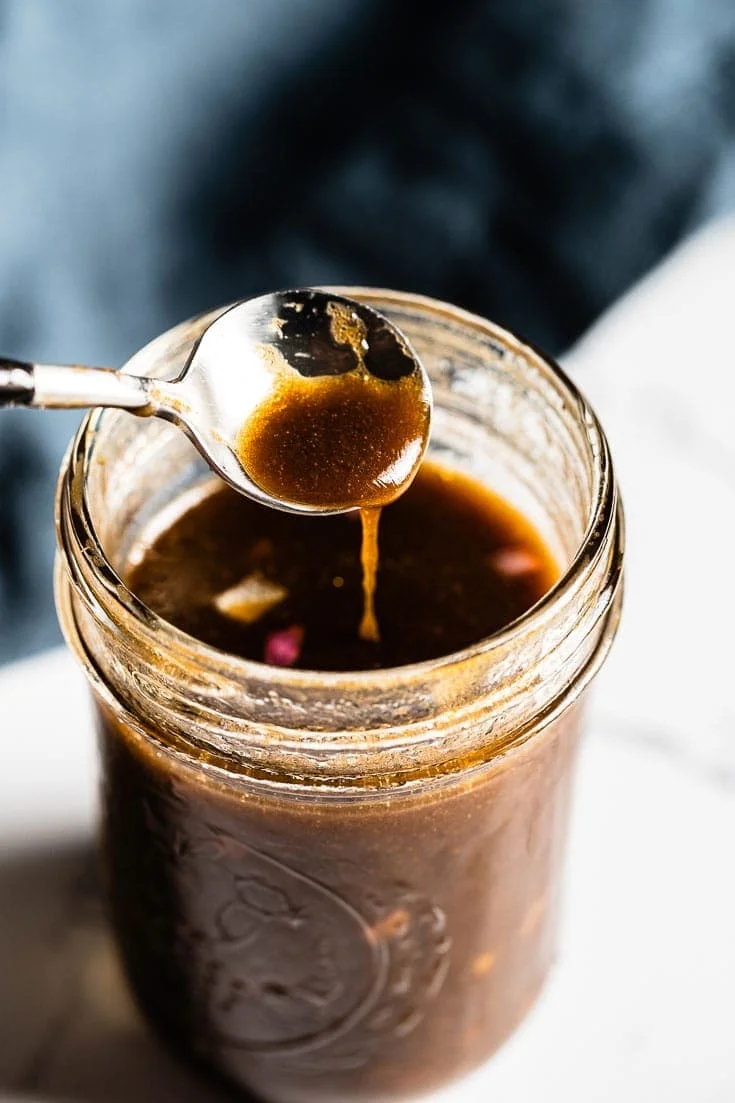
This quick balsamic vinaigrette combines tangy vinegar, olive oil, mustard and a touch of sweetness. Make it in a jar or with a whisk, then use it to dress salads and vegetables throughout the week.
Ingredients
- 60 ml (¼ cup)good-quality balsamic vinegar
- 15 ml (1 tbsp)finely minced shallot
- 15–30 ml (1–2 tbsp)honey or sugar, depending on the sweetness of your balsamic vinegar
- 5 ml (1 tsp)Dijon mustard
- 1.25 ml (¼ tsp)kosher salt
- 0.6 ml (⅛ tsp)freshly ground black pepper
- 120 ml (½ cup)extra-virgin olive oil
Instructions
- 1
Shake in a jar
Put all the ingredients in a jar with a tightly fitting lid. Shake for about 30 seconds, or until the dressing is emulsified and the honey has dissolved.
- 2
Combine in a bowl
Alternatively, add all the ingredients except the olive oil to a bowl and whisk them together.
- 3
Whisk in oil
Keep whisking as you slowly drizzle the olive oil into the bowl to emulsify the vinaigrette.
- 4
Taste and adjust
Taste the dressing for acidity, sweetness and salt, and adjust as needed.
What is balsamic vinaigrette?
Balsamic vinaigrette is a simple dressing built around balsamic vinegar and oil, with seasoning and often a little sweetness to soften the vinegar’s tang. Balsamic vinegar comes from Italy, and its rich, sweet-sour flavour gives this version its character.
Mustard helps the oil and vinegar come together, while shallot adds a mild savoury note. The short ingredient list makes this a handy dressing to mix whenever you need it.
Nutrition and macros by portion
The nutrition label shows one serving as written: 96 calories, 0g protein, 2g carbs, 10g fat.
| Portion | Adjustment | kcal | Protein | Carbs | Fat |
|---|---|---|---|---|---|
| Lighter | Use less olive oil | 67 kcal | 0g | 1g | 7g |
| This serving | As written | 96 kcal | 0g | 2g | 10g |
| Hungry | Larger dressing portion | 144 kcal | 0g | 3g | 15g |
Olive oil supplies most of the fat and energy, while the vinegar and honey or sugar contribute most of the carbohydrates. Shallot and mustard add only small amounts of protein. To balance a meal, serve a modest amount over a generous salad or vegetables alongside a protein-rich main.
Choosing the ingredients
Balsamic vinegar: Use a good-quality vinegar whose flavour you enjoy on its own; its sweetness and sharpness will shape the finished dressing.
Sweetener: Start with 1 tablespoon of honey or sugar, then add more if your vinegar tastes particularly sharp.
Olive oil: Extra-virgin olive oil brings a fruity flavour, so choose one you like in an uncooked dressing.
Getting an even emulsion
Jar method: A tight-fitting lid makes this the quickest option. Shake until the mixture looks evenly blended and the honey has dissolved.
Whisk method: Add the oil gradually while whisking continuously. A slow drizzle gives the vinegar and oil more opportunity to combine.
Balancing the flavour
Taste: Check the dressing after it is mixed, when you can judge the vinegar, sweetness and salt together. Adjust each in small amounts to suit your balsamic vinegar.
Seasoning: The shallot, Dijon mustard, salt and pepper add savoury depth without obscuring the vinegar. Stir or shake again after making any adjustment.
Using the dressing
Salads: Toss it with leafy greens shortly before serving so the leaves are coated but not left sitting in dressing.
Vegetables: Try it over roasted or steamed vegetables, or use a little to dress a grain salad. Shake or whisk it again if the oil and vinegar have separated.
Timing and texture
Mixing: The dressing takes about 2 minutes to make, with roughly 30 seconds of shaking for the jar method.
Doneness cue: It is ready when it looks briefly creamy and evenly blended, with no visible honey at the bottom of the jar. Separation after standing is normal for a vinaigrette.
Recipe notes & tips
- Taste the balsamic vinegar before mixing so you can choose how much sweetener to use.
- Finely mince the shallot so its flavour is distributed throughout the dressing.
- Shake the jar again just before serving if the oil and vinegar have separated.
- Add the oil in a slow, steady drizzle when using the whisk method.
- Dress salad leaves shortly before serving to keep them from becoming soggy.
Variations
- Add garlic: Whisk in a little finely minced garlic for a more savoury dressing.
- Use maple syrup: Swap the honey or sugar for maple syrup to change the sweet note.
- Add herbs: Stir in chopped fresh basil or parsley just before serving.
- Make it sharper: Use the lower amount of sweetener for a more tangy result.
- Add chilli: Mix in a pinch of chilli flakes for gentle heat.
Common mistakes to avoid
- Adding all the oil at once: Drizzle it in slowly while whisking to help the dressing emulsify.
- Using too much sweetener: Start with 1 tablespoon, taste, and increase only if needed.
- Not securing the jar lid: Check that it is tight before shaking to avoid spills.
- Expecting it to stay emulsified: Separation is normal; shake or whisk the dressing again before use.
- Leaving salad dressed too early: Add the vinaigrette shortly before serving to preserve the leaves’ texture.
How to store
Keep the dressing in a sealed jar in the refrigerator for up to 1 week. The olive oil may thicken when chilled; let the jar stand at room temperature briefly, then shake well before using.
Frequently asked questions
Can I make this vinaigrette without a jar?
Yes. Whisk all the ingredients except the oil in a bowl, then drizzle in the oil slowly while whisking continuously.
Why has the dressing separated?
Oil and vinegar naturally separate as they stand. Shake or whisk the dressing again just before serving.
How do I make it less sharp?
Add more honey or sugar a little at a time, tasting as you go. The recipe allows 1–2 tablespoons depending on the sweetness of your vinegar.
Can I use a different oil?
You can use another oil, but it will change the flavour. Extra-virgin olive oil is the specified choice for its distinctive taste.
How much does this recipe make?
It makes 12 servings. The amount you use per serving depends on how lightly or generously you dress your food.
Cook it from the original
This recipe comes from saltpepperskillet.com. Their page has the author’s own photos, notes and tips — the best place to cook it from.
Open the recipe on saltpepperskillet.com