
Cranberry Welsh Cakes
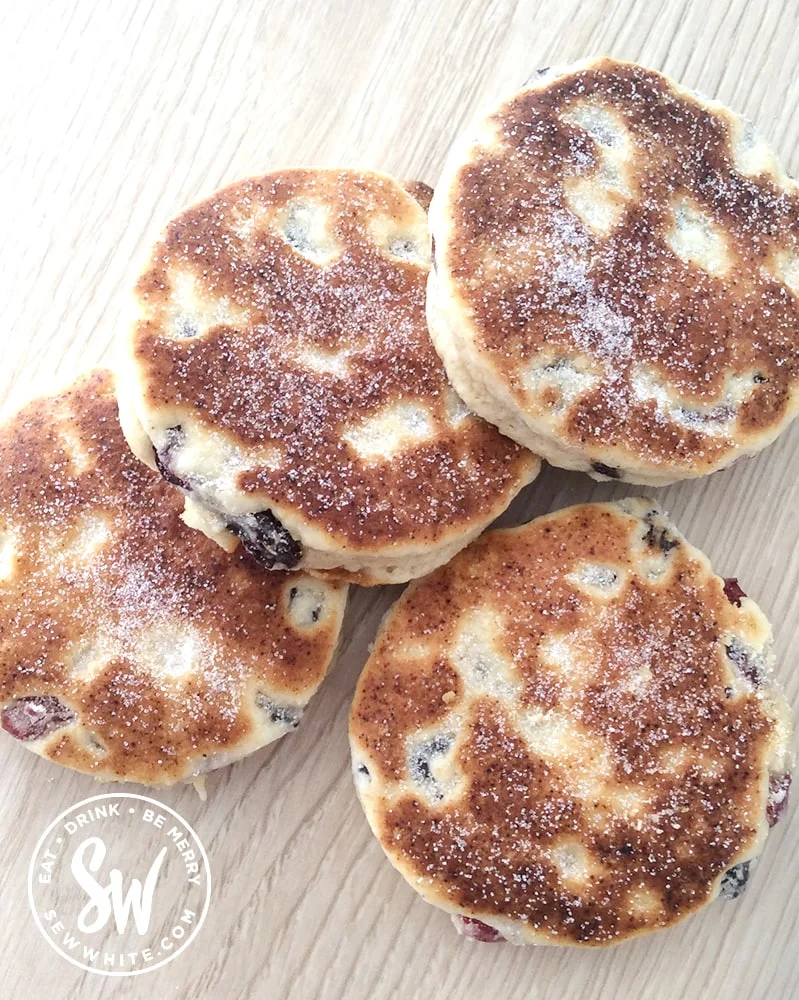
These Welsh griddle cakes combine currants and chopped dried cranberries with warm ginger and mixed spice. They cook quickly in a frying pan and make a handy sweet bake to share with a cup of tea.
Ingredients
- 350 gplain flour
- 2 teaspoonsbaking powder
- 175 gunsalted butter
- a pinchsalt
- 120 g, plus extra for dustingcaster sugar
- 60 gcurrants
- 40 gdried cranberries, chopped
- 0.5 teaspoonground ginger
- 0.5 teaspoonground mixed spice
- 1 largeegg
- 2 tablespoonsmilk
Instructions
- 1
Sift the dry ingredients
Sieve the flour and baking powder into a large bowl.
- 2
Rub in butter
Add the butter and rub it into the flour until the mixture resembles fine breadcrumbs.
- 3
Add fruit and spice
Stir in the sugar, a pinch of salt, the dried fruit and the spices.
- 4
Whisk egg and milk
Lightly whisk the egg and milk together in a jug until combined.
- 5
Bring dough together
Add the milk mixture to the flour mixture and combine to make a firm, thick dough. Add a little more milk if it seems too dry.
- 6
Roll out dough
Turn the dough onto a lightly floured work surface and roll it to about 5 mm thick.
- 7
Cut out cakes
Use a biscuit cutter to cut out the Welsh cakes. An 8 cm round cutter works, but you can use another size.
- 8
Heat the pan
Warm a griddle or frying pan over a low to medium heat. Cook a few cakes at a time, leaving enough room to get a spatula underneath and turn them.
- 9
Brown both sides
Cook each side for a few minutes, checking about every minute and turning once browned. If the pan is too hot and the cakes scorch, lower the heat; a low flame helps them cook through and turn golden.
- 10
Cool and dust
Remove the cooked cakes from the heat and place them on a cooling rack. Sprinkle with a little caster sugar.
- 11
Serve
Enjoy the Welsh cakes.
What are Welsh cakes?
Welsh cakes are traditional Welsh griddle cakes, cooked on a flat griddle or in a pan rather than baked in an oven. They sit somewhere between a scone and a biscuit: tender and lightly crumbly, with a browned surface.
This version keeps the familiar currants and adds chopped cranberries, ginger and mixed spice. The fruit brings sweet-tart bursts, while the spices give the dough a warming flavour.
Nutrition and macros by portion
The nutrition label shows one serving as written: 113 calories, 2g protein, 16g carbs, 5g fat.
| Portion | Adjustment | kcal | Protein | Carbs | Fat |
|---|---|---|---|---|---|
| Lighter | Smaller cakes, less sugar | 79 kcal | 1g | 11g | 4g |
| This serving | As written | 113 kcal | 2g | 16g | 5g |
| Hungry | Larger portion | 170 kcal | 3g | 24g | 8g |
The flour and sugar provide most of the carbohydrates, while butter is the main source of fat; the egg and flour contribute some protein. Pair a cake or two with plain yoghurt and fresh fruit for a more filling snack.
Getting the dough right
Butter: Rub it into the flour until there are no large lumps and the mixture looks like fine breadcrumbs. Keeping this step even helps the cakes cook with a tender texture.
Milk and egg: Add the whisked mixture to bring the dough together, stopping once it is firm and workable. If it is noticeably dry and crumbly, add milk sparingly rather than pouring in extra all at once.
Fruit and spice in every bite
Currants: These provide the classic little pockets of sweetness in Welsh cakes. Distribute them through the flour mixture so they do not clump together.
Cranberries and spice: Chop the cranberries so they sit comfortably in the dough, then mix them through with the ginger and mixed spice. The mixed spice here is described as a blend of cinnamon, ginger and cloves.
Rolling and cutting
Thickness: Roll the dough to about 5 mm, as specified in the recipe. Keeping the sheet even helps the cakes cook at a similar pace.
Cutter: The recipe uses an 8 cm round cutter, though other sizes are fine. Gather and re-roll the scraps gently to make more cakes without working the dough excessively.
Cooking over gentle heat
Pan temperature: A griddle or frying pan that is too hot can brown the outside before the centres have cooked. Begin at low to medium heat and lower it if the cakes colour too quickly.
Doneness: Check the underside about every minute and turn once it is golden brown. Leave space between cakes so you can slide a spatula underneath to flip them.
Serving and timing
These cakes are especially good freshly cooked, while the edges are lightly crisp and the centres remain tender. A final dusting of caster sugar adds a delicate sweetness.
Serve them with tea or coffee, or alongside fruit and yoghurt for a more substantial snack. The stated preparation and cooking time is 20 minutes, so have the dough and pan ready before cooking.
Recipe notes & tips
- Keep the butter cool enough to rub into the flour without melting.
- Chop the cranberries into small pieces so they are easier to distribute in the dough.
- Add any extra milk a little at a time if the dough will not come together.
- Roll the dough to an even thickness so the cakes cook consistently.
- Check the pan frequently because the cakes can brown quickly.
- Dust the cakes with caster sugar while they are still warm.
Variations
- More citrus: Add finely grated orange zest to complement the cranberries.
- Extra spice: Increase the ginger slightly for a more pronounced warming flavour.
- Cranberry swap: Use an equal amount of chopped dried fruit in place of the cranberries.
- Smaller rounds: Cut the dough into smaller cakes and check them sooner as they cook.
- No currants: Replace the currants with extra dried cranberries for a fruitier batch.
Common mistakes to avoid
- Adding too much milk: The dough can become sticky; add milk gradually until it just comes together.
- Uneven rolling: Thick and thin areas cook at different rates; aim for an even 5 mm sheet.
- Pan too hot: The outside may burn before the centre cooks; lower the heat and check often.
- Crowding the pan: Cakes are harder to turn when packed together; cook a few at a time.
- Overworking scraps: Repeated kneading can make the cakes tougher; gather and re-roll gently.
How to store
Once completely cool, store the cakes in an airtight container at room temperature and eat within 2–3 days. Warm them briefly in a dry pan over low heat or in a low oven; they can also be frozen in a sealed container.
Frequently asked questions
Can I make Welsh cakes without a griddle?
Yes. Use a heavy-based frying pan and cook the cakes over low to medium heat, adjusting the temperature if they brown too quickly.
How thick should I roll the dough?
Roll it to about 5 mm thick, as directed in the recipe. Try to keep the thickness even across the sheet.
How do I know when to turn the cakes?
Check the underside about every minute and turn when it has browned to your liking. The heat should be gentle enough for the centres to cook before the outside gets too dark.
What if the dough is too dry?
Add a little extra milk at a time until the dough comes together into a firm, thick consistency.
Can I use a different-sized cutter?
Yes. The recipe uses an 8 cm cutter, but another size will work; keep an eye on smaller or larger cakes as they cook.
Can I freeze Welsh cakes?
Yes. Cool them fully, then freeze in a sealed container. Defrost and warm briefly in a dry pan or low oven.
Cook it from the original
This recipe comes from sewwhite.com. Their page has the author’s own photos, notes and tips — the best place to cook it from.
Open the recipe on sewwhite.com