
Simple Lettuce Salad (Greek Style!)
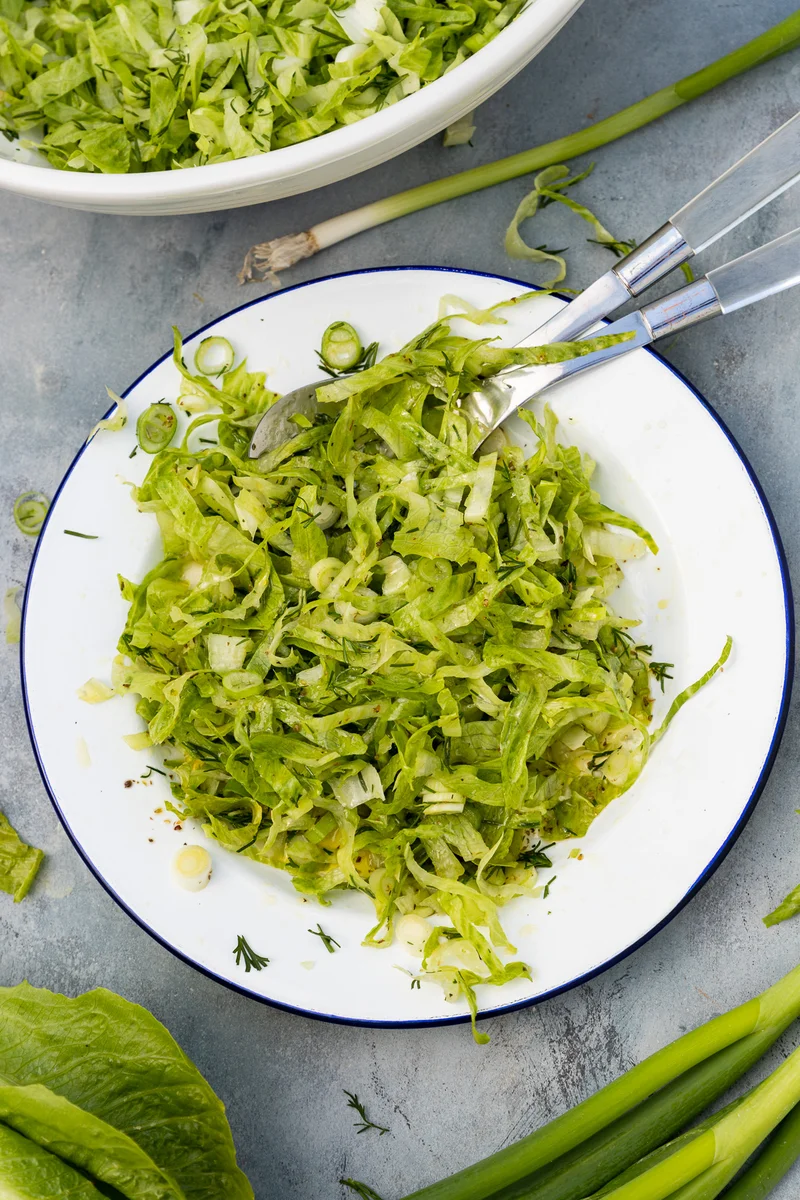
This Greek-style lettuce salad combines finely shredded lettuce, salad onions and dill with a simple olive oil and vinegar dressing. It comes together in minutes and makes a fresh, crunchy side for all sorts of meals.
Ingredients
- 225 g (4 cups shredded; 8 oz)baby Cos lettuce, or Romaine lettuce, lettuce hearts or iceberg lettuce
- 5salad onions
- 15 g (¼ cup)fresh dill, finely chopped
- 80 ml (⅓ cup)olive oil
- 45 ml (3 tablespoons)vinegar: white wine, white, apple cider or red wine vinegar, or lemon juice
- 1 teaspoondried oregano
Instructions
- 1
Slice the lettuce
Remove any damaged or bruised outer leaves and cut off the stalk end. Using a sharp knife, slice the lettuce very finely, working up from the stalk.
- 2
Wash the lettuce
Rinse the shredded lettuce thoroughly in a large colander. Leave it to drain while you prepare the other ingredients.
- 3
Chop onions and dill
Thinly slice the salad onions and rinse them in a colander. Wash the dill, gather it together and chop it finely.
- 4
Toss the greens
Combine the shredded lettuce, salad onions and dill in a large bowl.
- 5
Dress and serve
Whisk all the dressing ingredients together in a small jug or bowl. Just before serving, toss the dressing through the salad and serve immediately while crisp.
What is Greek lettuce salad?
This is a Greek-style green salad built around finely sliced lettuce, salad onions and dill, rather than the tomatoes, cucumber and feta often found in a village-style Greek salad. Its crisp greens and sharp, herb-scented dressing make it a quick, refreshing side.
The method relies on a simple combination of familiar Mediterranean ingredients. Thinly cutting the lettuce helps the herbs and dressing spread evenly through every bite.
Nutrition and macros by portion
The nutrition label shows one serving as written: 164 calories, 0g protein, 1g carbs, 18g fat.
| Portion | Adjustment | kcal | Protein | Carbs | Fat |
|---|---|---|---|---|---|
| Lighter | Use less olive oil | 115 kcal | 0g | 1g | 13g |
| This serving | As written | 164 kcal | 0g | 1g | 18g |
| Hungry | Serve a larger portion | 246 kcal | 0g | 2g | 27g |
The olive oil supplies most of this salad’s calories and fat, while the lettuce, onions and dill provide its small amount of carbohydrate. It contains very little protein, so pair it with a protein-rich main such as beans, fish or eggs to make a more balanced plate.
Choose the lettuce
Cos lettuce: Baby Cos or Romaine gives the salad a crisp, sturdy texture that holds up well to tossing.
Other leaves: Lettuce hearts or iceberg are also suitable. Whichever you choose, remove any bruised outer leaves before slicing.
Dry the leaves well
Drain the shredded lettuce after washing so excess water does not dilute the dressing. A salad spinner can help, or you can let the leaves sit in the colander while you chop the onions and dill.
Cutting the lettuce finely is the key preparation detail: it makes the salad easy to toss and helps distribute the dressing without crushing the leaves.
Keep the herbs fresh
Dill: Chop it finely so its fresh, distinctive flavour is spread throughout the salad rather than concentrated in a few large pieces.
Oregano: The dried herb goes into the dressing, where whisking helps mix it with the oil and vinegar.
Dress just before serving
Whisk the dressing in a separate jug or bowl, then wait to toss it with the greens until you are ready to eat. This keeps the lettuce crisp for longer.
Toss thoroughly but gently so the dressing coats the thinly sliced leaves without bruising them.
Serve it with
The salad’s sharp dressing and crunchy texture work well alongside grilled or roasted dishes, or as a fresh counterpoint to a richer main. It can also add crispness to a meal of dips, bread and other small plates.
Serve it straight after dressing; it is at its best before the leaves soften.
Recipe notes & tips
- Use a sharp knife to slice the lettuce finely and evenly.
- Rinse the shredded leaves in a large colander so they are easy to drain.
- Chop the dill finely to distribute its flavour through the salad.
- Whisk the dressing until the oil and vinegar are well combined.
- Wait until serving time to toss the dressing through the greens.
Variations
- Change the vinegar: Use lemon juice or another listed vinegar for a different kind of tang.
- Choose another lettuce: Swap baby Cos for Romaine, lettuce hearts or iceberg.
- Adjust the herbs: Add a little more or less dill to suit your taste.
- Serve with feta: Crumble feta over the salad for a savoury addition.
- Make it a meal: Add cooked beans or a protein of your choice alongside the salad.
Common mistakes to avoid
- Leaving the leaves wet: Excess water can thin the dressing; drain the lettuce thoroughly.
- Cutting the lettuce too roughly: Large pieces are harder to coat evenly; slice it finely.
- Chopping the dill coarsely: Big pieces can overwhelm individual bites; chop it finely.
- Dressing too early: The lettuce can lose its crispness; toss just before serving.
- Mixing too vigorously: Rough tossing can bruise the leaves; turn them gently until coated.
How to store
For the best texture, serve the salad immediately after dressing. If storing ahead, keep the undressed greens and dressing separately in covered containers in the fridge and combine just before serving.
Frequently asked questions
Can I prepare the salad ahead of time?
You can wash and slice the lettuce and prepare the onions and dill in advance. Keep everything covered and chilled, and dress the salad just before serving.
Which lettuce works best?
Baby Cos or Romaine gives a crisp result, but lettuce hearts and iceberg are suitable alternatives. Choose leaves that are fresh and firm.
Can I use lemon juice instead of vinegar?
Yes. The recipe lists lemon juice as an alternative; whisk it with the olive oil and oregano as directed.
How do I stop the salad becoming soggy?
Drain the washed lettuce well and keep the dressing separate until just before serving. Toss gently and serve straight away.
Can I make the dressing in advance?
Yes. Whisk it ahead and keep it covered in the fridge; whisk it again before tossing it through the salad.
Cook it from the original
This recipe comes from scrummylane.com. Their page has the author’s own photos, notes and tips — the best place to cook it from.
Open the recipe on scrummylane.com