
The best Spanish omelette recipe (just 5 ingredients)
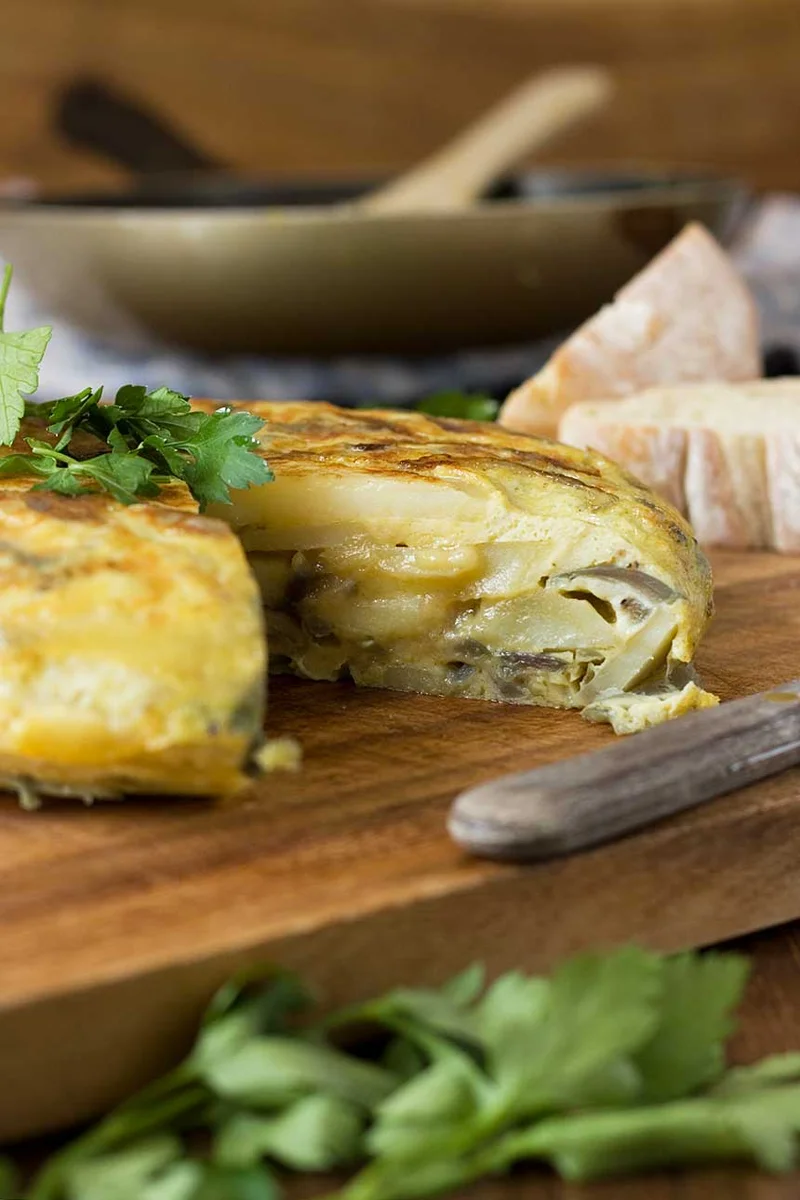
This Spanish omelette, or tortilla española, layers tender potatoes and onion with softly set egg. Slow cooking gives the filling time to soften and makes a simple, satisfying dish that works for lunch, supper or sharing.
Ingredients
- 60 ml olive oil, plus a little extra (up to 30 ml)olive oil
- 4 small to medium (400 g), peeled and thinly sliced (about 2 mm thick)potatoes
- 1 large, halved and thinly slicedonion
- 4eggs
- to tastesalt and pepper
- optionalsalad, fresh bread, mayonnaise or chutney
Instructions
- 1
Heat the oil
Warm the olive oil in a medium to large frying pan over a medium-high heat.
- 2
Cook the potatoes
Add the potatoes and onion, season generously with salt and pepper, and stir-fry for 1–2 minutes. Turn the heat right down, cover the pan and cook slowly for 20–25 minutes, stirring 2–3 times.
- 3
Whisk the eggs
Meanwhile, whisk the eggs in a large jug or bowl and season with more salt and pepper.
- 4
Combine and rest
When the potatoes and onion are cooked, lift them carefully from the pan with a slotted spoon, leaving excess oil behind. Add them to the eggs and leave the mixture to stand for about 10 minutes so the flavours can meld.
- 5
Heat the smaller pan
Pour 30 ml (2 tablespoons) of olive oil into a smaller, 20 cm frying pan over a medium heat, using any oil left in the larger pan first.
- 6
Cook the first side
Tip the egg mixture into the pan and let it sizzle for 1 minute. Turn the heat right down and cook uncovered for about 8 minutes, or until the omelette is about two-thirds set. If you like, run a spatula around the edge as it cooks, drawing the omelette towards the centre to shape it.
- 7
Turn the omelette
Slide the omelette onto a plate. Immediately turn the pan upside down over it, then flip the plate and pan together so the omelette lands back in the pan with its cooked side facing up.
- 8
Finish cooking
Return the pan to a low heat and cook slowly for another 5 minutes, shaping the omelette a little more with the spatula.
- 9
Slice and serve
Slide the omelette onto a wooden board or serving plate and cut it into wedges. Serve with salad, crusty bread and mayonnaise, if you like.
What is a Spanish omelette?
Spanish omelette, known in Spain as tortilla española or tortilla de patatas, is a classic dish built around eggs and potatoes, often with onion. It is cooked as one thick round and served in wedges, either warm or at room temperature.
This version uses a gentle, two-stage cooking method: first the potatoes and onion soften in oil, then they finish cooking inside the egg. Resting the filling with the whisked eggs helps bring the flavours together before the omelette sets.
Nutrition and macros by portion
The nutrition label shows one serving as written: 317 calories, 11g protein, 29g carbs, 18g fat.
| Portion | Adjustment | kcal | Protein | Carbs | Fat |
|---|---|---|---|---|---|
| Lighter | Use less olive oil | 222 kcal | 8g | 20g | 13g |
| This serving | As written | 317 kcal | 11g | 29g | 18g |
| Hungry | Serve a larger wedge | 476 kcal | 17g | 44g | 27g |
The potatoes provide most of the carbohydrates, while the eggs contribute protein and the olive oil supplies much of the fat. Serve a wedge with salad or other vegetables to add freshness and balance the plate.
Get the potato and onion ready
Even slices: Cut the potatoes to about 2 mm thick so they soften at a similar rate. Thin half-moons of onion will cook down alongside them.
Gentle heat: Start with a brief stir-fry, then cover and turn the heat low. Stir a few times during the 20–25-minute cook to help the slices soften evenly.
Why the mixture rests
After the cooked potatoes and onion are lifted into the eggs, give the mixture about 10 minutes to stand. This lets the egg coat the filling and allows the flavours to meld.
Use a slotted spoon as directed so excess oil stays in the first pan. The filling should be tender before it goes into the eggs, as the final cooking stage is mainly for setting the omelette.
Set the omelette slowly
The smaller 20 cm pan helps the mixture form a thick, manageable omelette. Let it sizzle for a minute when first added, then reduce the heat and cook uncovered for about 8 minutes.
Watch the edges and centre rather than relying only on the clock: the omelette should be about two-thirds set before you turn it. A spatula can help draw the edges in and create a rounded shape.
Turn it with confidence
Choose a plate that fully covers the pan and hold it firmly against the top before turning. Keep the pan and plate together as you flip, then ease the omelette back into the pan with its cooked side facing up.
If the omelette is still loose in the middle, handle the turn carefully and keep the pan close to the plate. The final 5 minutes on low heat finish the second side.
Serve it simply
Cut the finished tortilla into wedges and serve it with a crisp salad or fresh, crusty bread. Mayonnaise or chutney is optional if you want an extra accompaniment.
It also works well as part of a spread for guests, since it can be sliced into smaller portions. Allow it to settle briefly on the board or serving plate before cutting.
Recipe notes & tips
- Slice the potatoes evenly, aiming for about 2 mm thickness.
- Keep the heat low and the pan covered while the potatoes and onion soften.
- Stir the filling 2–3 times during its 20–25-minute cook.
- Leave the potato, onion and egg mixture to stand for about 10 minutes before cooking the omelette.
- Use a plate wider than the pan when turning the omelette.
- Cook the second side gently for the full 5 minutes.
Variations
- Add herbs: Stir chopped parsley into the egg mixture before adding the cooked potatoes and onion.
- Include peppers: Cook thinly sliced pepper with the potatoes and onion until tender.
- Add cheese: Mix a little grated cheese into the eggs for a richer variation.
- Serve at room temperature: Let the cooked omelette cool before slicing it for a sharing platter.
Common mistakes to avoid
- Thick potato slices: They may not soften evenly; slice them to about 2 mm.
- Rushing the filling: High heat can brown the outside before the potatoes are tender; cover and cook slowly.
- Skipping the rest: The filling has less time to meld with the eggs; leave it for about 10 minutes.
- Turning too early: A very loose omelette is harder to flip; wait until it is about two-thirds set.
- Using a small plate: It can make the flip awkward; choose one that fully covers the pan.
How to store
Cool leftovers, cover and refrigerate for up to 3 days. Reheat gently in a frying pan over low heat or in the microwave until warmed through; it can also be eaten cold.
Frequently asked questions
How do I know when the potatoes are cooked?
They should be tender after 20–25 minutes of slow cooking. Check a slice with a fork before lifting the mixture into the eggs.
Can I make the tortilla ahead?
Yes. Cook it in advance and refrigerate it once cool, then serve cold or reheat gently. You can also serve it at room temperature.
How do I turn the omelette without breaking it?
Use a plate that is wider than the pan, hold it firmly against the pan and flip both together in one controlled movement. Slide the omelette back into the pan cooked side up.
Can I leave out the onion?
Yes. The tortilla will still work with potatoes and eggs, though it will have a simpler flavour.
What can I serve with Spanish omelette?
The recipe suggests salad, fresh or crusty bread, mayonnaise or chutney. Pick one or two accompaniments to suit the meal.
Cook it from the original
This recipe comes from scrummylane.com. Their page has the author’s own photos, notes and tips — the best place to cook it from.
Open the recipe on scrummylane.com