
Tuna stew
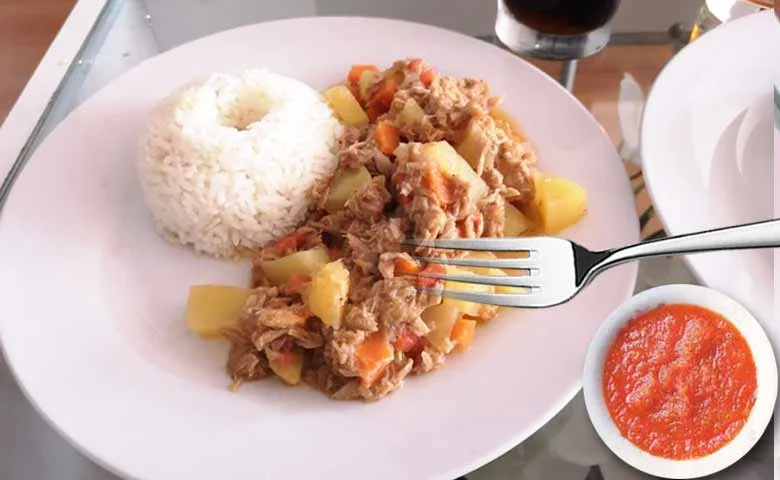
This Peruvian-style tuna stew combines tender potatoes with tuna in a savoury onion, garlic and ají amarillo base. It is a straightforward one-pot meal that comes together in about 30 minutes.
Ingredients
- 2 cans, drainedtuna in water or oil
- 4 mediumpotatoes, peeled and diced
- 1red onion, finely chopped
- 2 clovesgarlic, ground or crushed
- 15 ml (1 tablespoon)ground ají amarillo
- 5 ml (1 teaspoon), optionaltomato paste
- 120 ml (½ cup)vegetable stock or water
- 30 ml (2 tablespoons)vegetable oil
- to tastesalt, black pepper and cumin
- to garnishchopped parsley or coriander
Instructions
- 1
Cook the base
Heat the oil in a medium saucepan. Fry the onion until translucent, then stir in the garlic, ají amarillo and a pinch of cumin.
- 2
Add the potatoes
Tip in the peeled, diced potatoes and stir so they are coated with the aromatic mixture.
- 3
Add the liquid
Pour in the vegetable stock or hot water, adding enough to cover the potatoes slightly.
- 4
Cook until tender
Cover the pan and cook over a medium heat for about 10–12 minutes, until the potatoes are tender but still hold their shape.
- 5
Stir in the tuna
Add the drained, flaked tuna and fold it through the potatoes gently to keep its texture.
- 6
Adjust the seasoning
Taste and season with salt and pepper. Add a little more cumin or ají amarillo if you want a stronger flavour.
- 7
Simmer together
Cook everything together for about 5 more minutes so the tuna takes on the flavours of the stew.
- 8
Garnish and serve
Turn off the heat and scatter over chopped parsley or coriander. Serve hot, with white rice, quinoa or bread if you like.
What is Peruvian tuna stew?
This is a simple Peruvian-style guiso, or stew, made with tuna, potatoes and a gently spiced onion base. Ají amarillo gives the dish its characteristic fruity chilli flavour.
Here, the potatoes cook in the seasoned liquid before the tuna goes in, so they become tender while the fish stays in distinct flakes.
Nutrition and macros by portion
The nutrition label shows one serving as written: 280 calories, 0g protein, 0g carbs, 0g fat.
| Portion | Adjustment | kcal | Protein | Carbs | Fat |
|---|---|---|---|---|---|
| Lighter | Use less oil | 196 kcal | 0g | 0g | 0g |
| This serving | As written | 280 kcal | 0g | 0g | 0g |
| Hungry | Serve with rice | 420 kcal | 0g | 0g | 0g |
The potatoes provide most of the carbohydrates, while the tuna contributes protein; the vegetable oil is the main source of fat. Serve with a generous side of vegetables or salad to add freshness and balance the plate.
Building the flavour base
Onion: Cook it until translucent rather than deeply browned; it softens into the base of the stew.
Ají amarillo: Stir it into the onion with the garlic and cumin so its flavour disperses through the oil. Tomato paste is optional and adds another savoury note.
Getting the potatoes right
Even pieces: Cut the potatoes into similarly sized cubes so they cook at roughly the same rate.
Doneness: After 10–12 minutes, check that a knife can pierce a cube easily but that it is not falling apart. Cooking time can vary with the size and type of potato.
Adding the tuna gently
Drain the tuna before adding it, then flake it into the pan. Fold it through rather than stirring vigorously, which helps the pieces retain their shape.
The tuna only needs about 5 minutes in the stew to heat through and mingle with the seasoned potatoes.
Keeping the stew moist
The recipe uses 120 ml of stock or water, with the aim of covering the potatoes slightly. Check the pan as it cooks; if the liquid runs low before the potatoes are tender, add a small splash of hot water.
Keep the lid on during the potato-cooking stage, then taste and adjust the seasoning before serving.
What to serve alongside
White rice, quinoa or bread are suggested accompaniments and make the stew easy to serve as a filling meal.
Finish with parsley or coriander for a fresh contrast, and bring the stew to the table while it is hot.
Recipe notes & tips
- Drain the tuna well so it does not add excess liquid to the pan.
- Cut the potatoes into even cubes to help them cook uniformly.
- Soften the onion before adding the garlic and spices.
- Check the potatoes before adding the tuna, as they should be nearly tender.
- Fold in the tuna gently to keep some larger flakes intact.
- Taste the stew before serving and adjust the salt, pepper and cumin.
Variations
- Add tomato paste: Stir in the optional teaspoon with the garlic and ají amarillo.
- Change the herbs: Finish with parsley or coriander, according to your preference.
- Use water: Replace the vegetable stock with hot water for the cooking liquid.
- Choose the tuna: Use tuna canned in water or oil, draining either option before adding.
- Adjust the heat: Add a little more ají amarillo for a more pronounced chilli flavour.
Common mistakes to avoid
- Uneven potato cubes: Cut them to a similar size so they soften at the same pace.
- Overcooking the potatoes: Check after 10 minutes and stop when they are tender but still hold their shape.
- Adding tuna too early: Wait until the potatoes are tender so the fish does not spend too long cooking.
- Rough stirring: Fold the tuna in gently to avoid breaking it into very small pieces.
- Letting the pan dry out: Check the liquid while the potatoes cook and add a splash of hot water if needed.
How to store
Cool leftovers promptly and refrigerate in an airtight container for up to 2 days. Reheat gently in a saucepan until hot throughout, adding a splash of water if the stew has thickened.
Frequently asked questions
Can I use tuna in oil?
Yes. The recipe allows tuna in water or oil; drain it before adding it to the stew.
Can I leave out the tomato paste?
Yes. It is optional, so the stew can be made without it.
How do I know when the potatoes are done?
They should be easy to pierce with a knife but still keep their shape. Begin checking after about 10 minutes of covered cooking.
What can I use instead of vegetable stock?
Use hot water, as the recipe suggests. Add it carefully so the potatoes are only slightly covered.
What should I serve with tuna stew?
White rice, quinoa or bread all work as accompaniments. A fresh salad or vegetables can also be served alongside.
Cook it from the original
This recipe comes from recetascocinaperuana.com. Their page has the author’s own photos, notes and tips — the best place to cook it from.
Open the recipe on recetascocinaperuana.com