
Simple Roast Chicken
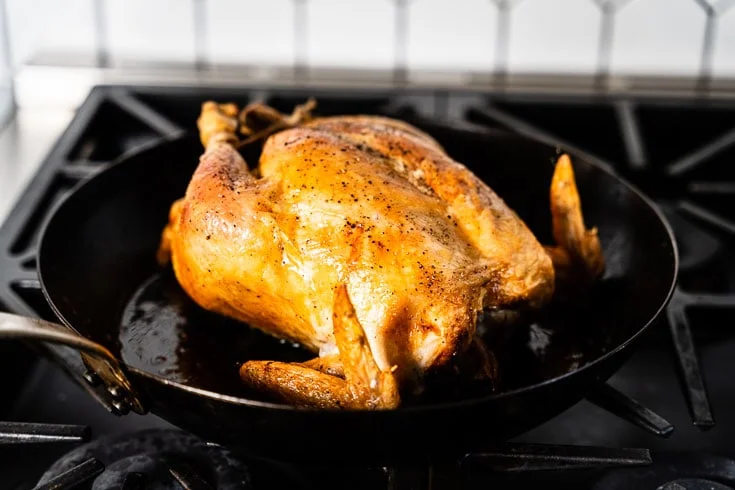
This straightforward roast chicken is seasoned ahead, then roasted until the skin is deeply golden and the meat stays juicy. It makes a satisfying centrepiece for a Sunday lunch or an easy dinner with simple sides.
Ingredients
- 1 (1.36–1.81 kg; 3–4 lb)whole chicken
- a littleolive oil
- generouslyDiamond kosher salt
- to tastefreshly ground black pepper
Instructions
- 1
Dry the chicken
Pat the chicken dry inside and out with kitchen paper. Trim away any excess fat around the cavity opening.
- 2
Season generously
Drizzle a little olive oil over the chicken, then season it well all over with Diamond kosher salt and freshly ground pepper. Season the inside of the cavity lightly too; if you like, gently loosen the skin and season underneath.
- 3
Chill uncovered
Refrigerate the seasoned chicken for 24 hours, preferably uncovered. If you cannot leave it that long, chill it for a few hours instead.
- 4
Bring to temperature
Take the chicken out of the fridge 1 hour before roasting so it can lose some of its chill.
- 5
Heat the oven
Heat the oven to 204°C with the convection setting, if available, or 218°C for a conventional oven. Put an ovenproof skillet, such as cast iron or carbon steel, in the oven as it heats.
- 6
Start roasting
Set the chicken on the hot skillet in the oven, with the cavity facing the front of the oven.
- 7
Turn the skillet
After about 30 minutes, rotate the skillet 180° so the legs and cavity face the back of the oven. This helps the chicken cook and brown more evenly.
- 8
Check the temperatures
Take the chicken out when the centre of the breasts reaches 68°C and the thighs reach 74°C. These readings are 10°F below the target finishing temperatures; the chicken will continue cooking as it rests.
- 9
Rest before carving
Transfer the chicken to a cutting board and leave it uncovered for 10–15 minutes before carving and serving.
- 10
Make pan sauce
For an optional sauce, remove the chicken from the skillet and spoon out most of the fat. Add chopped shallot, fresh thyme and white or red wine, then cook the mixture down and spoon it over the chicken.
What is roast chicken?
Roast chicken is a familiar American-style centrepiece: a whole bird cooked in the oven until the skin browns and the meat is tender. This version keeps the seasoning simple, relying on salt, pepper and a little olive oil.
The make-ahead seasoning gives the salt time to work across the surface, while chilling uncovered helps the skin dry before roasting. A hot ovenproof skillet provides a heated surface for the bird from the start.
Nutrition and macros by portion
The nutrition label shows one serving as written: 450 calories, 45g protein, 0g carbs, 28g fat.
| Portion | Adjustment | kcal | Protein | Carbs | Fat |
|---|---|---|---|---|---|
| Lighter | Remove the chicken skin | 315 kcal | 31g | 0g | 20g |
| This serving | As written | 450 kcal | 45g | 0g | 28g |
| Hungry | Serve a larger portion | 675 kcal | 68g | 0g | 42g |
Most of the protein comes from the chicken, while its skin and olive oil provide much of the fat; the recipe contains no significant carbohydrate ingredients. Pair a serving with vegetables and a starchy side such as potatoes or bread for a more rounded plate.
Why season ahead?
Dry skin: pat the chicken thoroughly dry before adding oil and seasoning. Surface moisture can slow browning, so take care around the wings, legs and cavity.
Salt the day before: refrigerate the seasoned bird for 24 hours, preferably uncovered. A few hours is the stated fallback when a full day is not possible.
Getting the bird ready
Before seasoning: trim excess fat around the cavity opening, then add oil, salt and pepper over the whole bird and a little inside the cavity. Loosening the skin to season beneath it is optional.
Before roasting: take the chicken out of the fridge 1 hour ahead, as directed, and preheat the skillet in the oven. Use oven gloves when handling the hot skillet.
How to get even browning
Hot skillet: place the chicken on the preheated pan with the cavity facing towards the oven door. The recipe uses this orientation as its starting point.
Turn halfway: after about 30 minutes, rotate the skillet by 180° so the legs and cavity face the back. This helps account for uneven heat and encourages more even cooking and colour.
When is it done?
Use a thermometer: check the centre of the breasts for 68°C and the thighs for 74°C, following the recipe’s removal temperatures. Avoid letting the probe touch bone, which can distort the reading.
Resting: transfer the chicken to a board and leave it uncovered for 10–15 minutes. The recipe notes that carryover cooking will raise the temperature further.
What to serve with it
A roast chicken pairs well with roast potatoes, bread or another filling side, alongside green vegetables or a crisp salad. These add-ons make it easy to build a meal around the chicken without complicating the method.
For a little extra flavour, use the optional pan sauce: cook chopped shallot, fresh thyme and white or red wine in the skillet after removing most of the fat. Spoon the reduced sauce over the carved chicken.
Recipe notes & tips
- Dry the chicken carefully before seasoning to help the skin brown.
- Use an ovenproof skillet that can safely go into a hot oven.
- Keep the chicken uncovered in the fridge during the advance seasoning if possible.
- Rotate the skillet after about 30 minutes rather than turning the chicken.
- Check both the breast and thigh temperatures with a thermometer.
- Let the chicken rest uncovered for 10–15 minutes before carving.
Variations
- Add shallot: cook chopped shallot in the skillet after removing most of the fat.
- Use fresh thyme: add it to the optional pan sauce for a savoury herbal note.
- Choose white wine: reduce it with shallot and thyme for the pan sauce.
- Choose red wine: use it in place of white wine when making the optional sauce.
- Season under the skin: gently loosen the skin and add some of the salt and pepper beneath it.
Common mistakes to avoid
- Damp skin: pat the chicken dry inside and out before adding oil and seasoning.
- Skipping the turn: rotate the skillet 180° after about 30 minutes for more even browning.
- Relying on timing alone: check the breast and thigh temperatures as directed.
- Carving straight away: rest the chicken for 10–15 minutes before serving.
- Leaving the skillet unheated: preheat it in the oven before adding the chicken.
How to store
Refrigerate leftover chicken in a covered container within 2 hours and use within 3–4 days. Reheat portions until piping hot, or enjoy the meat cold.
Frequently asked questions
Can I season the chicken for less than 24 hours?
Yes. The recipe suggests a few hours as an alternative if you cannot season it a day ahead. The longer, uncovered chill is the preferred option.
Do I need a convection oven?
No. Use 204°C with convection if available, or 218°C in a conventional oven.
Why preheat the skillet?
The method places the chicken on a skillet that has heated in the oven. Use an ovenproof pan, such as cast iron or carbon steel.
Can I skip rotating the skillet?
The recipe recommends rotating it 180° after about 30 minutes to help the chicken cook and brown evenly.
Why remove the chicken before the final target temperature?
The recipe takes the chicken out at 68°C in the breast and 74°C in the thighs, noting that carryover cooking continues during the rest.
How can I make a sauce from the pan?
After taking out the chicken, spoon out most of the fat. Add chopped shallot, fresh thyme and white or red wine, then cook the mixture down.
Cook it from the original
This recipe comes from saltpepperskillet.com. Their page has the author’s own photos, notes and tips — the best place to cook it from.
Open the recipe on saltpepperskillet.com