
Classic Bavarian Pork Roast with a crunchy crust!
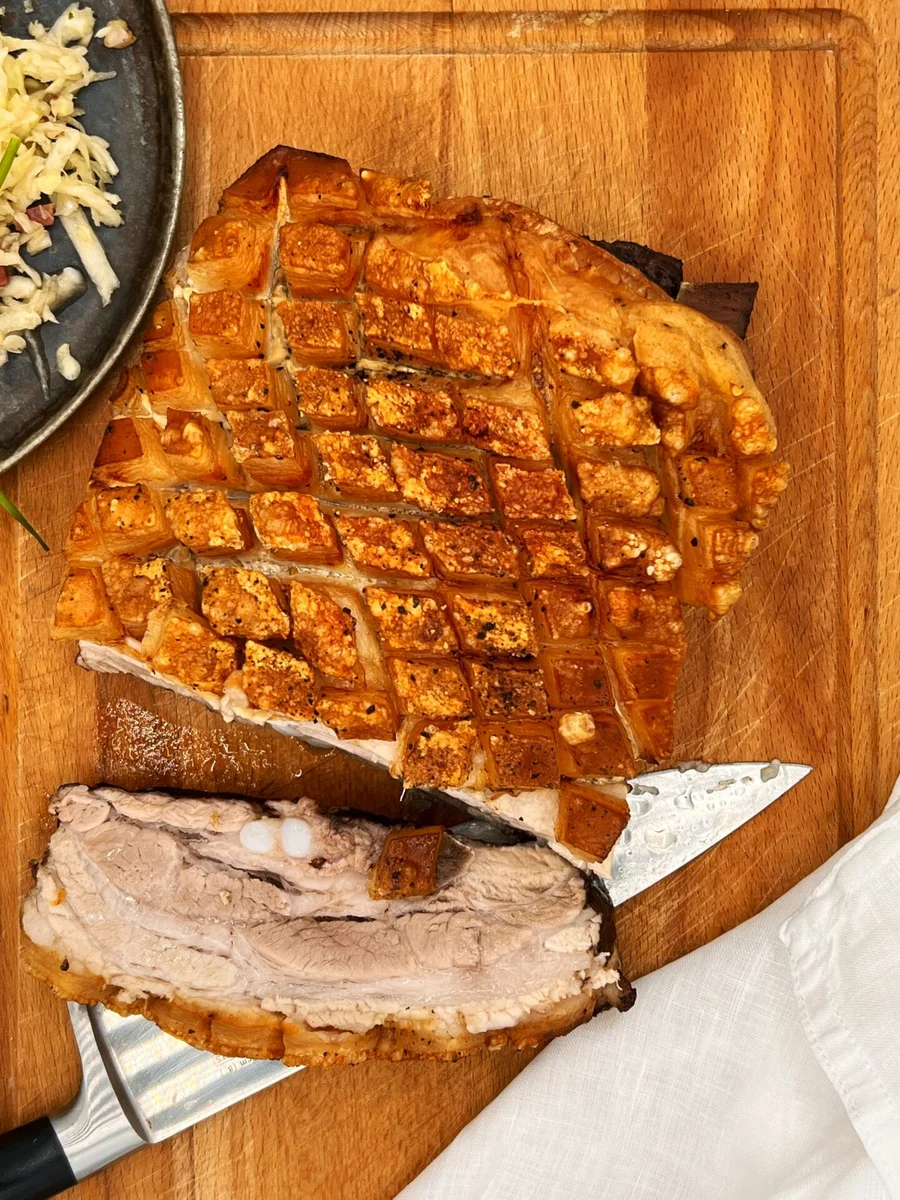
This Bavarian-style pork belly roast pairs tender meat with crisp, deeply scored crackling and a rich red-wine gravy. It makes a warming Sunday centrepiece, with most of the cooking time spent in the oven.
Ingredients
- 1.5 kgpork belly, ready to cook, with rind
- 1 litrechicken stock
- 2 largeonions
- 1carrot
- 150 groot celeriac
- 1 smallleek
- 2 tablespoonsoil
- 1 teaspoonicing sugar
- 1 tablespoontomato purée
- 250 mlred wine
- 2dried bay leaves
- 2 clovesgarlic
- 1 teaspoondried marjoram
- 0.5 teaspooncaraway seeds
- to tastesalt
- to tastepepper
- 1 sliceginger
- 1 piecelemon zest
Instructions
- 1
Preheat the oven
Heat the oven to 180°C, using conventional top and bottom heat.
- 2
Prepare the pork
Rinse the pork under cold water and pat it dry with kitchen paper. Score the rind in a diamond pattern with a sharp knife, then rub the pork well with salt and pepper.
- 3
Prepare the onions
Peel and quarter the onions. Peel and quarter one of the garlic cloves.
- 4
Chop the vegetables
Clean the carrot, leek and celeriac, then cut them into large pieces.
- 5
Sear the rind
Heat the oil in a roasting pan and briefly sear the pork with the rind facing down.
- 6
Turn and sear
Turn the pork over so the rind faces upwards and sear the other side.
- 7
Brown the vegetables
Lift the pork out of the roasting pan and sear the vegetables in it.
- 8
Build the sauce
Push the vegetables to the sides of the pan. Add the icing sugar to the centre and let it caramelise, then stir in the tomato purée briefly. Gradually simmer in a little red wine, then add the stock and stir everything together.
- 9
Roast the pork
Set the pork on top of the vegetables and sauce, rind side up. Roast on the bottom shelf of the oven for 2 hours.
- 10
Raise the heat
Towards the end of the roasting time, increase the oven temperature to 220°C.
- 11
Crisp the crackling
Remove the pan from the oven and transfer the pork to a baking tray. Salt the rind again and return the pork to the oven for about 15–20 minutes, until crisp.
- 12
Strain the sauce
Meanwhile, strain the sauce through a sieve into a separate saucepan. Add the bay leaves, a toothpick threaded with garlic, the ginger, lemon zest, marjoram and caraway seeds.
- 13
Remove the aromatics
After about 5 minutes, take out the garlic, ginger and lemon zest.
- 14
Season the sauce
Taste the sauce and season it with salt and pepper.
- 15
Slice and serve
Take the pork out of the oven, slice it and serve with the sauce.
What is Bavarian pork roast?
Bavarian pork roast, or Schweinebraten, is a traditional German roast often served as a generous Sunday meal. This version uses pork belly with its rind left on, so the meat cooks in its own fat while the rind is finished at a higher temperature for crackling.
The roasting vegetables, red wine and stock form a savoury sauce, while marjoram and caraway give it a characteristic earthy, aromatic flavour.
Nutrition and macros by portion
The nutrition label shows one serving as written: 354 calories, 0g protein, 0g carbs, 0g fat.
| Portion | Adjustment | kcal | Protein | Carbs | Fat |
|---|---|---|---|---|---|
| Lighter | Smaller pork portion, more vegetables | 248 kcal | 0g | 0g | 0g |
| This serving | As written | 354 kcal | 0g | 0g | 0g |
| Hungry | Add potatoes or dumplings | 531 kcal | 0g | 0g | 0g |
The pork belly supplies most of the fat and protein, while the vegetables and small amount of icing sugar contribute some carbohydrate; the stock and wine also add flavour to the sauce. Balance the plate with a generous serving of vegetables and a moderate portion of potatoes or dumplings.
Choose and score the pork
Pork belly: choose a piece with the rind attached and ask your butcher to score it if you would rather not do it yourself. The diamond cuts help the surface render and crisp; take care to cut through the rind without slicing deeply into the meat.
Dry rind: pat the pork thoroughly dry before scoring and seasoning. Moisture on the surface can make it harder for the crackling to turn crisp.
Build flavour in the roasting pan
Vegetables: cut the onion, carrot, leek and celeriac into large pieces so they can brown without breaking down too quickly. Their browned surfaces add depth to the eventual sauce.
Caramel and wine: let the icing sugar colour in the centre of the pan, then stir in the tomato purée and add the wine gradually. Scrape the pan as you stir so the browned bits become part of the sauce.
Get tender meat and crisp crackling
Slow roast: keep the pork rind side up while it cooks at 180°C for 2 hours. The meat should be tender before you move on to the hotter finishing stage.
Hot finish: transfer the pork to a baking tray and roast it at 220°C for about 15–20 minutes. Watch the rind as it crisps, since its colour can change quickly near the end.
Finish the sauce
Straining: sieve the roasting liquid into a saucepan to remove the cooked vegetables and any solids. Add the herbs and aromatics to the strained sauce as directed, then remove the garlic, ginger and lemon zest after about 5 minutes.
Seasoning: taste the sauce at the end and adjust the salt and pepper. Keeping the aromatics in briefly lets them perfume the sauce without overwhelming it.
Serve it as a Sunday roast
Slice the pork just before serving so each portion gets some meat and crackling, then spoon the sauce alongside. Roast potatoes, bread dumplings or boiled potatoes make natural accompaniments.
A sharp or lightly dressed vegetable side, such as braised red cabbage or green beans, brings contrast to the rich pork and gravy.
Recipe notes & tips
- Pat the rind especially dry before scoring and seasoning.
- Use a sharp knife and keep the score cuts shallow enough to avoid cutting into the meat.
- Sear the pork briefly on both sides before roasting to develop flavour in the pan.
- Add the red wine gradually while stirring the tomato purée and caramelised sugar.
- Keep the rind facing upwards during the long roast and the hot finishing stage.
- Check the crackling closely during the final 15–20 minutes.
Variations
- Use beer: replace some of the red wine with beer for a different, malty sauce.
- Add stock herbs: include a sprig of thyme with the bay leaves while the sauce simmers.
- Serve with dumplings: pair the roast and gravy with bread dumplings for a traditional-style plate.
- Add cabbage: serve with braised red cabbage for a sweet-and-sour contrast.
- Make the sauce smoother: strain it as directed and blend it before seasoning.
Common mistakes to avoid
- Wet rind: pat it completely dry before scoring so the surface has a better chance of crisping.
- Cuts into the meat: score only through the rind and fat, not deeply into the pork.
- Rind facing down for the roast: turn it upwards before placing the pork in the oven so it stays exposed.
- Adding all the wine at once: pour it in gradually and stir to incorporate the pan flavours.
- Leaving aromatics in too long: remove the garlic, ginger and lemon zest after about 5 minutes as directed.
- Unwatched crackling: check it during the hot finish and take the pork out once the rind is crisp.
How to store
Refrigerate leftover pork and sauce separately in covered containers for up to 3 days. Reheat the meat and sauce until piping hot; warm the crackling separately in a hot oven to help it crisp again.
Frequently asked questions
Can I prepare the pork ahead?
You can score and season the pork in advance, then keep it covered in the fridge. Pat the rind dry again before roasting.
How do I know when the crackling is ready?
It should look well browned and feel crisp rather than soft. Keep an eye on it during the final 15–20 minutes at 220°C.
Can I use a different cut of pork?
The recipe is written for pork belly with rind, which gives both the meat and crackling its characteristic texture. A cut without rind will not produce the same crackling.
Can I make the sauce without red wine?
The wine is part of the stated recipe and gives the sauce depth. For an alcohol-free version, use extra chicken stock instead.
What should I serve with the roast?
Roast or boiled potatoes, bread dumplings, red cabbage or green vegetables all work well with the pork and sauce.
Can I make the sauce ahead?
Yes. Strain and refrigerate it separately, then reheat it gently and season to taste before serving.
Cook it from the original
This recipe comes from sabrinastable.com. Their page has the author’s own photos, notes and tips — the best place to cook it from.
Open the recipe on sabrinastable.com