
Hake in green sauce
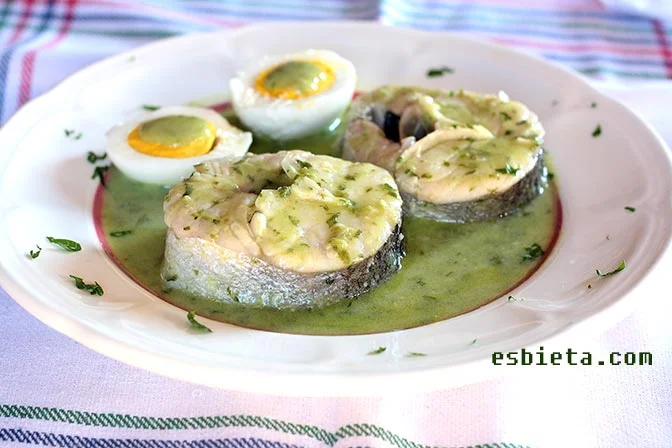
Hake in green sauce is a quick fish dish coated in a parsley, garlic and white wine sauce. It takes about 30 minutes and pairs well with potatoes or bread to soak up the sauce.
Ingredients
- 600 ghake
- 2–3 tablespoonschopped parsley
- 2–4 clovesgarlic
- 10 gplain flour
- 50 mlwhite wine
- 150–200 mlfish stock
- 4–5 tablespoonsolive oil
- to tastesalt
Instructions
- 1
Chop parsley
Finely chop the parsley.
- 2
Crush garlic
Pound the garlic and parsley together in a mortar until their juices are released.
- 3
Warm the oil
Heat the olive oil in a frying pan or shallow casserole, then add the garlic and parsley mixture.
- 4
Briefly fry
Cook for 10–15 seconds.
- 5
Cook the flour
Stir in the flour and cook it for 1 minute.
- 6
Add wine
Pour in the white wine.
- 7
Add hake
Arrange the hake in the pan and pour in 150 ml of fish stock.
- 8
Cook the fish
Cook for 5 minutes on each side, gently shaking the pan, or until the hake is done to your liking.
- 9
Adjust the sauce
If needed, add more stock to adjust the sauce to your preferred thickness.
What is hake in green sauce?
Hake in green sauce is a Spanish-style fish dish, often associated with Basque cooking. Its green colour comes from parsley, which is blended with garlic and brought together with wine and stock.
This version keeps the method simple: the fish cooks directly in the sauce, so its juices mingle with the garlic, parsley and stock as it becomes tender.
Nutrition and macros by portion
The nutrition label shows one serving as written: 365 calories, 37g protein, 7g carbs, 21g fat.
| Portion | Adjustment | kcal | Protein | Carbs | Fat |
|---|---|---|---|---|---|
| Lighter | Use less olive oil | 255 kcal | 26g | 5g | 15g |
| This serving | As written | 365 kcal | 37g | 7g | 21g |
| Hungry | Add potatoes or bread | 548 kcal | 56g | 11g | 32g |
The hake supplies most of the protein, while the flour and wine contribute a small amount of carbohydrate. Olive oil is the main source of fat. Serve with vegetables and a modest portion of potatoes or bread for a more balanced plate.
The parsley and garlic base
Fresh parsley: chop it finely so it distributes through the sauce and gives it an even green colour.
Garlic: crushing it with the parsley helps release its juices. The brief frying step warms the mixture without giving the garlic time to brown.
Cooking the flour
Flour: stir it into the oil and herb mixture for a full minute before adding the wine. This helps it combine smoothly with the cooking liquid and thicken the sauce.
Wine: pour it in after the flour has cooked, then add the fish and stock as directed.
Getting the fish just right
Gentle movement: shake the pan lightly rather than stirring around the hake, which can break the fillets apart. Turn them carefully after 5 minutes.
Doneness: cook for 5 minutes on each side, then check the thickest part; the flesh should be opaque and separate easily. The exact time can vary with the thickness of the pieces.
Adjusting the sauce
Stock: begin with 150 ml, as specified, and add more only if the sauce needs loosening. The recipe allows 150–200 ml in total.
Consistency: the sauce should coat the fish while still being loose enough to spoon onto the plate.
What to serve alongside
Potatoes: boiled or steamed potatoes make a simple accompaniment and work well with the parsley sauce.
Bread: crusty bread is useful for mopping up the sauce. A green salad can add a fresh contrast to the plate.
Recipe notes & tips
- Use fresh parsley for a brighter-tasting sauce.
- Crush the garlic and parsley together until they release their juices.
- Keep the garlic mixture moving and remove the pan from the heat if it starts to brown.
- Add the stock gradually so you can control the sauce thickness.
- Shake the pan gently instead of stirring the fish.
- Check the hake at the end of the stated cooking time, especially if the pieces are thin.
Variations
- Add peas: stir them into the sauce near the end of cooking so they heat through.
- Use coriander: replace some or all of the parsley for a different herbal flavour.
- Add clams: cook them in the sauce until their shells open, discarding any that stay closed.
- Make it more garlicky: use the upper end of the stated garlic range.
- Serve with potatoes: cook them separately and spoon the green sauce over them.
- Use a thicker fillet: allow for a little more cooking time and check the centre before serving.
Common mistakes to avoid
- Browning the garlic: it can turn bitter; cook the garlic and parsley for only 10–15 seconds.
- Adding stock all at once: the sauce may become too thin; start with the stated 150 ml and adjust gradually.
- Stirring roughly: hake can flake apart; move the pan gently instead.
- Overcooking the fish: it can become dry; check it after 5 minutes on each side.
- Skipping the flour cooking time: the sauce may taste floury; cook it for the full minute before adding wine.
How to store
Refrigerate leftovers in a covered container and eat within 1–2 days. Reheat gently in a covered pan over low heat, adding a splash of stock or water if the sauce has thickened; avoid vigorous stirring.
Frequently asked questions
Can I use frozen hake?
Yes. Thaw it completely and pat it dry before cooking so excess water does not dilute the sauce.
How do I know when the hake is cooked?
The flesh should be opaque and separate easily when tested with a fork. Check the thickest piece, as fillet thickness affects the cooking time.
Can I make the sauce without wine?
You can omit the wine and use extra fish stock instead, though the sauce will have a different flavour.
What if the sauce is too thick?
Add fish stock a little at a time until it reaches a spoonable consistency.
Can I prepare it ahead?
It is best cooked shortly before serving, but you can chop the parsley and prepare the garlic mixture in advance and keep them covered in the fridge.
Cook it from the original
This recipe comes from recetasdesbieta.com. Their page has the author’s own photos, notes and tips — the best place to cook it from.
Open the recipe on recetasdesbieta.com