
Opah Bolognese
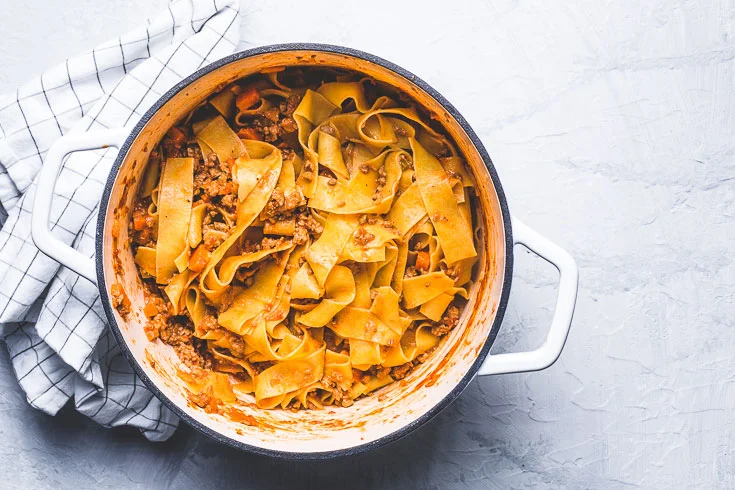
Opah Bolognese is a slow-simmered tomato sauce made with ground opah, aromatic vegetables, wine and milk. It brings the comforting, savoury feel of a traditional ragù to pasta or gnocchi, with a seafood twist.
Ingredients
- To tastePasta or gnocchi
- 3 tbsp (45 ml)Olive oil
- 1Onion, diced
- 1Celery stalk, diced
- 1Carrot, peeled and finely diced
- 454 gOpah abductor muscle, ground
- 240 ml (1 cup)Dry white wine
- 1Bay leaf
- 240 ml (1 cup)Milk
- 1/4 tsp (about 1.25 ml)Ground nutmeg
- 3 tbsp (about 45 g)Tomato paste
- 397 gCrushed San Marzano tomatoes
- To tasteKosher salt and freshly ground black pepper
- 3 tbsp (about 43 g)Unsalted butter
- To tasteGrated Parmigiano-Reggiano cheese
Instructions
- 1
Soften vegetables
Heat 2 tablespoons of the olive oil in a large, heavy-based pot over medium heat. Add the onion, celery and carrot with a pinch of salt. Cook for about 8 minutes, until soft and translucent but not browned.
- 2
Cook the opah
Raise the heat to medium-high, add a little more olive oil and the ground opah. Season with salt and freshly ground pepper, then break up any large pieces with the back of a wooden spoon. Cook for 4 to 5 minutes, until the fish is just cooked through and no longer red.
- 3
Reduce the wine
Add the wine and bay leaf, then lower the heat to medium. Cook until most of the wine has evaporated.
- 4
Add the milk
Pour in the milk and cook until most of it has evaporated. Stir in the ground nutmeg.
- 5
Cook the paste
Stir in the tomato paste and cook for 2 to 3 minutes, stirring frequently.
- 6
Add tomatoes
Stir in the crushed tomatoes.
- 7
Simmer the sauce
Once the sauce reaches a simmer, turn the heat down to very low. Cook uncovered for about 1 to 1 1/2 hours, stirring occasionally, until the liquid has reduced and the sauce is thick.
- 8
Check seasoning
Taste the sauce and add more salt and pepper if needed. Set it aside or refrigerate it until you are ready to serve.
- 9
Finish with pasta
Before serving, transfer the sauce to a 12-inch skillet and warm it through. Swirl in 3 tablespoons of butter, then add al dente cooked pasta and stir to coat. Cook for about 3 more minutes; if the sauce is too thick, loosen it with a little reserved pasta water.
- 10
Serve with cheese
Serve with plenty of freshly grated Parmigiano-Reggiano.
What is opah Bolognese?
Bolognese is a slow-cooked Italian-style ragù, usually served with pasta. This version swaps the more familiar meat for opah, also known as moonfish, and builds a rich sauce with vegetables, wine, milk and tomato.
The gentle simmer gives the fish and tomato time to come together, while butter stirred in at the end gives the sauce a smooth finish.
Nutrition and macros by portion
The nutrition label shows one serving as written: 650 calories, 37g protein, 71g carbs, 22g fat.
| Portion | Adjustment | kcal | Protein | Carbs | Fat |
|---|---|---|---|---|---|
| Lighter | Less pasta, more vegetables | 455 kcal | 26g | 50g | 15g |
| This serving | As written | 650 kcal | 37g | 71g | 22g |
| Hungry | Larger pasta portion | 975 kcal | 56g | 107g | 33g |
Most of the carbohydrates come from the pasta or gnocchi, while the opah provides much of the protein. Olive oil, butter, milk and cheese contribute much of the fat; the exact balance depends on how much pasta and cheese you serve. Pair a moderate serving with a generous green salad or vegetables for a more balanced plate.
Build the vegetable base
Soffritto: onion, celery and carrot form the aromatic foundation of the sauce. Dice them finely so they soften evenly and blend into the finished ragù.
Gentle heat: cook the vegetables until soft and translucent, not browned. This gives them time to sweeten without adding a toasted flavour.
Cook the opah carefully
Break it up: use the back of a wooden spoon to separate large pieces as the fish cooks. Aim for small, even pieces throughout the sauce.
Doneness: the method calls for cooking the opah until it is just cooked through and no longer red, around 4 to 5 minutes. It will continue to cook gently later in the sauce.
Reduce before adding tomatoes
Wine first: simmer the wine until most of it has evaporated before adding the milk. This keeps the sauce from carrying excess liquid into its long simmer.
Milk next: let the milk reduce too, then stir in the nutmeg. Cooking the tomato paste briefly before adding crushed tomatoes helps it blend into the sauce.
Let the sauce thicken slowly
Low and uncovered: keep the sauce at a very gentle simmer for 1 to 1 1/2 hours. Stir occasionally, especially around the base of the pot, so the thickening sauce does not catch.
Texture cue: the sauce is ready when the liquid has reduced and it looks thick rather than watery. If making it ahead, set it aside or refrigerate it before the final pasta step.
Finish with pasta and butter
Pasta water: warm the sauce in a skillet, add the butter, then toss in al dente cooked pasta. A splash of reserved cooking water can loosen a sauce that has become too thick.
Cheese: finish with plenty of freshly grated Parmigiano-Reggiano. The recipe also works with gnocchi, as suggested in the ingredient list.
What to serve alongside
A green salad or simply dressed vegetables make a fresh contrast to the rich, slow-cooked sauce. Serve the pasta hot, with extra grated cheese at the table.
Recipe notes & tips
- Keep the vegetables finely diced so they soften evenly during the initial cooking.
- Add the wine and milk in sequence, allowing most of each to evaporate before moving on.
- Maintain a very low simmer during the long reduction and stir the sauce occasionally.
- Cook the pasta until al dente before tossing it with the sauce.
- Reserve some pasta water before draining so you can loosen the sauce if needed.
- Grate the Parmigiano-Reggiano just before serving for the freshest finish.
Variations
- Use gnocchi: toss cooked gnocchi with the warmed sauce in place of pasta.
- Adjust the wine: use another dry white wine in place of the one listed.
- Add herbs: finish with a little fresh parsley for a fresh herbal note.
- Make it tomato-forward: add a little extra crushed tomato and allow it time to reduce.
- Change the cheese: serve with another hard, finely grated Italian-style cheese if needed.
Common mistakes to avoid
- Browning the vegetables: keep the heat moderate and stop when they are soft and translucent.
- Leaving large fish pieces: break them up with the wooden spoon as the opah cooks.
- Rushing the reductions: let most of the wine and milk evaporate before adding the next ingredient.
- Boiling the sauce hard: lower the heat to very low once it simmers so it thickens gently.
- Overcooking the pasta: cook it al dente, then finish it in the sauce for about 3 minutes.
- Adding too much pasta water: loosen the sauce a little at a time until it coats the pasta.
How to store
Cool leftover sauce promptly, refrigerate it in a covered container and use within 2 days. Reheat gently in a pan until hot throughout; add a splash of water if it has thickened. Store cooked pasta separately where possible and combine it with the sauce when reheating.
Frequently asked questions
What can I use instead of opah?
The recipe is specifically written for ground opah. If you substitute another fish, choose one that can be finely broken up and expect its texture and cooking time to differ.
Can I make the sauce ahead?
Yes. After seasoning, set the sauce aside or refrigerate it until you are ready to serve. Warm it in a skillet and finish with butter and freshly cooked pasta.
Can I serve this with gnocchi?
Yes, gnocchi is listed as an option. Cook it separately, then toss it with the warmed sauce as you would the pasta.
How do I know when the sauce is ready?
After 1 to 1 1/2 hours at a very low simmer, it should be thick, with much of the liquid reduced. Stir occasionally while it cooks.
What should I do if the sauce is too thick?
Stir in a little reserved pasta water while tossing the pasta with the sauce. Add it gradually until the sauce coats the pasta as you like.
How much pasta should I cook?
The recipe does not specify a quantity, so choose an amount that suits your six servings and how saucy you like the dish. Cook it al dente before adding it to the skillet.
Cook it from the original
This recipe comes from saltpepperskillet.com. Their page has the author’s own photos, notes and tips — the best place to cook it from.
Open the recipe on saltpepperskillet.com