
Easy Moussaka Recipe
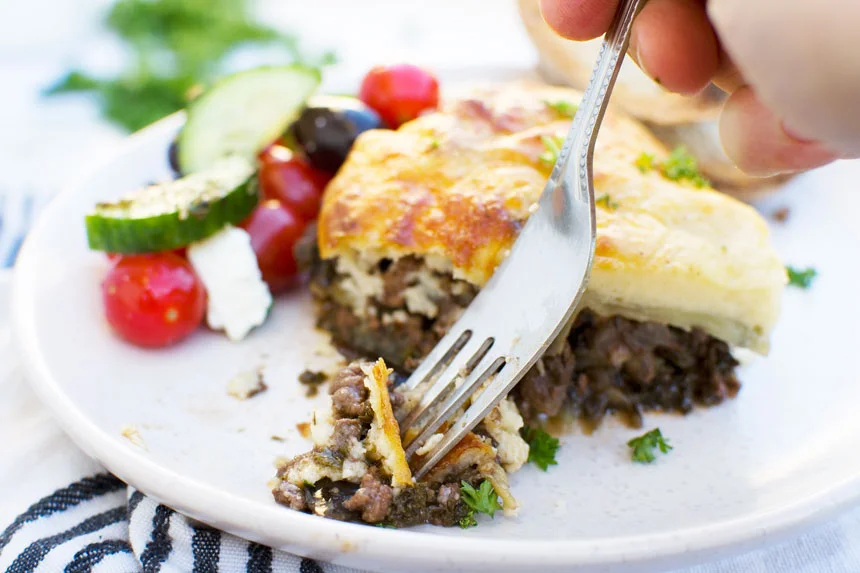
This Greek moussaka layers soft aubergine with warmly spiced meat sauce and a cheesy béchamel topping. This version skips the potatoes and keeps the component steps straightforward, making it a satisfying dish for a relaxed meal.
Ingredients
- 2 largeaubergines, cut into even 0.5–1 cm slices
- 60 ml (¼ cup), approximatelyolive oil
- 1onion, finely chopped
- 4 clovesgarlic, crushed or chopped
- 2 teaspoonscinnamon
- 1½ teaspoonsdried oregano
- 454 g (1 lb)minced beef or lamb
- 2 tablespoonstomato purée, mixed with about 125 ml water
- 160 ml (⅔ cup)red wine, or good-quality beef or chicken stock
- ½ teaspoonsalt
- ¼ teaspoonpepper
- 1 bunchfresh parsley, chopped
- 4 tablespoonsbutter
- 4 tablespoonsplain flour
- 480 ml (2 cups)milk, warmed slightly
- about 67 g (⅔ cup)Parmesan, or Italian pecorino or Greek kefalotyri
- ¼ teaspoonground or freshly grated nutmeg
- 2eggs, lightly whisked
Instructions
- 1
Bake the aubergine
Heat the oven to 180°C and line two large baking sheets with baking paper. Arrange the aubergine slices on the trays, brush both sides with a little olive oil and bake for about 25 minutes, or until soft.
- 2
Cook the aromatics
Meanwhile, heat a little olive oil in a large saucepan. Cook the onion for a few minutes, then add the garlic, cinnamon and oregano and cook for 1 minute more.
- 3
Brown the meat
Add the minced meat and brown it, breaking it up with a wooden spoon as it cooks.
- 4
Simmer the sauce
Add the tomato purée mixed with water and the wine. Simmer until the sauce has thickened, about 30 minutes.
- 5
Season the sauce
Stir in the parsley, salt and pepper to taste.
- 6
Make the roux
Melt the butter in a medium saucepan, then stir in the flour until it forms a paste.
- 7
Add the milk
Take the pan off the heat and stir in the milk a little at a time.
- 8
Thicken the béchamel
Return the pan to the heat and stir until the sauce thickens and is just bubbling. Add most of the cheese and the nutmeg.
- 9
Whisk in eggs
Leave the sauce to cool for about 5 minutes, then whisk in the eggs.
- 10
Layer the moussaka
Divide the aubergine slices into three portions. Arrange the first portion across the bottom of a 23 × 33 cm to 23 × 33 cm baking dish (12 × 9 to 13 × 9 inches), then spread over half the meat sauce.
- 11
Add another layer
Add a second layer of aubergine, followed by the rest of the meat sauce.
- 12
Finish the layers
Add the final aubergine layer and pour the béchamel over it. Smooth the top with a spatula and sprinkle over the remaining cheese.
- 13
Bake and rest
Bake at 180°C for 40–45 minutes, until the top is golden and bubbling. Cover with aluminium foil if it becomes too dark. Leave to rest for 20–30 minutes before serving so the portions hold together when cut.
What is Greek moussaka?
Moussaka is a Greek baked dish best known for its layers of aubergine, meat sauce and béchamel. The combination of savoury, spiced filling and a creamy, browned top gives it its distinctive character.
This version leaves out potatoes, so the aubergine takes centre stage. Baking the slices before assembling softens them and helps the finished layers sit neatly together.
Nutrition and macros by portion
The nutrition label shows one serving as written: 414 calories, 18g protein, 17g carbs, 29g fat.
| Portion | Adjustment | kcal | Protein | Carbs | Fat |
|---|---|---|---|---|---|
| Lighter | Use less béchamel | 290 kcal | 13g | 12g | 20g |
| This serving | As written | 414 kcal | 18g | 17g | 29g |
| Hungry | Serve a larger slice | 621 kcal | 27g | 26g | 44g |
The aubergine and tomato purée contribute carbohydrates, while the olive oil, butter, cheese and béchamel provide much of the fat. The minced meat, milk, cheese and eggs supply protein. Pair a slice with a generous salad or vegetables for a more balanced plate.
Preparing the aubergines
Even slices: Cut the aubergines to a consistent thickness of 0.5–1 cm so they soften at roughly the same rate.
Light coating: Brush both sides with a little oil before baking. The slices should be soft after about 25 minutes, ready to form the three layers.
Building flavour in the meat sauce
Aromatic base: Let the onion cook for a few minutes, then give the garlic, cinnamon and oregano their extra minute in the pan. This brief cooking helps distribute their flavour through the sauce.
Slow simmer: Break up the meat as it browns, then simmer the tomato, water and wine mixture for about 30 minutes. The sauce is ready when it has thickened rather than remaining watery.
Getting a smooth béchamel
Flour paste: Stir the flour into the melted butter until there are no dry patches. Take the pan off the heat before adding the warmed milk gradually, stirring as you go.
Eggs last: Once the sauce has thickened and the cheese and nutmeg are stirred in, let it cool for about 5 minutes before whisking in the eggs. This gives the mixture a chance to cool slightly before they are added.
Layering and baking
Three aubergine layers: Divide the slices into three portions, sandwiching the two portions of meat sauce between them. Spread the béchamel over the final layer and smooth it evenly.
Golden top: Bake at 180°C for 40–45 minutes, watching the surface towards the end. If it darkens too quickly, cover the dish with foil.
Resting before serving
Give the moussaka 20–30 minutes to rest after baking. This helps the layers settle, making it easier to cut and lift portions without them collapsing.
Serve it with a crisp green salad or simply cooked vegetables to bring a fresh contrast to the rich topping and meat sauce.
Recipe notes & tips
- Use baking trays large enough to arrange the aubergine slices in a single layer.
- Warm the milk slightly before adding it to the flour and butter mixture.
- Stir the meat sauce now and then as it simmers so it thickens evenly.
- Keep a little cheese aside for the final topping.
- Rest the baked dish for the full 20–30 minutes before cutting.
Variations
- Use lamb: Replace the minced beef with minced lamb for a different traditional-style flavour.
- Swap the wine: Use good-quality beef or chicken stock instead of red wine.
- Change the cheese: Try Italian pecorino or Greek kefalotyri in place of Parmesan.
- Adjust the spice: Use a little less cinnamon if you prefer a subtler aromatic note.
- Add a salad: Serve with crisp leaves and a sharp dressing to contrast with the creamy top.
Common mistakes to avoid
- Uneven slices: Cut the aubergine to a consistent thickness so the slices soften at a similar pace.
- Watery meat sauce: Simmer it until it has thickened before layering.
- Lumpy béchamel: Add the warmed milk gradually, stirring continuously as it goes in.
- Adding eggs too soon: Cool the béchamel for about 5 minutes before whisking in the eggs.
- Cutting straight away: Rest the dish for 20–30 minutes so the portions hold their shape.
- Over-browning the top: Cover the dish with foil if the cheese darkens before the baking time is up.
How to store
Cool leftovers, cover and refrigerate for up to 3 days. Reheat portions in the oven until piping hot throughout, covering loosely with foil if the top is browning too much.
Frequently asked questions
Can I make moussaka ahead of time?
You can prepare the aubergine, meat sauce and béchamel ahead, then assemble and bake when ready. Allow chilled components to warm slightly before assembling.
How do I know when the moussaka is done?
The top should be golden and bubbling after 40–45 minutes at 180°C. If it is getting too dark before then, cover it with foil.
Why does the moussaka need to rest?
Resting for 20–30 minutes lets the layers settle, so the dish is easier to portion and serve.
Can I replace the red wine?
Yes. The recipe suggests using good-quality beef or chicken stock instead.
Can I use another cheese?
Yes. Italian pecorino or Greek kefalotyri can replace the Parmesan.
Does this moussaka contain potatoes?
No. This recipe uses aubergine for all three vegetable layers and contains no potatoes.
Cook it from the original
This recipe comes from scrummylane.com. Their page has the author’s own photos, notes and tips — the best place to cook it from.
Open the recipe on scrummylane.com