
Pico de Gallo
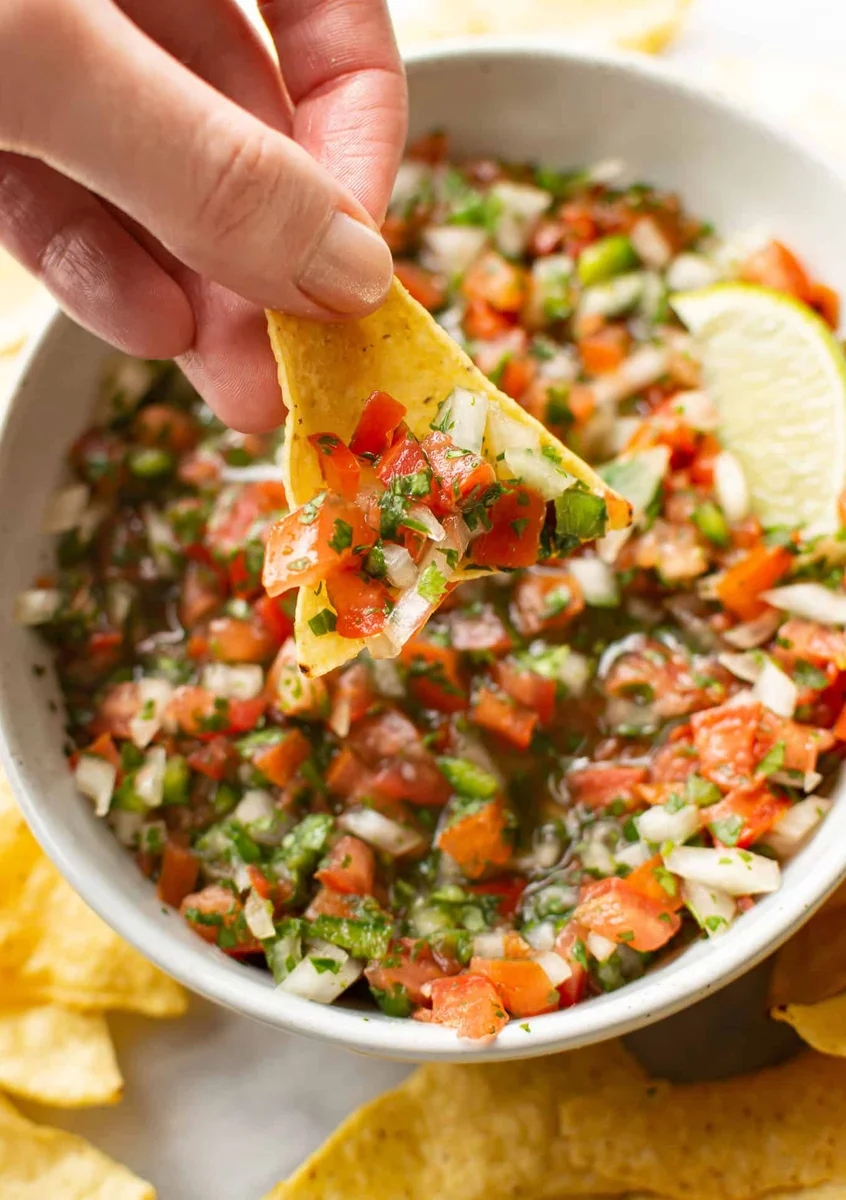
Pico de gallo is a fresh Mexican salsa made with finely chopped tomatoes, onion, jalapeño, cilantro and lime. It takes little hands-on effort and brings a crisp, tangy finish to tacos, grilled dishes and more.
Ingredients
- 454 g (1 pound)Roma tomatoes
- 120–180 ml (½–¾ cup)finely chopped onion
- 1 small bunchfresh cilantro, finely chopped
- 1–2jalapeño peppers, finely chopped; remove the pith and seeds if desired
- 45–60 ml (3–4 tablespoons), or to tastelime juice
- 2.5 ml (½ teaspoon)sea salt or kosher salt
Instructions
- 1
Chop the tomatoes
Core the tomatoes and chop them finely, then put them in a medium bowl. Remove the seeds before chopping if you prefer.
- 2
Mix the salsa
Add the remaining ingredients and toss until combined. Taste and adjust as needed, adding more lime juice or salt, for example.
- 3
Let flavours mingle
For the best flavour, leave the salsa to sit for at least 15–20 minutes, or for up to a few hours, before serving. It will keep in the fridge for a few days. It can be quite juicy, so use a slotted spoon if you want less liquid, such as when serving it in tacos.
What is pico de gallo?
Pico de gallo is a fresh Mexican salsa, often served as a topping or side rather than a smooth, blended sauce. Its name means “rooster’s beak” in Spanish, and its simple mix of chopped vegetables, chilli and lime is known for its bright, fresh character.
Roma tomatoes give this version a firm, meaty base, while onion, jalapeño, cilantro and lime add sharpness and heat. A short rest lets the flavours mingle without losing the salsa’s fresh texture.
Nutrition and macros by portion
The nutrition label shows one serving as written: 25 calories, 1g protein, 6g carbs, 0g fat.
| Portion | Adjustment | kcal | Protein | Carbs | Fat |
|---|---|---|---|---|---|
| Lighter | Use less onion | 18 kcal | 1g | 4g | 0g |
| This serving | As written | 25 kcal | 1g | 6g | 0g |
| Hungry | Serve a larger scoop | 38 kcal | 2g | 9g | 0g |
The tomatoes and onion provide most of the carbohydrates, while this salsa contains very little fat and only a small amount of protein. Pair a serving with a protein-rich main and a more substantial carbohydrate such as beans or tortillas to make a fuller plate.
Choose and prepare the tomatoes
Roma tomatoes: their relatively firm flesh works well when chopped and helps the salsa keep some structure. Core them first, then cut them into small, even pieces.
Seeds: removing them is optional, but it can reduce the amount of liquid in the bowl. Keep them in if you like a juicier salsa.
Balance onion and chilli
Onion: start at the lower end of the stated amount if you prefer a gentler bite, then add more to taste. Finely chopping it helps it blend into each spoonful.
Jalapeño: the pith and seeds can be removed for less heat. Chop it finely so its spice is distributed through the salsa rather than concentrated in large pieces.
Get the seasoning right
Lime: the recipe allows 45–60 ml, or an amount to taste. Add it with the other ingredients, then taste the salsa and decide whether it needs more brightness.
Salt: half a teaspoon seasons the whole bowl, but the final balance depends on the tomatoes and your preference. Make small adjustments after mixing.
Rest before serving
Timing: give the salsa at least 15–20 minutes to sit before serving; it can rest for up to a few hours. This gives the lime, salt and chopped ingredients time to come together.
Texture: the tomatoes release juice as the salsa rests, so expect some liquid in the bowl. A slotted spoon makes it easier to top tacos without adding as much juice.
Ways to serve it
Tacos: spoon pico de gallo over tacos for a fresh, tangy contrast, using a slotted spoon if you want to keep the filling drier. It also works alongside grilled dishes or as a dip with tortilla chips.
On the plate: serve it with dishes that benefit from a crisp, acidic topping. Its fresh ingredients can balance richer or more savoury accompaniments.
Recipe notes & tips
- Cut the tomatoes and onion into similarly small pieces for an even texture.
- Taste the salsa after mixing before adding extra lime or salt.
- Remove the jalapeño pith and seeds if you want to keep the heat milder.
- Let the salsa rest for at least 15–20 minutes before serving.
- Use a slotted spoon when you want to add less tomato juice to tacos.
Variations
- Milder heat: remove the jalapeño pith and seeds before chopping.
- Extra lime: add more lime juice to taste for a sharper finish.
- Chunkier salsa: chop the tomatoes and onion slightly larger.
- Less liquid: remove the tomato seeds before chopping.
- More onion: use the upper end of the stated amount for a stronger onion flavour.
Common mistakes to avoid
- Large tomato pieces: chop them finely so the ingredients combine evenly.
- Too much heat: remove the jalapeño pith and seeds before mixing.
- Over-seasoning: taste after combining, then add salt or lime in small amounts.
- Serving straight away: allow at least 15–20 minutes for the flavours to mingle.
- Too much liquid in tacos: serve the salsa with a slotted spoon.
How to store
Keep the salsa covered in the fridge and use it within a few days. It is best served cold or at room temperature; stir it before serving and drain off extra liquid if needed.
Frequently asked questions
Can I make pico de gallo ahead?
Yes. The recipe can sit for at least 15–20 minutes and up to a few hours before serving. Keep it covered in the fridge if preparing it ahead.
How can I make it less spicy?
Remove the jalapeño pith and seeds before chopping. You can also use just one pepper, or leave it out if you prefer.
Should I remove the tomato seeds?
It is optional. Removing them makes the salsa less juicy, while leaving them in gives it a looser texture.
Why is my pico de gallo watery?
Tomatoes release juice, especially after the salsa has rested. Remove the seeds before chopping or use a slotted spoon when serving to limit the liquid.
What should I serve with pico de gallo?
Serve it with tacos, tortilla chips or grilled dishes. It also works as a fresh topping for a savoury plate.
How long does pico de gallo keep?
It will keep in the fridge for a few days. The tomatoes soften and release more juice as it sits, so stir it and drain excess liquid before serving.
Cook it from the original
This recipe comes from saltandlavender.com. Their page has the author’s own photos, notes and tips — the best place to cook it from.
Open the recipe on saltandlavender.com