
Chimichurri
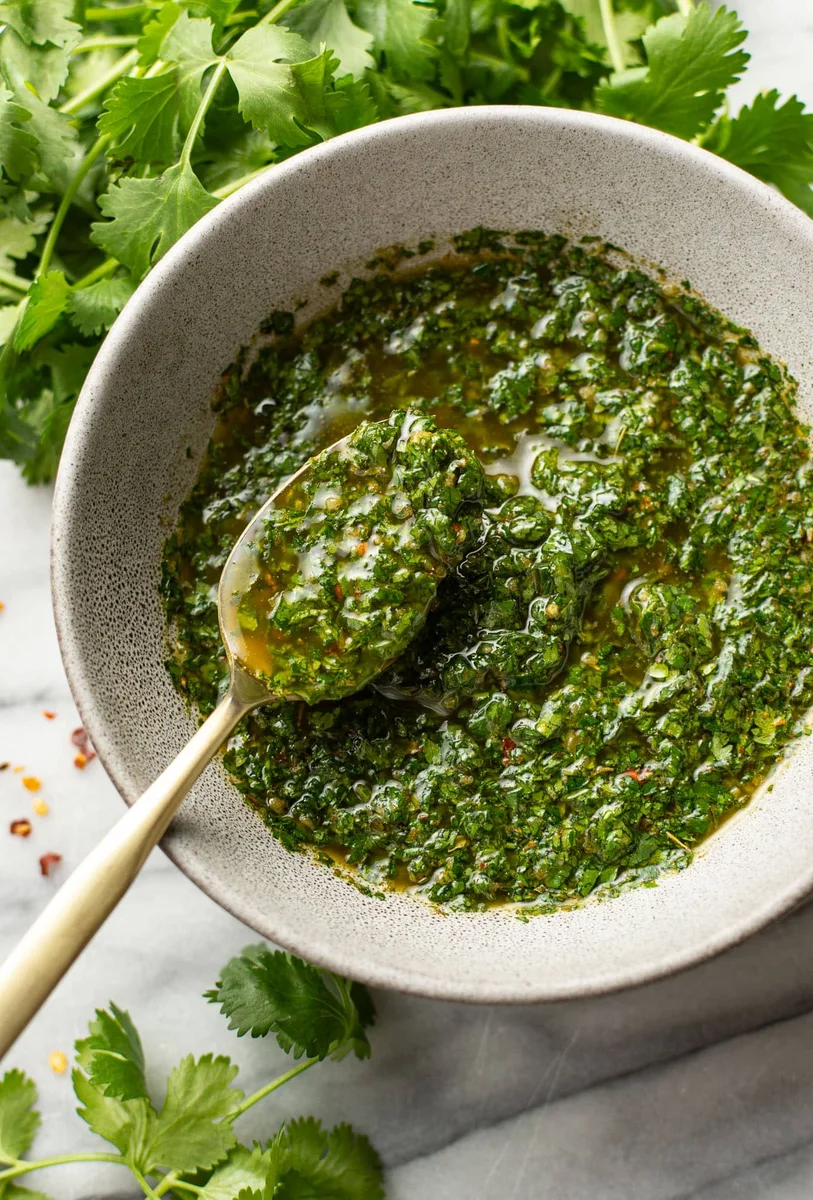
Chimichurri is a bright, herb-packed Argentinian sauce with garlic, vinegar and olive oil. It takes little effort to make and brings a lively, savoury lift to steak and other grilled dishes.
Ingredients
- 1 cup (tightly packed; about 30 g)fresh flat-leaf parsley, thick stems removed
- 1/2 cup (tightly packed; about 15 g)fresh coriander, thick stems removed
- 1/2 cup (120 ml)olive oil
- 2 tablespoons (30 ml)red wine vinegar
- 1/2 teaspoonsmoked paprika
- 1/2 teaspoondried oregano
- 1/2 teaspoonsalt (see note)
- 2–3 clovesgarlic, minced
- 1/4 teaspooncrushed red chilli flakes
Instructions
- 1
Pulse the ingredients
Put all the ingredients in a food processor and pulse until combined, stopping when the texture is to your liking. Taste and adjust the seasoning if needed.
- 2
Rest before serving
Spoon the sauce into a jar or bowl and leave it at room temperature for 15–20 minutes before serving. Cover and refrigerate any leftover sauce for up to 3 days.
What is chimichurri?
Chimichurri is an Argentinian herb sauce, commonly served with grilled meat. Fresh parsley, garlic, vinegar and oil give it a sharp, savoury character that works especially well alongside steak.
This version adds coriander, smoked paprika, oregano and chilli flakes for extra herbal depth and gentle warmth. A brief rest after blending lets the flavours mingle.
Nutrition and macros by portion
The nutrition label shows one serving as written: 167 calories, 0g protein, 1g carbs, 18g fat.
| Portion | Adjustment | kcal | Protein | Carbs | Fat |
|---|---|---|---|---|---|
| Lighter | Use less olive oil | 117 kcal | 0g | 1g | 13g |
| This serving | As written | 167 kcal | 0g | 1g | 18g |
| Hungry | Serve a larger spoonful | 251 kcal | 1g | 2g | 27g |
Most of the energy and fat in a serving come from the olive oil; the herbs, garlic and spices contribute relatively little carbohydrate. Serve a modest spoonful alongside a protein-rich main and vegetables for a more balanced plate.
The herbs matter
Parsley: Use fresh flat-leaf parsley and remove the thick stems, which can make the sauce coarse. Pack it firmly into the measuring cup before measuring.
Coriander: Fresh coriander brings a citrusy note alongside the parsley. Remove its thick stems too, and keep the tender leaves and stems.
Blend to your liking
Pulse rather than running the processor continuously so you can stop when the herbs are chopped to your preferred consistency. A few short bursts help avoid turning the sauce into a completely smooth purée.
If needed, scrape down the sides so the oil and seasonings are distributed through the herbs.
Balance the seasoning
Vinegar: Red wine vinegar gives the sauce its tang. Taste after blending, as the strength of the herbs and vinegar can vary.
Salt and spice: The salt seasons the herbs, while smoked paprika and chilli flakes add savoury warmth. Start with the listed quantities and adjust to taste.
Give it a short rest
Resting: Leave the sauce at room temperature for 15–20 minutes before serving, as directed. This gives the garlic, herbs and seasonings time to come together.
Texture: The finished sauce should remain spoonable and visibly flecked with herbs. Avoid processing it longer than necessary if you want a coarser texture.
How to serve it
Chimichurri is a classic partner for steak and suits other grilled foods too. Spoon it over just before serving or offer it at the table so everyone can add as much as they like.
It also makes a lively accompaniment to roasted vegetables or potatoes, where its acidity helps balance richer, browned flavours.
Recipe notes & tips
- Remove the thick herb stems for a more even texture.
- Pulse in short bursts and stop when the herbs are chopped as you prefer.
- Taste the sauce before serving and adjust the seasoning if needed.
- Let it rest at room temperature for 15–20 minutes before serving.
- Keep the sauce covered when storing it in the fridge.
Variations
- More heat: Add extra crushed red chilli flakes a little at a time.
- Milder sauce: Leave out the chilli flakes for a gentler flavour.
- Herb balance: Adjust the parsley-to-coriander mix while keeping the total quantity of herbs similar.
- Fresh oregano: Use fresh oregano instead of dried, adjusting the amount to taste.
- Coarser texture: Finely chop the herbs and garlic by hand, then stir in the remaining ingredients.
Common mistakes to avoid
- Over-processing: The sauce can become too smooth; pulse briefly and check the texture as you go.
- Leaving thick stems in: They can make the mixture coarse; remove them before blending.
- Skipping the taste: Seasoning can vary with the herbs and vinegar; taste and adjust after pulsing.
- Serving straight away: The flavours have less time to mingle; allow the stated 15–20-minute rest.
- Leaving it uncovered: The sauce may dry out in storage; cover the jar or bowl before refrigerating.
How to store
Transfer the sauce to a covered jar or bowl and refrigerate for up to 3 days. Bring out the amount you need for serving; this recipe does not specify a reheating method.
Frequently asked questions
Can I make chimichurri without a food processor?
Yes. Finely chop the herbs and garlic by hand, then mix them with the other ingredients until combined.
How long should chimichurri rest before serving?
Leave it at room temperature for 15–20 minutes, as directed, to let the flavours mingle.
What should I serve chimichurri with?
It is a classic sauce for steak and also pairs well with grilled foods, roasted vegetables and potatoes.
How long does homemade chimichurri keep?
Keep it covered in the fridge for up to 3 days.
Can I make the sauce smoother or chunkier?
Yes. Pulse briefly for a chunkier result, or continue in short bursts until it reaches your preferred consistency.
Cook it from the original
This recipe comes from saltandlavender.com. Their page has the author’s own photos, notes and tips — the best place to cook it from.
Open the recipe on saltandlavender.com