
Carnitas
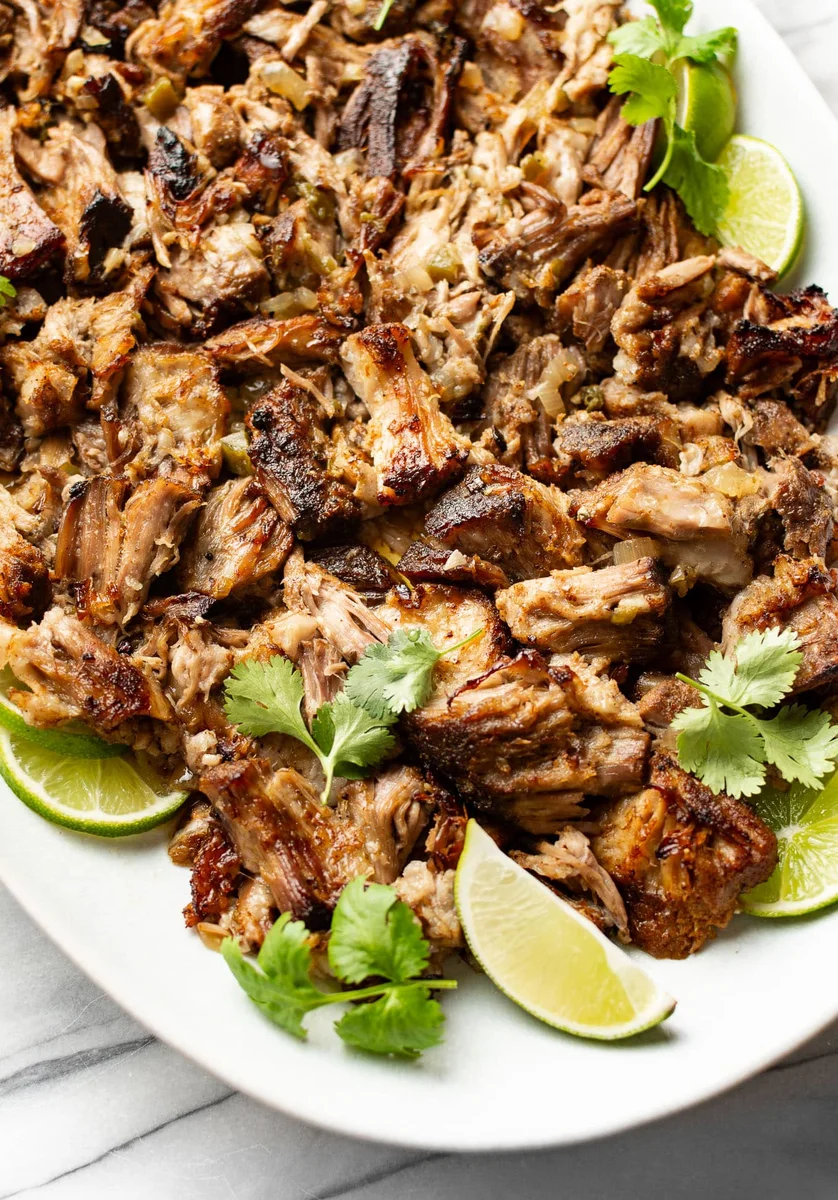
Carnitas are slow-cooked pork shoulder, shredded and crisped until it has tender strands and browned edges. This Mexican-inspired version is cooked with spices, onion, garlic and citrus, then served in warm corn tortillas or used in other dishes.
Ingredients
- 1.8–2.3 kg (4–5 lb)boneless pork shoulder
- 15 ml (1 tablespoon)chilli powder
- 10 ml (2 teaspoons)dried oregano
- 10 ml (2 teaspoons)ground cumin
- 10 ml (2 teaspoons)salt
- 2.5 ml (½ teaspoon), or to tastepepper
- 1 mediumonion, chopped
- 1–2jalapeño peppers, finely chopped
- 6 clovesgarlic, minced
- 120 ml (½ cup)chicken stock
- Juice of 1 largeorange
- Juice of 1lime
- To serve, optional and to tastewarmed corn tortillas, lime wedges, red onion, avocado, coriander, etc.
Instructions
- 1
Preheat the oven
Heat the oven to 150°C (300°F). For the slow-cooker method, refer to the notes mentioned in the original recipe.
- 2
Prepare the pork
Cut the pork shoulder into 4 smaller pieces. Remove any string around the joint, but leave the fat in place.
- 3
Season the pork
Mix the chilli powder, oregano, cumin, salt and pepper in a small bowl. Coat the pork pieces in the mixture and place them in a Dutch oven.
- 4
Add aromatics
Arrange the onion, jalapeño, garlic, chicken stock, orange juice and lime juice on and around the pork.
- 5
Cook until tender
Cover and cook for 2 hours. Remove the lid and cook for a further 1½ hours, or until the pork is tender enough to fall apart.
- 6
Shred and moisten
Lift the pork out of the Dutch oven and put it on a baking tray. Shred it with two forks, spoon about 240 ml (1 cup) of the cooking liquid over it, and toss to coat. Serve it as it is or crisp it using one of the methods in the next step.
- 7
Crisp the pork
For the oven method, move the rack to the top third of the oven and switch on the grill. Put the baking tray in and grill until browned and crisp in places, checking after 5 minutes and returning it for more time if needed. For the skillet method, cook the pork with some cooking juices over medium-high heat until one side is crisp; the juices should provide enough fat, but add oil or lard if needed. Cook in batches.
- 8
Serve the carnitas
Serve in tacos or as desired.
- 9
Keep the juices
Keep the remaining cooking juices and mix them into leftover shredded pork to help it stay moist. They will set as they cool, forming a layer of fat that can help when reheating.
What are carnitas?
Carnitas, meaning “little meats” in Spanish, are associated with Mexican cooking and are traditionally made by slowly cooking pork until tender. The meat is then shredded and often browned for crisp edges.
Here, pork shoulder cooks in a Dutch oven with spices, onion, garlic and citrus. The slow braise makes it easy to shred, while a final blast of heat adds contrast.
Nutrition and macros by portion
The nutrition label shows one serving as written: 207 calories, 35g protein, 3g carbs, 5g fat.
| Portion | Adjustment | kcal | Protein | Carbs | Fat |
|---|---|---|---|---|---|
| Lighter | Use fewer tortillas | 145 kcal | 25g | 2g | 4g |
| This serving | As written | 207 kcal | 35g | 3g | 5g |
| Hungry | Serve extra pork | 311 kcal | 53g | 5g | 8g |
The pork provides most of the protein and fat, while the tortillas contribute much of the carbohydrate if you serve them. Add avocado for extra fat, or include fresh toppings and vegetables to round out the plate.
Why pork shoulder works
Cut: Shoulder has enough fat and connective tissue to stay juicy through a long cook. Keep the fat on, as directed, rather than trimming it away before cooking.
Size: Cutting the joint into 4 pieces helps it fit in the pot and makes the seasoning easier to distribute.
Build the seasoning
Spices: Chilli powder, oregano and cumin give the pork its savoury, warm flavour. Stir them with the salt and pepper before coating the meat so each piece gets an even layer.
Citrus: Orange and lime juice go into the pot with the stock. The combination adds a bright note to the rich pork and the savoury cooking liquid.
Watch for fall-apart tenderness
Covered cook: Keep the Dutch oven covered for the first 2 hours so the pork cooks gently in the moist environment.
Uncovered finish: Cook for another 1½ hours without the lid, checking that the meat pulls apart easily with a fork. If it still resists, it needs more time.
Shred, then crisp
Moisture: Toss the shredded pork with about 240 ml (1 cup) of cooking liquid before crisping. This helps keep the strands juicy as their edges brown.
Oven or skillet: The grill browns the pork on a baking tray; a skillet crisps it in batches over medium-high heat. In either case, look for browned patches rather than trying to dry out every strand.
Serving ideas
Tacos: Warm corn tortillas and add lime wedges, red onion, avocado or coriander to taste. Their fresh, sharp flavours balance the rich pork.
Beyond tacos: Serve the carnitas as desired, using the suggested toppings at the table so everyone can assemble a portion.
Recipe notes & tips
- Leave the pork fat in place while it cooks, as the recipe directs.
- Coat the pork pieces thoroughly with the spice mixture before adding them to the pot.
- Use two forks to shred the pork while it is still warm and tender.
- Start checking the pork under the grill after 5 minutes, then give it more time as needed.
- If using a skillet, crisp the pork in batches so it has room to brown.
- Mix leftover cooking juices into the shredded pork rather than discarding them.
Variations
- Adjust the chilli: Use less chilli powder or fewer jalapeños for a milder batch.
- Add toppings: Offer lime, red onion, avocado and coriander alongside the pork.
- Choose the skillet: Brown the shredded meat in batches on the hob instead of under the grill.
- Skip the crisping: Serve the shredded pork after tossing it with cooking liquid.
- Serve beyond tacos: Use the cooked pork in another meal as desired.
Common mistakes to avoid
- Trimming the fat: Leave it on the pork shoulder as directed so the meat stays juicy during the long cook.
- Stopping too soon: Cook until the pork falls apart easily; give it more time if it is still firm.
- Skipping the cooking liquid: Toss the shredded meat with about 240 ml (1 cup) before crisping to help keep it moist.
- Overcrowding the skillet: Cook in batches so the pork can brown rather than steam.
- Walking away from the grill: Check after 5 minutes, then monitor closely as the edges can crisp quickly.
How to store
Refrigerate leftover pork with the remaining cooking juices in a covered container and use within 3–4 days. The juices will set as they cool; mix them through the pork before reheating, and warm until piping hot. Freeze portions for up to 3 months and thaw in the fridge before reheating.
Frequently asked questions
Can I serve the carnitas without crisping them?
Yes. The method says you can serve the shredded pork as it is after tossing it with cooking liquid. Crisping is optional, though it adds browned edges.
How do I know when the pork is tender enough?
It should pull apart easily with a fork. If it is still firm after the stated cooking time, continue cooking until it reaches that texture.
Can I crisp the pork in a skillet instead of the oven?
Yes. Cook it with some of the cooking juices over medium-high heat until one side is crisp, working in batches. Add oil or lard if the juices do not provide enough fat.
Why keep the leftover cooking liquid?
Mixing it into leftover shredded pork helps keep the meat moist. The juices set as they cool and can be used when reheating.
What can I serve with carnitas?
The recipe suggests warmed corn tortillas, lime wedges, red onion, avocado and coriander, all optional and to taste.
Cook it from the original
This recipe comes from saltandlavender.com. Their page has the author’s own photos, notes and tips — the best place to cook it from.
Open the recipe on saltandlavender.com