
Penne al Gorgonzola (Creamy Italian Gorgonzola Pasta)
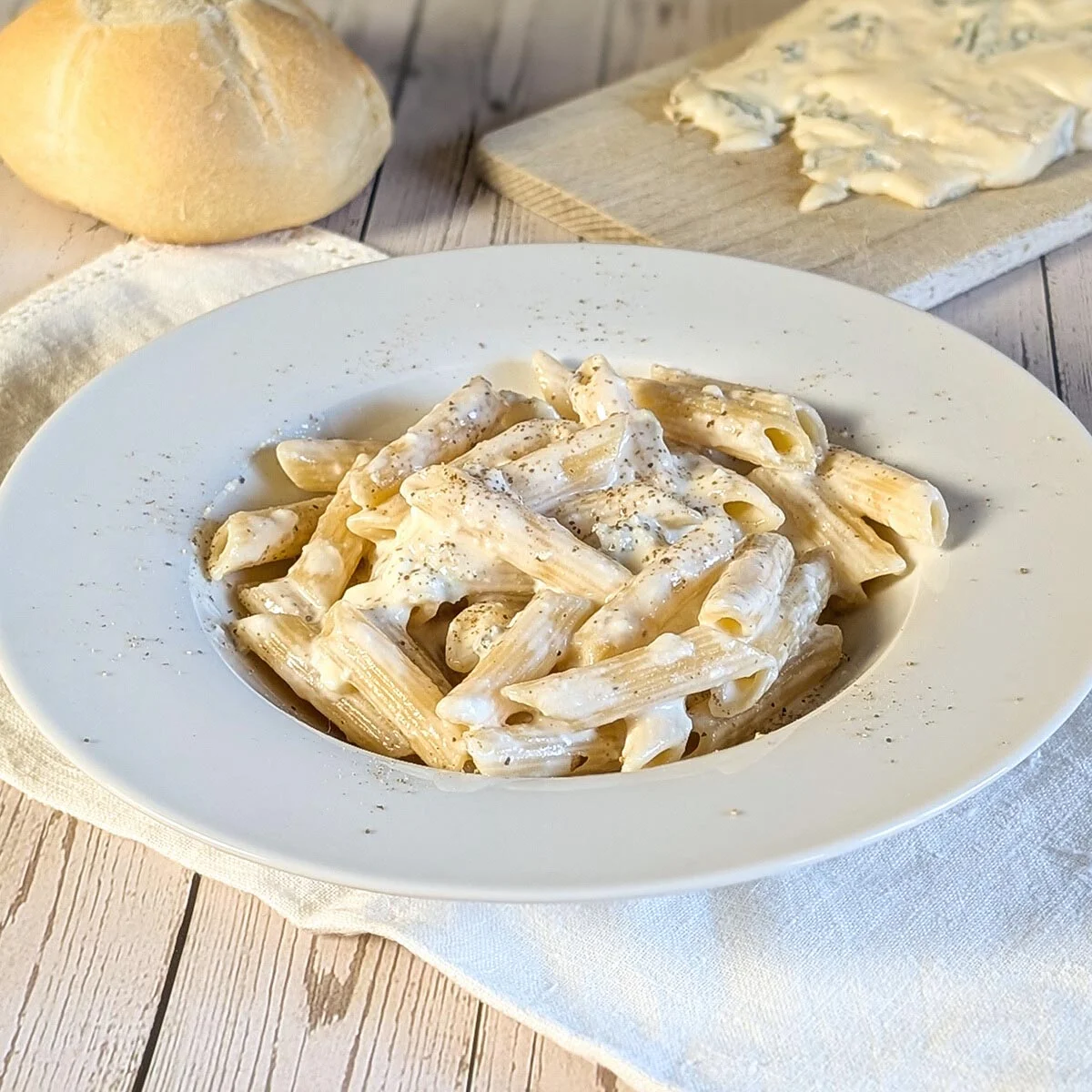
Penne al Gorgonzola pairs ridged pasta with a smooth sauce of sweet Gorgonzola and cream or milk. It comes together quickly, making it a comforting choice for a weeknight or an easy last-minute meal.
Ingredients
- 350 gpenne rigate
- 400 gGorgonzola dolce
- 150 gdouble cream or whole milk
- to tastefreshly ground black pepper
Instructions
- 1
Prepare the cheese
Remove the rind from the Gorgonzola if it has one, then cut the cheese into small cubes.
- 2
Combine sauce ingredients
Pour the milk into a wide pan or skillet, or use cream for a thicker sauce. Add the Gorgonzola cubes.
- 3
Melt the cheese
Set the pan over low heat and stir often as the cheese melts gently. Keep the heat low to help prevent the sauce from separating or sticking. After about 7–8 minutes, the cheese should be melted and the sauce smooth and creamy. Season with freshly ground black pepper to taste, then switch off the heat and set the pan aside.
- 4
Cook the penne
Bring a large pan of salted water to a rolling boil and cook the penne according to the packet instructions until al dente: tender but still slightly firm to the bite. Before draining, reserve a small cup of the cooking water.
- 5
Add pasta to sauce
Drain the penne and transfer it straight into the pan with the Gorgonzola sauce.
- 6
Toss with sauce
Put the pan back over low heat and gently toss the pasta for 1–2 minutes. Add a splash of the reserved cooking water if needed to help the sauce coat the penne evenly.
- 7
Serve immediately
Mix until all the pasta is coated in sauce. Serve at once, with an extra pinch of black pepper if you like.
What is Penne al Gorgonzola?
Penne al Gorgonzola is an Italian pasta dish built around short pasta and a sauce made by gently melting Gorgonzola with cream or milk. It reflects a simple style of home cooking: a few well-matched ingredients brought together without a long preparation.
This version uses sweet Gorgonzola dolce, whose creamy texture makes a smooth sauce, while ridged penne helps hold it. The sauce is kept on a low heat so the cheese melts gently rather than turning oily or grainy.
Nutrition and macros by portion
The nutrition label shows one serving as written: 805 calories, 34g protein, 69g carbs, 44g fat.
| Portion | Adjustment | kcal | Protein | Carbs | Fat |
|---|---|---|---|---|---|
| Lighter | Use whole milk | 564 kcal | 24g | 48g | 31g |
| This serving | As written | 805 kcal | 34g | 69g | 44g |
| Hungry | Larger pasta portion | 1208 kcal | 51g | 104g | 66g |
The penne supplies most of the carbohydrates, while Gorgonzola and cream contribute much of the fat and a substantial share of the protein. Pair a serving with a generous salad or vegetables for a more balanced plate.
Choosing the cheese and liquid
Gorgonzola dolce: Use the sweet, softer style of Gorgonzola specified here. Remove any rind and cut the cheese into small cubes so it melts more evenly.
Cream or milk: Cream gives the sauce a thicker, richer finish, while whole milk makes it looser. Either works with the method; choose one and keep the heat gentle.
Keep the sauce gentle
Low heat: Let the cheese melt slowly, stirring often. A hard boil can make the sauce separate or catch on the bottom of the pan.
Doneness cue: After about 7–8 minutes, the cheese should have melted into a smooth, creamy sauce. Take the pan off the heat once it reaches that texture.
Cook the pasta al dente
Penne: Follow the packet timing, checking for pasta that is tender but still slightly firm in the centre. It will spend another 1–2 minutes in the sauce, so avoid cooking it past al dente.
Pasta water: Reserve a small cup before draining. Its starchy water can loosen the sauce and help it cling to the ridges if the mixture looks too thick.
Finish and serve
Combine: Add the drained pasta straight to the sauce, then toss gently over low heat for 1–2 minutes. Add the reserved water a splash at a time only if needed.
Serve: Bring the pasta to the table as soon as it is coated, while the sauce is still smooth. A little extra freshly ground black pepper makes a simple finishing touch.
What to serve alongside
A crisp green salad or lightly dressed leaves offer a fresh contrast to the rich, creamy pasta. You could also serve a simple vegetable side, keeping the pasta as the main feature of the meal.
Recipe notes & tips
- Cut the Gorgonzola into small cubes so it melts smoothly.
- Stir the sauce frequently while keeping the pan over low heat.
- Reserve the pasta water before draining, not after.
- Check the penne towards the end of the packet cooking time so it stays al dente.
- Add reserved cooking water a little at a time to avoid making the sauce too thin.
- Serve as soon as the pasta is coated, before the sauce cools and thickens.
Variations
- Use cream: Choose cream instead of milk for a thicker sauce.
- Use milk: Choose whole milk for a looser sauce.
- Add black pepper: Grind extra over each serving just before eating.
- Try another shape: Use another short pasta shape that can catch the sauce.
- Serve with greens: Add a crisp salad or vegetable side for contrast.
Common mistakes to avoid
- Using high heat: The sauce may split or stick; melt the cheese slowly over low heat.
- Leaving the rind on: It may not melt smoothly; remove it before cubing the cheese.
- Overcooking the penne: It can turn soft during the final toss; drain it while still slightly firm.
- Forgetting the pasta water: You may have no easy way to loosen the sauce; reserve a small cup before draining.
- Adding too much pasta water: The sauce can become thin; add only a splash at a time.
- Letting the dish stand: The sauce thickens as it cools; serve the pasta immediately.
How to store
Refrigerate leftovers in an airtight container and eat within 2 days. Reheat gently in a pan over low heat, stirring in a splash of milk or water if the sauce has thickened.
Frequently asked questions
Can I use milk instead of cream?
Yes. Whole milk makes a looser sauce, while cream gives it a thicker consistency.
How do I stop the Gorgonzola sauce from splitting?
Melt the cheese over low heat and stir often. Avoid bringing the sauce to a boil.
Why reserve pasta water?
A splash can loosen the sauce and help it coat the penne. Add it gradually so the sauce does not become watery.
Can I make the sauce ahead?
It is best made just before serving, as the method relies on tossing the freshly cooked pasta into the warm sauce. The sauce can thicken as it cools.
How do I know when the penne is al dente?
Follow the packet instructions and taste a piece near the end of the cooking time. It should be tender but still slightly firm to the bite.
Cook it from the original
This recipe comes from recipesfromitaly.com. Their page has the author’s own photos, notes and tips — the best place to cook it from.
Open the recipe on recipesfromitaly.com