
Slow Cooked Pork with Butter Beans and Sherry
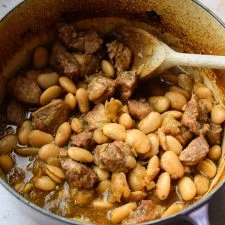
This slow-cooked pork and butter bean casserole is braised with onions, thyme and dry sherry until the pork is tender and the sauce is richly flavoured. It is a comforting make-ahead meal for a chilly day, with beans stirred in near the end so they keep their shape.
Ingredients
- 1 1/2 tbspolive oil
- 500 gdiced pork shoulder
- to tastesea salt and freshly cracked black pepper
- 2white onions
- 150 mldry sherry
- 350 mlgood quality chicken stock
- 4fresh thyme sprigs
- 560 gjar Queen butter beans, drained and rinsed
Instructions
- 1
Brown the pork
Heat the oil in a large lidded casserole over a medium-high heat. Season the pork all over and brown it in batches, transferring each batch to a plate once coloured.
- 2
Soften the onions
Turn the heat down to medium-low and preheat the oven to 160°C. Peel and thickly slice the onions, then add them to the casserole with a generous pinch of salt. Cook for 8–10 minutes, until softened and beginning to colour at the edges.
- 3
Deglaze with sherry
Return the pork and any juices from the plate to the casserole. Pour in the sherry and let it bubble briefly, scraping the browned bits from the bottom with a wooden spoon.
- 4
Braise the pork
Add the stock and thyme, along with a little more salt and pepper. Cover the casserole and transfer it to the oven for 1 hour 30 minutes.
- 5
Add the beans
Remove the thyme sprigs and stir in the butter beans. Cook for a further 30 minutes, then taste the reduced sauce and adjust the salt and pepper before serving.
What is pork with butter beans?
This is a slow-braised casserole: pork shoulder cooks gently in a savoury liquid until tender, while butter beans make the sauce substantial. Pork and beans are a familiar pairing in many home-cooked stews, and this version gets a distinctive depth from dry sherry.
The method builds flavour in stages, browning the meat and onions before adding the liquid. Adding the beans for only the final 30 minutes helps them absorb some sauce without cooking them for the full braising time.
Nutrition and macros by portion
The nutrition label shows one serving as written: 700 calories, 51g protein, 47g carbs, 37g fat.
| Portion | Adjustment | kcal | Protein | Carbs | Fat |
|---|---|---|---|---|---|
| Lighter | More greens, less pork | 490 kcal | 36g | 33g | 26g |
| This serving | As written | 700 kcal | 51g | 47g | 37g |
| Hungry | Serve with crusty bread | 1050 kcal | 77g | 71g | 56g |
Pork shoulder provides most of the protein and a substantial share of the fat, while the butter beans supply most of the carbohydrates and additional protein. Olive oil adds further fat, and the stock and seasoning contribute sodium. Balance the plate with green vegetables or a salad, and add bread only if you want a more substantial meal.
Choosing the pork and beans
Pork shoulder: its marbling suits a long, gentle braise and helps the meat become tender. Keep the pieces a similar size so they cook at roughly the same rate.
Butter beans: drain and rinse them before adding. Their creamy texture complements the pork, while stirring them in late helps them stay intact.
Build flavour in the casserole
Browned pork: work in batches rather than crowding the pot. A good sear adds savoury flavour, and leaving space around the pieces helps them colour instead of steaming.
Onions and sherry: let the onions soften and pick up colour at the edges, then scrape the base of the casserole as the sherry bubbles. Those browned bits dissolve into the cooking liquid and enrich the sauce.
The slow braise
Keep the casserole covered in the oven at 160°C for 1 hour 30 minutes before adding the beans. The lid holds in moisture while the pork cooks gently in the stock and sherry.
Pork doneness: the pieces should be tender when tested with a fork. If they still feel firm, continue cooking until tender, checking that there is enough liquid in the pot.
Getting the sauce right
After the final 30 minutes with the beans, the sauce should be reduced and coating rather than watery. If it seems thinner than you prefer, remove the lid for a short time at the end and keep an eye on the beans.
Taste before serving: stock and sherry vary in saltiness and intensity, so adjust the seasoning only once the sauce has reduced.
Serve it as a meal
The pork and beans make a filling dish on their own, especially with bread to catch the sauce. For a fresher contrast, serve with a simple green salad or steamed green vegetables.
If preparing ahead, cool and refrigerate the casserole, then reheat it gently until piping hot. A splash of stock or water can loosen the sauce if it thickens while chilled.
Recipe notes & tips
- Pat the pork dry before browning so it colours more readily.
- Brown the pork in batches and avoid moving it around constantly.
- Use a wooden spoon to loosen all the browned bits when adding the sherry.
- Keep the casserole covered during the initial oven braise.
- Rinse the butter beans gently so they do not break up before cooking.
- Taste the sauce after it has reduced before adding more salt.
Variations
- Add garlic: soften a couple of crushed cloves with the onions for a fuller savoury flavour.
- Use white beans: cannellini beans can replace the butter beans with a slightly firmer texture.
- Add carrots: slice them thickly and cook them with the onions for extra sweetness.
- Change the herbs: use a bay leaf alongside the thyme, removing it before serving.
- Add greens: stir in a handful of spinach at the end and let it wilt in the hot sauce.
Common mistakes to avoid
- Crowding the pot: the pork can steam rather than brown, so sear it in batches.
- Cooking the onions too quickly: lower the heat if the edges darken before the onions soften.
- Skipping the scrape: loosen the browned bits with the sherry so they flavour the sauce.
- Adding beans too early: stir them in only for the final 30 minutes to help them hold their shape.
- Over-seasoning before reducing: taste the sauce at the end, as its saltiness becomes more concentrated.
How to store
Refrigerate leftovers in a covered container for up to 3 days, cooling them promptly. Reheat gently in a saucepan until piping hot, adding a splash of water or stock if the sauce has thickened; avoid vigorous stirring so the beans stay whole.
Frequently asked questions
Can I make this ahead?
Yes. Cook it fully, cool it promptly and refrigerate it, then reheat gently until piping hot. The sauce may thicken in the fridge, so add a little water or stock as needed.
Can I use a different cut of pork?
Pork shoulder is well suited to this long braise. A leaner cut may become dry if cooked for the same length of time, so check it earlier.
Can I cook it on the hob instead of in the oven?
Yes, keep it covered and cook it at a very gentle simmer for the same stages and timings. Check occasionally that it is not sticking and that there is enough liquid.
What can I use instead of sherry?
A dry white wine can provide a similar sharpness, though the finished flavour will differ. If you prefer not to use alcohol, use extra stock and add a small splash of vinegar to taste.
How do I know when the pork is ready?
After the initial 1 hour 30 minutes, the pork should be tender when tested with a fork. If it is still firm, continue the covered braise until tender before adding the beans.
Cook it from the original
This recipe comes from rachelphipps.com. Their page has the author’s own photos, notes and tips — the best place to cook it from.
Open the recipe on rachelphipps.com