
Quick Chinese Beef Noodles Recipe
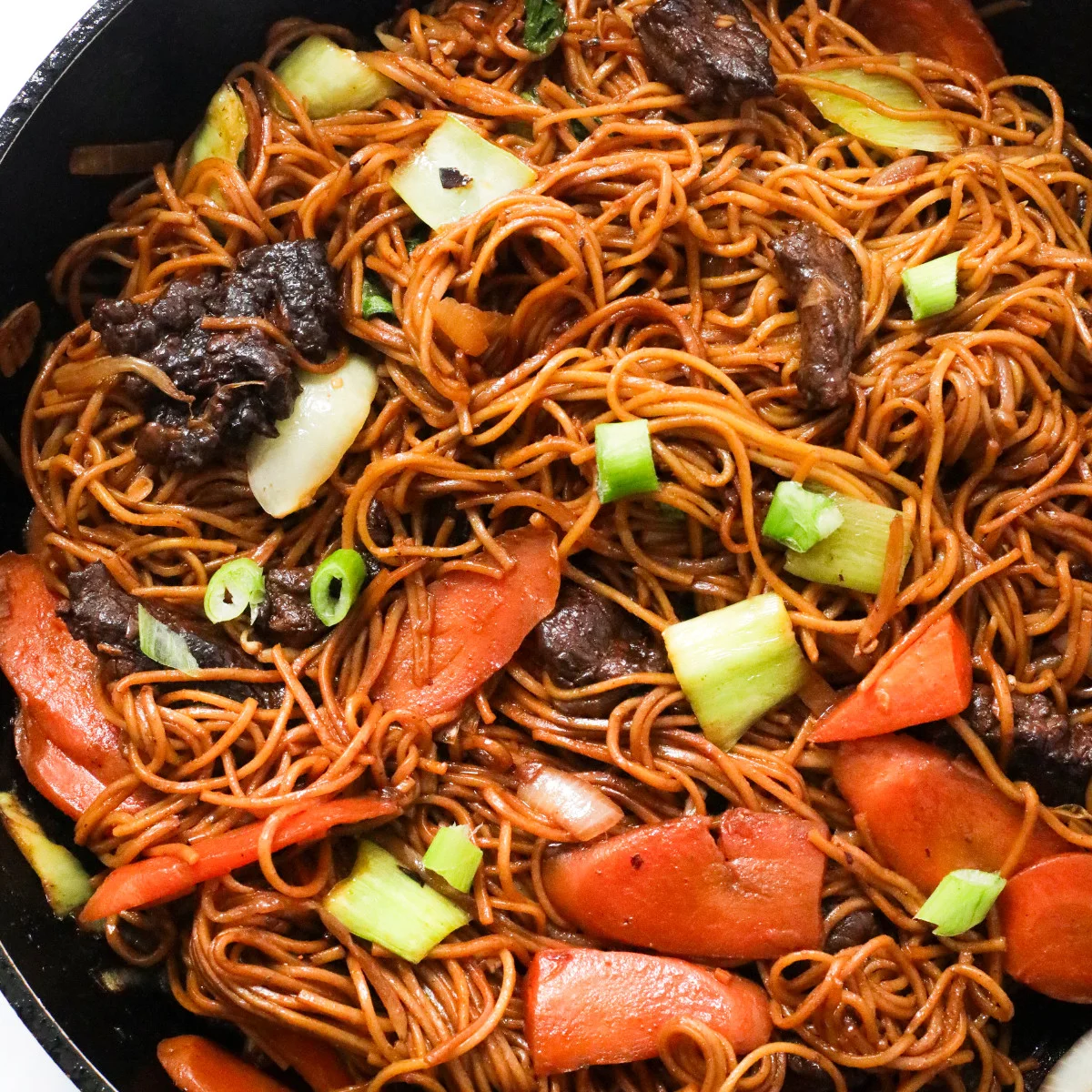
These quick beef noodles combine egg noodles, tender beef, vegetables and a savoury soy-based sauce for a filling weeknight meal. They come together in about 30 minutes in one wok, with a little prep for the beef and sauce.
Ingredients
- 400 gegg noodles
- 500 gbeef
- 1/2 tbspblack pepper (or white pepper)
- 4 tbspcornflour
- 3 tbspsesame oil
- 1 tbspchicken bouillon
- 6 tbspdark soy sauce
- 3 tbsprice wine vinegar
- 2 tbspbrown sugar
- 5 clovesgarlic, grated
- 3 tbspginger, grated
- 4 stalksspring onions, chopped
- 4carrots, chopped
- 1/2onion, sliced
- 2pak choi, chopped diagonally
Instructions
- 1
Marinate the beef
Cut the beef against the grain into bite-sized pieces. In a bowl, combine it with the cornflour, soy sauce, 1/2 tbsp chicken bouillon and 1/2 tbsp black pepper. Cover the bowl and leave the beef to marinate while you prepare the sauce.
- 2
Mix the sauce
In a separate bowl, combine the dark soy sauce, rice wine vinegar, brown sugar, white pepper, cornflour, chicken bouillon and sesame oil. Stir until evenly mixed.
- 3
Cook the noodles
Bring a pot of water to the boil, add the noodles and cook for 5–7 minutes, or until done. Drain them. If using fresh noodles, separate them by rubbing them on a chopping board.
- 4
Cook the beef
While the noodles cook, heat sesame oil in a wok. Add the marinated beef and cook on both sides for 5–7 minutes, or until fully cooked. Add the sliced onion, minced garlic, ginger and spring onions, then cook for a further 2 minutes.
- 5
Combine and finish
Add the cooked noodles to the wok with the beef and vegetables. Pour over the sauce and stir over medium-high heat until everything is well combined. Add the pak choi and cook over low heat for about 5 minutes, until tender.
- 6
Serve the noodles
Serve the beef noodles with chopped spring onions, sesame seeds and chilli oil for extra flavour.
What are Chinese beef noodles?
Beef noodles are a broad family of Chinese and Chinese-inspired dishes, rather than one single fixed recipe. This quick stir-fried version brings together noodles, beef, greens and a savoury soy-based sauce.
The combination of dark soy, vinegar, brown sugar, ginger and garlic gives the sauce a balance of savoury, tangy and gently sweet flavours. Cooking the components in a wok keeps the method practical for a weeknight.
Nutrition and macros by portion
The nutrition label shows one serving as written: 602 calories, 36g protein, 72g carbs, 20g fat.
| Portion | Adjustment | kcal | Protein | Carbs | Fat |
|---|---|---|---|---|---|
| Lighter | More pak choi, fewer noodles | 421 kcal | 25g | 51g | 14g |
| This serving | As written | 602 kcal | 36g | 72g | 20g |
| Hungry | Larger noodle portion | 903 kcal | 54g | 108g | 31g |
The noodles and brown sugar provide most of the carbohydrates, while sesame oil contributes much of the fat. Beef supplies the main protein, with smaller amounts also coming from the noodles. For a more balanced plate, serve a generous share of the vegetables alongside your portion.
Choosing and cutting the beef
Against the grain: slice the beef across its visible muscle fibres into bite-sized pieces. This shortens the fibres and helps each piece feel more tender to eat.
Cornflour coating: the recipe uses it in the beef marinade and the sauce. Mix the sauce thoroughly so the starch is distributed rather than settling at the bottom of the bowl.
Getting the sauce right
Savoury balance: dark soy sauce and chicken bouillon bring depth, while rice wine vinegar adds a sharp note and brown sugar rounds it out. Taste the mixed sauce before adding it to the wok, keeping in mind that soy sauce and bouillon can both be salty.
Smooth texture: stir the sauce again just before pouring, as cornflour can sink while it stands. Once it meets the hot noodles, keep tossing so it coats the ingredients evenly.
Managing the wok
Hot pan: give the wok time to heat before adding the beef so it cooks rather than sits in a cool pan. If the pieces crowd the wok, cook them in batches.
Order matters: cook the beef first, then briefly soften the aromatics before adding the noodles and sauce. The pak choi goes in last and cooks gently for about 5 minutes, as directed.
Noodle texture and timing
Check early: cook the noodles for 5–7 minutes, following the packet guidance if it differs, and drain them once tender. They will be stirred through the hot wok afterwards, so avoid leaving them to overcook in the water.
Fresh noodles: separate them on a chopping board before adding them to the wok. This helps prevent clumps when they meet the sauce.
Vegetables and serving
Even pieces: chop the carrots and slice the onion so they cook through during the brief wok time. Cut the pak choi diagonally as specified, and add it towards the end to keep its texture tender rather than limp.
To finish: chopped spring onions, sesame seeds and chilli oil are suggested serving additions. They add freshness, crunch and heat; use whichever suit your table.
Recipe notes & tips
- Slice the beef across the grain for a more tender bite.
- Have the sauce and vegetables ready before heating the wok, as the cooking moves quickly.
- Stir the sauce again immediately before pouring it into the wok.
- Cook the beef in batches if the wok is crowded.
- Taste the sauce before adding it, since soy sauce and bouillon can be quite salty.
- Keep the noodles moving in the wok so they take on the sauce without sticking.
Variations
- Add more greens: Increase the pak choi for a vegetable-forward bowl.
- Adjust the heat: Serve with chilli oil at the table so everyone can choose their level of spice.
- Use fresh noodles: Separate them on a chopping board before adding them to the wok.
- Try white pepper: Use it instead of black pepper for a different peppery note.
- Change the vegetables: Replace some of the carrots with another quick-cooking vegetable you have to hand.
Common mistakes to avoid
- Cutting with the grain: Slice across the fibres so the beef is easier to chew.
- Crowding the wok: The beef may cook unevenly; brown it in batches if needed.
- Overcooking the noodles: Check them at 5 minutes and drain once tender.
- Skipping the sauce stir: Cornflour can settle; mix the sauce again before adding it.
- Adding pak choi too early: Put it in near the end so it does not become overly soft.
- Leaving noodles in a clump: Separate fresh noodles before cooking them with the beef.
How to store
Refrigerate leftovers in a covered container within 2 hours and eat within 3 days. Reheat in a wok or frying pan until piping hot, adding a small splash of water if the noodles have dried out.
Frequently asked questions
Can I use fresh noodles instead of dried egg noodles?
Yes. Separate fresh noodles on a chopping board before adding them, as the method suggests. Follow their packet instructions for cooking time.
How do I keep the beef tender?
Cut it against the grain and avoid crowding the wok. Cook in batches if necessary so the beef cooks properly rather than steaming.
Can I prepare anything ahead?
You can chop the vegetables and mix the sauce in advance, then refrigerate them separately. Marinate the beef while you prepare the other components, as in the method.
Is this dish spicy?
The listed ingredients are not especially hot, though pepper adds a little warmth. Chilli oil is an optional serving suggestion, so you can leave it off or add it to taste.
What can I serve with beef noodles?
They can be served on their own as a complete meal. Add spring onions, sesame seeds or chilli oil at the table for extra flavour and texture.
Can I make the sauce less salty?
Taste it before adding it to the wok, as soy sauce and bouillon both contribute saltiness. You can use less sauce in the dish and add more only if needed.
Cook it from the original
This recipe comes from simshomekitchen.com. Their page has the author’s own photos, notes and tips — the best place to cook it from.
Open the recipe on simshomekitchen.com